
Being reviewed:
Advertisement

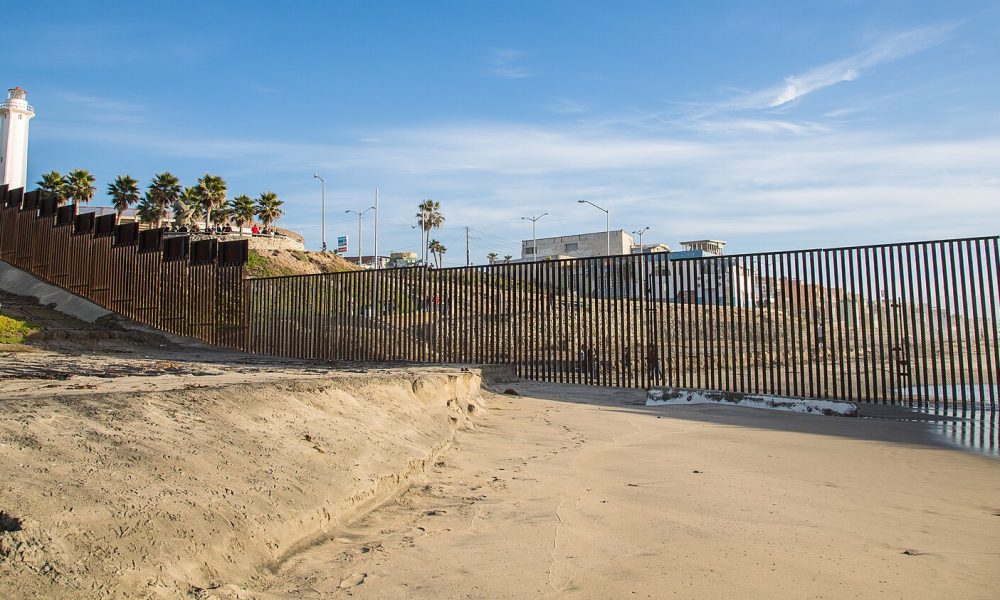
States manifest borders in myriad forms: as imagined map lines; as checkpoints; as a highway sign; as physical walls and smart walls; as law enforcement violence. Since Trump initiated his mass deportation campaign, “the border” has burst into expanded visibility as federal law enforcement officers—from not only Immigration and Customs Enforcement (ICE) but also other agencies pressed into service—and even vigilantes attempt to kidnap individuals deemed “intruders” on some version of an imagined nation. There are parts of these imagined and materialized border practices that are much harder to see: apps that sell or share our phone data; public and private surveillance video and audio networks; and public databases designed for other purposes yet pressed into service of law enforcement.
The punishing power of data has come into public consciousness recently as the DOGE, or the Department of Governmental Efficiency, attempts to hoover up data from across the US federal government. The Internal Revenue Service (IRS), the US tax agency, has agreed to share data with ICE. This extends ICE practices from previous administrations. Over the last decade, ICE creatively used legal tools to request data from schools, medical clinics, telecommunications companies, major tech firms, money transfer services, airlines, and even utility companies.1 In San Diego in 2021, Homeland Security Investigations (HSI, part of ICE) secretly requested and received 75 pages of data on two San Diego State University students, including “student enrollment status, class schedules, residence address, employment, phone numbers, campus registered vehicles,” and medical records. In the hands of ICE, such data can serve both as a pretext for deportation and a tool to execute it.
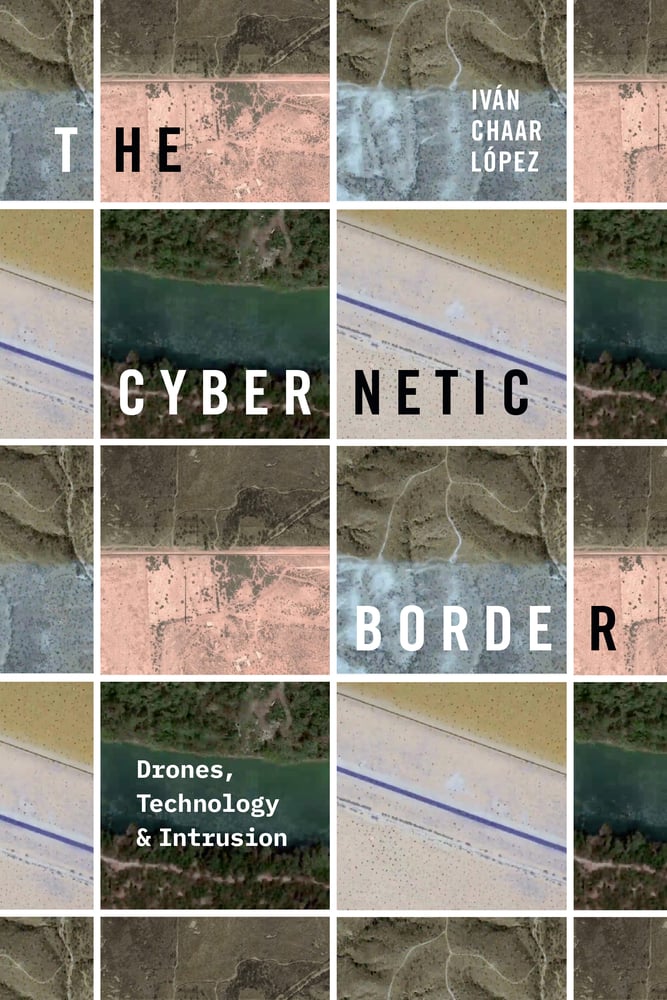
How did data, computer science, and cybernetics become central to border regimes? This is one question illuminated by Iván Chaar López’s The Cybernetic Border. Borders are technological and political, the book argues, in that they abstract and calculate “humanity” and target the state’s “enmity”—the violence or hostility to some life that constitutes the modern state. Chaar López urges us to understand the racialized enmity of the US empire-nation and its obsession with border crossers in the Sonoran desert.
This is a critical history for our times, as ICE and the US Department of State target union leaders standing with workers, activists challenging genocides, and scientists critical of Trump. Mexican Americans have long been the worst targeted, and we should all be learning from their resistances and struggling in solidarity. We are in a moment that makes clear that the border—as a regime of enmity—can make intruders of us all.


Tracking the assembly of a massive technological apparatus over a century, The Cybernetic Border shows how the US arrived at a post-9/11 vision of systems of systems, combining many kinds of data gathered across jurisdictions—the systems we live under today. This century-long construction built both datafied borders and parallel changes to federal agencies. The creation of the Department of Homeland Security brought customs enforcement and immigration naturalization together to refocusing each of their missions on “homeland” and “security.” Along with this, Joint Terrorism Task Forces convened law enforcement at federal, state, and local levels to share information and a mission of locating intruders not just at border zones but in mosques, in schools, and in communities. Regional fusion centers were formed to spy on residents and citizens and redistribute intelligence across agencies as well. In the US, we still live with these technologies and institutions that intrude on our lives in the name of finding the danger, usually racialized, within.
All this is why Iván Chaar López’s The Cybernetic Border argues for understanding the border as a “technopolitical regime,” organized around the detection of “intruders” violating the sovereignty of a nation. The technical systems change over time: prototypes and pilots come and go, infrastructures crumble or pile atop one another, some companies come and go. State imaginations of who is an intruder expand and shift, and Chaar López rightly emphasizes the construction of working-class Mexicans, Central Americans, and later, Muslims, as intruders in the US age of empire. The Cybernetic Border helps us track the arcs of sovereignty, enmity, and how they are mediated by race and technology: a critical task when the state itself provides resources for, reinforces, and iterates these visions.
How do systems change, even while panic over intruders remains much the same? In the 1970s, Border Patrol worked with defense companies to create a sensor line along the border that would detect intruders and deploy agents to intercept them. The project was modeled on an earlier attempt by the US military to enforce the “McNamara Line” in Vietnam, detecting Vietnamese people on the move to be targeted for annihilation. The sensors worked poorly in both Vietnam and the southern US. Even so, the state committed vast resources of time and money to prototype a basic framework that Chaar López traces to our present: the signal processing problem of sensing, transmitting, computing, and responding, and the cultural-political process of differentiating between “intruders” and those welcome in the imagined nation.
We start where we live, we start where we have power. And we work to abolish ICE, including by tearing out its data infrastructures and building solidarity against empire wherever we can.
This 1960s and 1970s digital “McNamara Line” prefigured a networked and platform-like vision of “smart borders” promoted by Obama, Biden, Trump, and their defense contractors. Customs and Border Patrol’s 2012–2016 Strategic Plan outlined a vision of systems-of-systems intrusion detection by gathering and synthesizing diverse data sources from unmanned aerial systems, agent field observations, relay towers, remote video surveillance, satellite imaging, ground sensors, and much else. These data-aggregating systems would then act as platforms for state actors, enacting US sovereignty as racial enmity focused on the southern border.
These systems promise to track intruders. But what they really do is draw all in the field of view under a discriminating and suspicious gaze.
This history makes ICE’s contracts to Palantir, an intelligence-gathering and analysis software company, less surprising, if still terrifying. Palantir, after all, was founded on funding from not only Silicon Valley’s Peter Thiel but also the CIA’s venture capital arm, IN-Q-Tel, founded during the Clinton administration.2
Although The Cybernetic Border tracks the technopolitics of enmity primarily at the southern border, its lessons matter to so many of us who can be cast as intruders in changing political winds. The border attempts to discriminate between those who serve US ruling coalition projects and those who threaten it. Immigration laws and visa systems control and divide workers, funneling some into low-rights regimes through employer-based and student visa systems.3 The state has also mobilized border enforcement as a tool to scapegoat communities as “foreign”: from Japanese Americans, displaced, dispossessed, and incarcerated during World War II, to US Muslims, most intensely in the wake of 9/11. Activists challenging US imperial projects—from Black Trinidadian Communist Claudia Jones to Palestinian student Mahmoud Khalil—also faced detention and immigration “due process” detentions as attempts to silence and suppress them.4 Scholar-activist Harsha Walia argues that border regimes practice a kind of divide-and-rule strategy on global working classes, echoing colonial and plantation practices that fomented and consolidated racial and ethnic difference to divide the dominated and consolidate ruling class power.5
As the range of intruders tracked with data shifts and grows, so do the technological networks and tools used to stalk them shift and expand. Even US constitutional protections against unlawful search and seizure are constantly eroded. Those coming out of prison are pressured to waive their right to Fourth Amendment protections, as I have learned from Khalid Alexander and others at Pillars of the Community San Diego. Further, law enforcement routinely purchases our data traces from data brokers on the private market. Even worse, police tag primarily racialized men as “gang members,” entering them into local databases or the federal TECS (Treasury Enforcement Communications System) based on mere suspicion of criminality. Homeland Security uses these databases to fast-track people for deportation.6
In San Diego, where I organize with a coalition against the proliferation of mass surveillance technology, prosecutors and police constantly seek new systems to spread their gaze and speed up data gathering, tracking, and prosecution. They say the data can help exonerate the accused as well. But that argument falls flat: only law enforcement agencies can see the data, and the construction of crime and the ritual of justice is structured to prioritize institutionalized expertise7 for the protection of propertied interests, including against resistance.8
It can feel overwhelming to chase our data, and to even imagine stopping its flows. I’ve got a sticker on my laptop, made by my coworker Dr. Stuart Geiger, that declares in ominous capital letters “THEY SELL YOUR DATA.” The colors are Google’s cheerful and disarming red, green, yellow, and blue. People love the sticker: it resonates with their concrete experiences of companies and the pull of profit over time, even if the details are always more nuanced. Even as we create community through our frustration, though, the sticker reflects a feeling of intractability I often hear about from the students I teach and people I organize with. “They sell your data” projects an unbounded “they.” “Data” points to an ocean of informational traces that cannot be clawed back—impossible to do anything about.
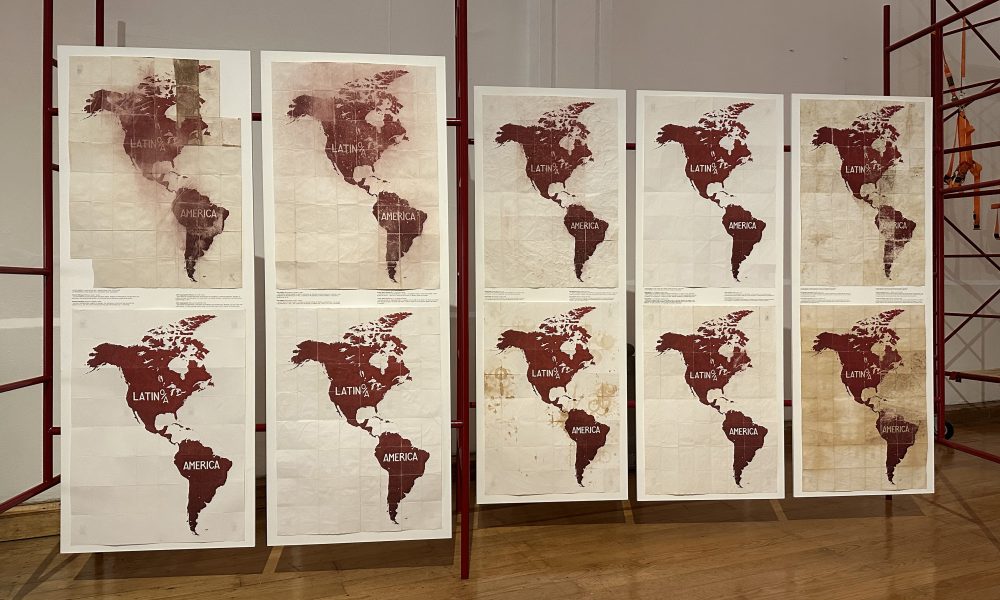
Across our differences, the residents of San Diego have built a coalition of rage to disassemble the cybernetic border and its violences. An expanding group has organized against ICE in recent months as federal agencies have invaded workplaces, occupied neighborhoods, and kidnapped neighbors and coworkers all over the city. When ICE invaded a beloved restaurant in military gear, customers, neighbors, and workers made national news confronting the federal officials. The San Diego & Imperial Counties Labor Council has called for the abolition of ICE and shutting down automated license plate readers as part of that fight. Getting ICE out of San Diego and ICE out of everywhere means that local police surveillance the agency taps for its work also needs to be out of San Diego. The San Diego Police Department has hundreds of surveillance technologies we now know about because of the surveillance oversight ordinance won by the San Diego TRUST (Transparent and Responsible Use of Surveillance Technology) SD Coalition in 2023. The coalition, the regional Labor Council, a number of unions, and wider community allies have been fighting ICE by fighting the city-owned Automated License Plate Readers operated by Flock, a tech company funded in part by Peter Thiel’s Founders Fund. Abolish the cybernetic border, brick by brick, circuit by circuit.
We start where we live, we start where we have power. And we work to abolish ICE, including by tearing out its data infrastructures and building solidarity against empire wherever we can. 
This article was commissioned by Geraldo Cadava, A. Naomi Paik, and Catherine S. Ramírez.
- https://www.wired.com/story/ice-1509-custom-summons/. ↩
- Andrew Iliadis and Amelia Acker, “The Seer and the Seen: Surveying Palantir’s Surveillance Platform.” ↩
- Harsha Walia, Border and Rule: Global Migration, Capitalism, and the Rise of Racist Nationalism (Haymarket Books, 2021). ↩
- Carole Boyce Davies, Left of Karl Marx: The Political Life of Black Communist Claudia Jones (Duke University Press, 2007), 136-38. ↩
- Walia, Border and Rule. ↩
- Ana Muñiz, Ana. Borderland Circuitry: Immigration Surveillance in the United States and Beyond (University of California Press, 2022). ↩
- Charles Goodwin, “Professional Vision,” American Anthropologist vol. 96, no. 3 (1994), 606–33. ↩
- Ben Brucato, “Policing Race and Racing Police: The Origin of US Police in Slave Patrols,” Social Justice 47, no. 3/4 (161/162) (2020), 115–36. ↩