
Advertisement

I.
There is a formula in sitcoms. As explicit as in French court poetry or Shakespearean romances, the sitcom expects the restoration of order. In a sitcom, the desire shifts and changes the bodies of paired couples, before returning to a normative state by the final act. A formula.
I always got a little sad when I saw A Midsummer Night’s Dream. The formula overrides all, yet Bottom seemed happy with his donkey’s head and with the possibilities of other desires peeking over the edges. I felt the same way with Twelfth Night: boys playing girls playing boys falling in love with one another, in a righteous explosion of sexuality; and then, by the end, everything pin neat.
Similarly, Ross could flirt with Rachel over a decade of excruciating seasons, eventually returning to her. Yet Ross could never really consider fucking Joey; Monica could never fall in love with Phoebe. This continues throughout the last decade as well on New Girl: Schmidt fucks both Jess and CeCe, almost marries CeCe, Nick fucks Jess, and, over several seasons, falls in love with, breaks up, and returns to her. And yet, we never get Nick and Schmidt, being the most obvious alternative, the clearest chemistry. A similar dynamic exists in Ted Lasso, where the emotional core of the series is not Ted and the woman he is paired with, Rebecca, the owner of the club, but his co-coach, Beard.
II.
These are just conventional pairing up, and an argument for an exclusion of a bisexual potential. Still, I wonder if even these readings reinforce a kind of monosexuality. After all, why can’t Ted and Rebecca and Beard all fall in love with one other? Why can that not be its own kind of resolution?
There is real potential for the disruption of queerness on television, like the post-queer melodramas of The L Word or Queer as Folk, or whatever is happening with Euphoria. Within the sitcom, there is very rarely the anarchic sexual desires; instead, any potential for sexuality relates to a deeply heteronormative mode (see Cam and Mitchell on Modern Family). There are paratexts here—all of the fan fiction, the internet archives of other potentials—which refuse to carve everything into clean pairings, and whose potential moves into more complex manners.
Ryan Murphy, with his encyclopedic history of television, and his perverse desire to fuck things up, would appear to be a director that allows this chaos to permeate: to stain or rot the heteroromantic obsessions of genre.
III.
Maybe it’s a function of comedy: the chaos and release of the joke, to break order and then to restore it.
IV.
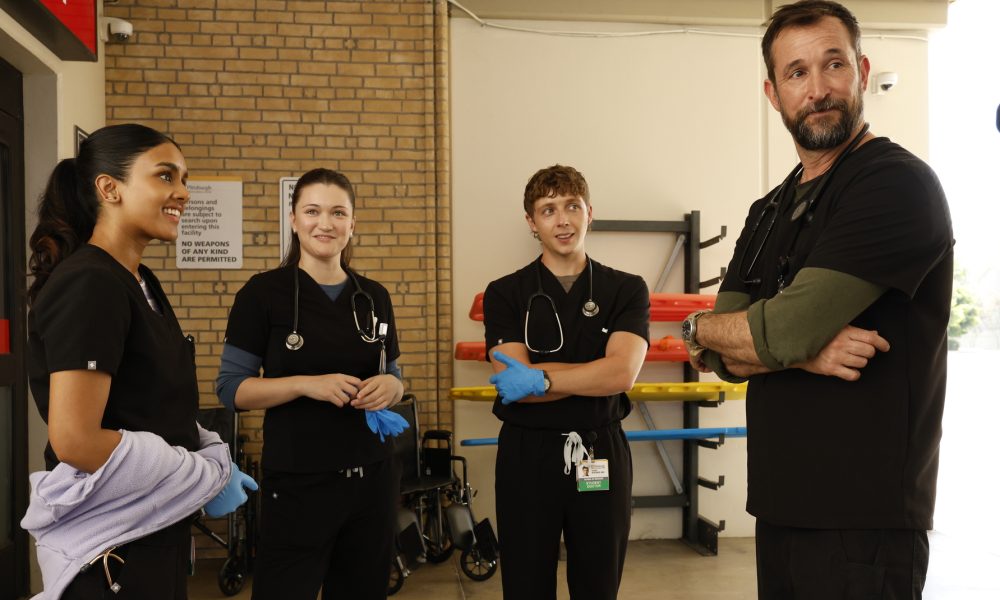
Ryan Murphy, with his encyclopedic history of television, and his perverse desire to fuck things up, would appear to be a director that allows this chaos to permeate: to stain or rot the heteroromantic obsessions of genre. There is a moment in Murphy’s most recent production, Doctor Odyssey—a network remake of The Love Boat, now canceled—which allowed for the potential for the threesome as a permanent fixture.
Yet the potential was cruelly taken away from eager readers.
V.
One of the lovers on Doctor Odyssey was played by Joshua Jackson, and I wonder if his career allowed potential sexual dissidence. Jackson, since the beginning of his career, has been a conduit to how an audience views the domestic, and often the sexualized domestic. Across shows like Dawson’s Creek, The Affair, and Little Fires Everywhere, he has remained slippery, inelegant, bawdy, and bodily: sometimes playing the taboo-breaking lover, and sometimes playing the husband.
How Jackson plays sex corrects this normative desire for closure. And because of this, the final turn of Doctor Odyssey is not only problematic, it’s just dull. Jackson’s career becomes a case study in television that seems to be radical but shuts down any queer excesses.
VI.
Dawson’s Creek is a show that remains lodged in the minds of so many millennial teens, and the origin of Jackson as an impish figure of ambivalent desire. While the titular Dawson had an endless desire to yearn, his yearning was uncomfortably close to whining. Meanwhile, Pacey, Dawson’s best friend, had the energy to roam.
It was never made explicit, but there was a distinct possibility that Pacey’s sexuality would spill over to the main cast. After all, this was a figure who, in the first season, fucked his English teacher, and who in the subsequent seasons was thought to be fucking Jen, the female lead, before settling into a relationship with Joey. All of this roaming was never at the same time, never a threesome, and never with Dawson, though hinting at other chaotic possibilities that the show never committed to.
VII.
Later, the show introduces Jack, an angelic gay teen, to prevent the chaotic potential of Pacey from leaking over the rest of the show. Jack brought the idea of homosexuality, the potential of it, but without that potential being embodied. The final scene takes place at a wedding, with Joey bolting to go meet Pacey, before the two of them spend the summer sailing.
VIII.
The cultural critic Karen Tongson, in the Los Angeles Review of Books, described The Affair as having a “tawdry, hetero-disasterkink run”—and Jackson’s work in it—wreaking revenge for decades of compulsory heterosexuality. There is a connection to Pacey here; a geographic quality of the Hamptons versus the fictional Capeside; and a question of class, a working-class interloper, disrupting the genteel softness of a monied elite.
Maybe The Affair could be seen as an adult version of Dawson’s Creek. Jackson plays Cole, a fisherman, who is married to Alison, played by Ruth Wilson. There is some tragic backstory, including the death of their child. When Cole realizes that Alison is fucking around, he returns the favor. And yet, the show explores the consequences of those affairs while melodramatically refusing the comic potential of cuckoldry, or even the pathos found in the dissolution of a marriage.
IX.
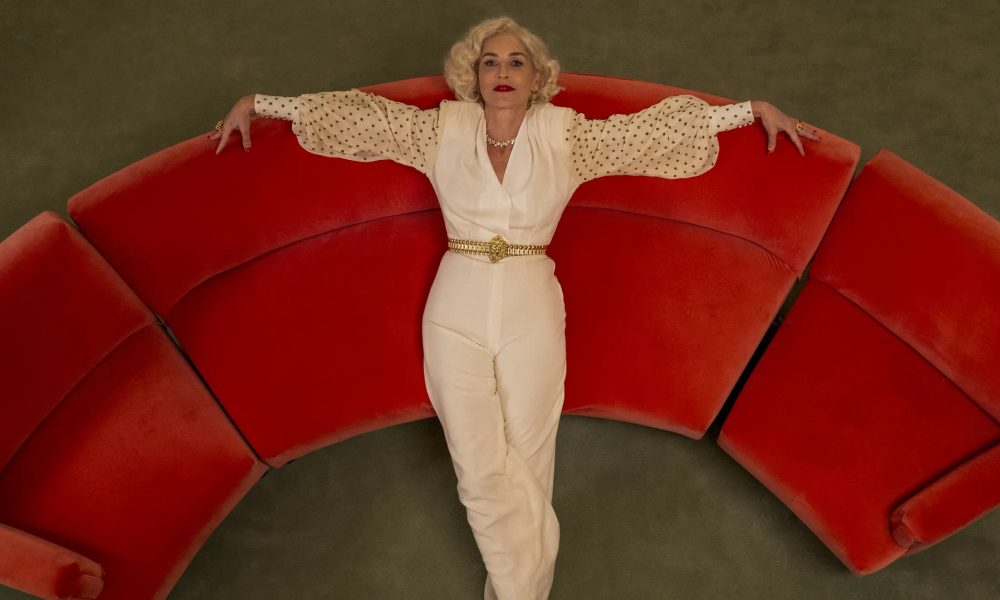
There is a scene in the second season of The Affair, where Cole has an afternoon assignation with a lover. Everything about the scene imposes Cole as an interloper, and Jackson is at his lupine best. The blond is wearing a towel, fresh from the shower, and then is not; she leans against a fireplace, crowded with jewelry boxes, white china flower vases, and above, a giant TV. She tells Cole, quick and quiet—and for the rest of the act, there is nothing quiet about it. He strips from his stained black T-shirt and filthy jeans. His hair is greasy, and his body is smeared with dark marks. She keeps calling Cole a ranch hand, her “Montauk” ranch hand, he flips her and plows her, telling her to shut up.
X.
The possibility here is one of class, of a working-class man in the bedroom of a rich woman; how the sex is filthy; about how to negotiate quietness; about who gets to speak and who is forced to remain silent.
This is the least queer show Jackson has made. Still, thinking about how his filth enters into the bedroom of a bored housewife—with Jackson as an unsettled, and unstable figure—is key to understanding the rest of the show.
XI.
Cole cannot keep married; and marriage, here, is not a solution. One of the ways that The Affair seems like a shadow of Dawson’s Creek is that if the first ends at love, a successful relationship after years of will they or won’t they, then the other shows what happens after they say I do. There are literal bodies buried, charisma redeems nothing, and the fire of a sexual encounter destabilizes the whole enterprise.
Marriage is the disaster that Jackson does not recover from. So this critique of marriage and its discontents becomes a soapy exercise where no one is happy.
XII.
There is a conservative element to all of this; the marriage does not satisfy, and the desire to have the dissolution is key to the enterprise. The kink, like a good bisexual hunger, like Violet Beauregarde, is wanting both/and, wanting it all. The critique of the figures in The Affair is a critique of this hunger: the show punishes its major players because they are dissatisfied with the afterlife of heteronormative marriage. Still, it is a masochism with no small amount of heat.
XIII.
So much heat that it might burn the house down, as seen in Little Fires Everywhere (based on the Celeste Ng novel). This prestige melodrama begins not with The Affair’s dead body but an expensive house burned to ashes. The show is supposed to be a mystery, figuring out who set the fire. But the fire is a metaphor, one which centers on who is allowed into a social circle and who is forbidden. The gatekeeping is racial and class based; Jackson here is not the working class interloper like he is as Pacey or Cole. The show begins with his wife, Elena, black with soot, standing amid the ruins of her Shaker Heights home—the rest of the show tracing who set that fire.
XIV.
The rest of Little Fires Everywhere is its own kind of interrupting/disrupting collapsing structure. The irony is that it differs from most of Jackson’s work. This depends on his role as a kind of chaos agent who dismantles social normality in favor of pleasure; at the end of Dawson’s Creek, he sails away, the marriage is not even implied. Here, though quiet and sure, he provides a kind of ordinary plainness.
In one infamous scene, he is in a white T-shirt and briefs wandering around the bedroom and ensuite, half watching his wife anxiously prepare for bed. She asks repeatedly if she is racist for suspecting Mia, a Black artist, who is new to the community. He doesn’t really say much, doesn’t reassure her but also does not call her out.
There is a charisma here, but it is one that works against Elena’s anxiety: one which tends fires but does not flame or extinguish them.
XV.
It is impossible to imagine Jackson working in anything but a domestic context—but his work is to disrupt it. For every direct and explicit disruption, there is the reminder of the centrality of the domestic: that marriage is such a necessary establishment, that any violation of it can lead to a murder, but the body on the beach is an erotic consequence of the sexual violations, a trope so conservative that it could be centuries old.
This all makes me wonder if what we assume to be radical can be reactionary. Perhaps the dirty boy in the clean chamber fucking the blond does not violate the chamber but cleans his own practice—he in fact obeys. Or, even more reactionary than that, it could be argued that his failure to control the disorder in the house that is aflame makes him responsible.
XVI.
Watching Doctor Odyssey, we are reminded that Jackson is brilliant because finally his rutting, satyr swagger is fully permitted. He plays the doctor on a cruise ship in a show that recasts itself as a winking and nodding reworking of The Love Boat. Camp is determined by audience reaction; watching The Love Boat even now is a camp experience—the absurdity of the guest stars being an ongoing joke; the excess of the memetic force unable to be weirder than those who actually showed up. A remake of a show cannot be any weirder or even perhaps queerer than the original.
XVII.
Doctor Odyssey has a two-part structure: it has a guest theme of the week—a gay week, a swinging week, a romance week; and then it has an overarching narrative structure. The structure depends on Jackson’s charisma as a figure of authority, even into his 40s, one of the few places where he does not play a perpetual adolescent. The question of the show is how to handle his sexual charisma as an adult: one of the first scenes in the first episode is one where he talks a character played by Chord Overstreet about how to be respectable and still fuck.
The whole show is meta like that: Jackson as the ship’s doctor; Phillipa Soo as a respectable nurse, dutiful like Eliza; Don Johnson as the captain, roguish but aged past his worst excesses. These ghostings of historical memories are a trick of Ryan Murphy.
XVIII.
Tristan and Avery; Avery and the Doctor, the fulcrum of a traditional threesome; Tristan and the Doctor—a potential for another way forward, but not unconventional. There is some flirtation onboard, when a half-dressed strip-poker game, marked by some half-committed nudity, has a character describe their castmates at the table as “Boys, Butches, and Bis.”
This was said after a scene where the triangle—Tristan, Avery, Doctor—meet in a dark cabin and fuck. Jackson might be a boy, he might just be a little butch, but finally, he is bisexual.
XIX.
The potential of that moment, this ever so slight moment of radical potential, of course, collapses. Avery thinks she might be pregnant, and the episodes immediately after the threesome do not allow for the potential of pleasure, or even bisexuality. Who the father is is one of the least interesting questions; and, considering the current state of Roe v. Wade, abortion is never considered seriously. Rather, asking who the father is is asking who will take care of the child: with the understanding that that care will take place within the framework of a commercialized, het family.
Avery does not want either of the men to take care of her, she does not want them to say that they love her, there is no real talk of an abortion; there is no real talk about the potential for all three to love her; the splitting must take place in favor of the heterosexual pairing.
To be sentimental is to want the love story, but the show ends in a careening pile of bad sex and worse domesticity; though one hopes that eventually, the triangle might be allowed to pivot in other directions.
XX.
And it does, eventually. Avery miscarries, and the absence of a baby resets the potential of that romance. The show gets weird in the second half; there is a hallucinatory scene where the doctor visits his twin brother in California. The subtext of this scene is an argument against decadence, against the peripheral life of the sea, in favor of his twin’s choice to fall in love, in favor of the consequences of this love—children, property. The scene is shot in a luscious, creamy way—the camera work slow, and methodical, the arguments for family made visual, lovely, formal.
XXI.
The season ends with Avery and the doctor on the cusp of marriage. But because the show had middling viewership numbers and it was expensive to produce, the crisis of capital erases any of the crises that can occur within the show. To be sentimental is to want the love story, but the show ends in a careening pile of bad sex and worse domesticity; though one hopes that eventually, the triangle might be allowed to pivot in other directions.
XXII.
A critic friend of mine talked about not liking Cabaret, because it implied that bisexual throuples led to the rise of the Third Reich. It’s a joke take, but one with a seed of seriousness.
In the same way, watching Doctor Odyssey—and cheering for the sexual decadence, and then having what is the natural order of things chaotically torn apart, and only be restored by marriage—seems profoundly reactionary.
XXIII.
There is this expectation, right now, in this reactionary moment, that the world is more decadent than it is, the sex is wilder, and what is allowed on television runs rampant. Watching Jackson, the expectation is that the potential of the threesome, the throuple, the cuck, or the adulterous subject is always present. But, actually, those destabilizing figures unsettle and then move on.
For their disruption to have any power is to argue that they are the exception and not the rule. However much desire there is for the threesome to maintain its stability, the cultural force of homogenous marriage is strong.
It makes me wonder if there isn’t a position for the possibility of a television Lubitsch yet—who refuses virtue and finds value in that refusal.
XXIV.
Think about Jackson, in The Affair, with the filthy shirt and the dirty boots; and think about the residue of those boots on the good white linens, and think that the stain is there even if the marriage is repaired. However ambivalent and impermanent the moral majority wants to depict some kinds of sex, that residue persists against any attempt to clean up the dirt. Metaphorical dirt, real dirt. 
This article was commissioned by Sarah Kessler.