Being reviewed:
Advertisement
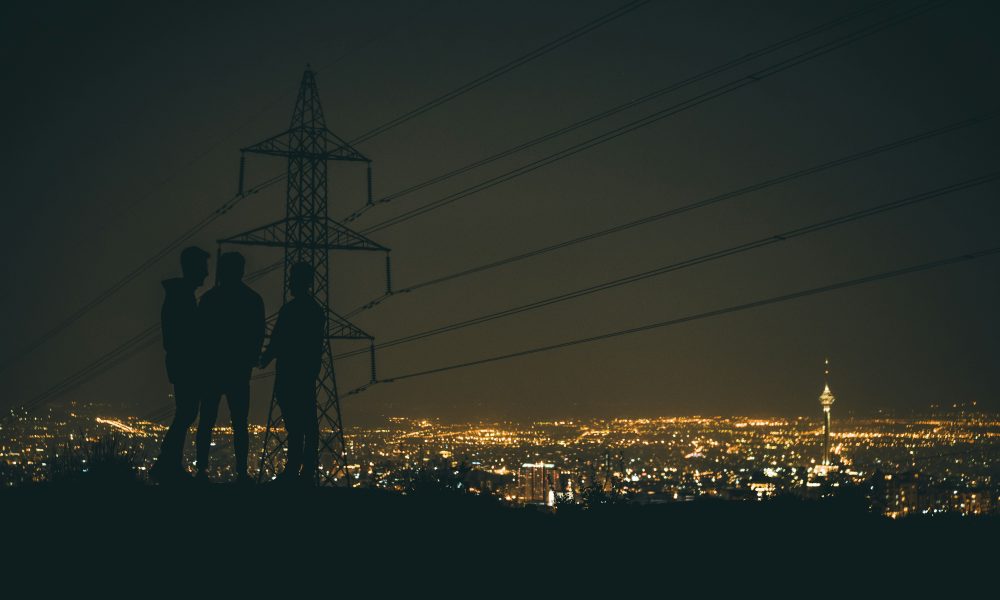
In Tehran, the winter of 2026 did not arrive with the cold; it arrived with two nights of bullets and blood. It was a darkness so absolute that it didn’t merely swallow the streets—it severed the very nervous system of our connection to the world. We had long learned to read the sudden death of our screens as an omen, but this time, the silence carried a heavier, more stifling texture. As the entire country was plunged into a digital blackout, the only light remaining in my room was the cold, clinical glow of my disconnected laptop.
There, in that forced isolation, I sat translating a story about death. Meanwhile, the real thing operated just outside my window.
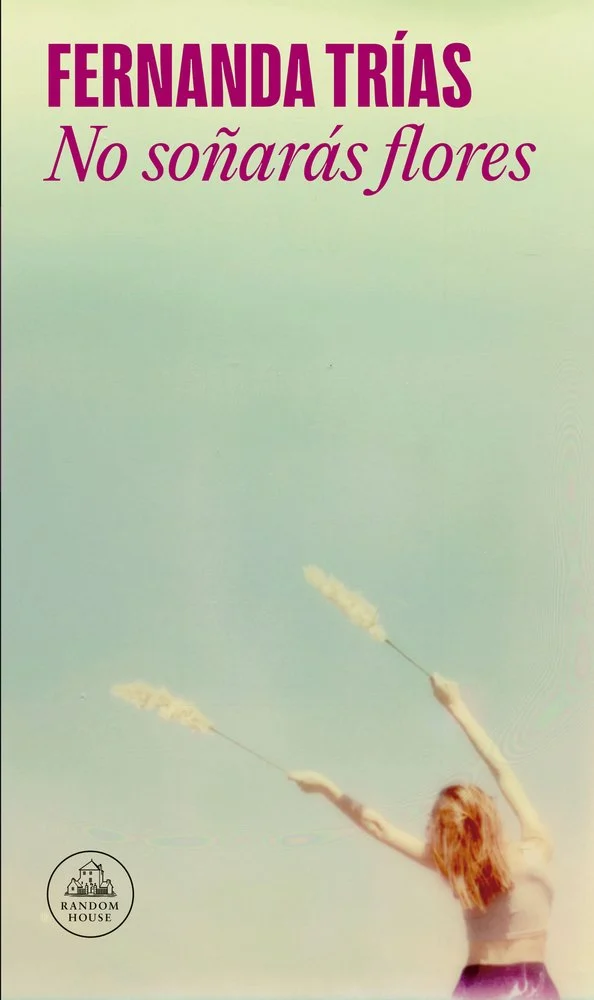
I was hunched over the Spanish manuscript of Fernanda Trías’s collection, No soñarás flores (You Will Not Dream of Flowers). It was a cruel irony: While I struggled to find Persian words for Trías’s tales of quiet loss, the air outside was thick with the scent of gunpowder and the final breaths of a generation. Every time I hit a linguistic wall or a cultural nuance that required a quick online search, I would instinctively glance at the laptop’s connection icon, only to be reminded of the void.
The lack of internet turned the act of translation into heavy, manual labor: a slow, agonizing crawl through sentences that felt less like fiction, and more like prophecies.
Within the vacuum of those days, two books began to bleed into one another. While translating the quiet losses of No soñarás flores, I found myself haunted by a specific ghost from another of Trías’s works—her novel, El monte de las furias (The Hill of Wrath)—which I had spent the previous spring and summer translating. Set on a mist-shrouded mountain, the novel centers on a woman and a mysterious Caretaker who both guard the isolated landscape. When her land inexplicably becomes a dumping ground for the dead, she reports the very first body to him, only to confront his chilling indifference. It was as if the novel’s Caretaker—dragging the same wheelbarrow, holding the same anonymous bodies—had traveled from the fictional mountain to the streets of Tehran today. Grappling with the cold mechanics of death, Trías’s protagonist asks the Caretaker a question that still echoes in my mind:
“When someone dies, whose body is it? … And what if that person has no family?” I said to the Caretaker. “Whose body is it, then?”
He shook his head. He just kept fiddling with the antenna to tune into a channel.
“Then it’s trash,” he said.
Now, every time one appears, I clean its face with the rag I tied to the handle of the wheelbarrow. I don’t like mixing the rag for the bodies with the rags for the house. It would be like saying that bodies are things. I don’t like bodies being confused with trash.
Beyond the glass where I sat, translating, a similar engine of erasure was at work in the dark. The architects of this erasure had become Trías’s Caretaker. Bodies were disappearing, swallowed by a systematic silence that sought to render them anonymous, to reduce them to mere statistics or debris, to turn them into “trash.”
Alone in the airless dark of Tehran, I realized that my keyboard had indeed become that mountain. Every Persian word I meticulously chose for Trías’s pages felt like a late, sacred ritual—my own clean rag. By finding the exact vocabulary for grief, I was trying to “wash” the faces of those falling in the streets just blocks away, reclaiming them from the system’s indifference.
People weren’t merely buying a novel; they were scavenging for a vocabulary that could map their own suffocation. In a society where the official tongue is engineered to mask the truth, Trías’s prose became our silent vernacular.
Months before the blackout, in the sweltering heat of summer, I had formally interviewed Fernanda. Her novels had found such profound echoes among Iranian readers that even a leading state-owned daily in Tehran dedicated a full page to our conversation—an ironic bid, perhaps, to burnish its own prestige by association. It was a jarring contradiction: a government-sanctioned outlet providing a platform for a voice that maps the interior of state-induced silence, and for an author who carries the raw, historical memory of a dictatorship in her own bones.
I asked her about the relentless, visceral presence of death in El monte de las furias. In that moment, her answer felt like a profound reflection on the historical traumas of Latin America. She spoke of death not just as a natural mystery, but of its terrible, man-made manifestations in our continents: the massacres, the disappearances, the harsh legacy that demands collective memory.
“Still,” she told me, “in that novel, I hope I managed to take away some of the darkness from those moments through the presence of care—and how it is still possible to care for one another, even in the face of death.”
At the time, I understood her words intellectually. But when the internet finally flickered back in late January after three endless weeks—a blackout echoing the suffocating darkness of 2019 and the sprawling tragedies of 2022—that concept of “care” took on a terrifyingly immediate meaning. I opened Instagram, and my screen was suddenly transformed into a cemetery of faces: the thousands who had never returned from the blackout. I stared at the photograph of Ali-Mohammad, barely two years old; he was perched on his father’s shoulders, smiling at a future he would never reach. I scrolled past the bright, defiant eyes of teenagers like Nastaran and Amir-Abbas; looking at them, the sheer abruptness of their erasure became paralyzing. The horror of this blackout was not just that it killed, but how it violently severed the ordinary. Hours before they were turned into symbols of grief, they had been doing the most achingly mundane things: lacing a shoe, listening to a voice note, promising a parent they would be careful. They stepped out of their doors as citizens, unknowingly crossing the threshold between life and debris.

Throughout the blackout, I had labored over a story in Trías’s collection about a group of people gathering to keep the memory of their lost loved ones alive through a haunting, strange ritual. It was a desperate, unorthodox effort to tether the departed to the world of the living.
Days later, I saw this very fiction spilling into our cemeteries. I watched videos of women and men who, instead of weeping in traditional mourning, stood over the graves of their fallen siblings and children, and danced. It was a dance of profound, bleeding defiance. When the apparatus dictates how you must live, how you must die, and how you must mourn, dancing over a grave becomes the ultimate refusal of oblivion.
“Care” was the word that illuminated my dark room. In a landscape where the system treats human life as disposable, the act of remembering, naming, and translating becomes our most radical form of care. I was attempting to do with my dictionary what the dancing mourners were doing with their bodies. I was translating one book, but I was living the other.
This profound connection did not happen overnight. The roots of this literary haunting stretch back to when Trías’s La azotea (The Rooftop) and Mugre rosa (Pink Slime) first reached Iranian readers. Her prose carried a quiet, corrosive power; it articulated our taboos through their very absence, speaking in the margins of what was forbidden. Although her debut arrived with the fragility of official permission, I lived under the constant shadow of it being banned and pulped—another routine martyrdom for literature in this geography. Yet, the public’s tremor was a revelation. In a market choked by the saccharine promises of motivational bestsellers—those fleeting, chemical painkillers—readers instead sought sanctuary in her chronicles of claustrophobia and the agonizing weight of freedom. I understood my own reasons for translating her, but seeing that resonance span generations, from teenage students to those in their seventies, felt less like a literary trend and more like a collective awakening. In graduate seminars, we dissect “reception theory” as an abstract framework. But on the pavements of Enghelab Street, Tehran’s historic artery of bookstores, the reception was something far more visceral: a desperate, collective clutching at language. People weren’t merely buying a novel; they were scavenging for a vocabulary that could map their own suffocation. In a society where the official tongue is engineered to mask the truth, Trías’s prose became our silent vernacular. We were all survivors of a collapse no one was permitted to name, finding the contours of our own ruin in her fiction.
When I finally opened my inbox, there was an email from Fernanda in Bogotá. Her worry was palpable—a frantic solidarity from a geography that also knows the taste of silence. It was then that the true weight of our collaboration hit me. In a land where intellectual property is often as unprotected as the bodies in the streets, Fernanda and I built a bridge of shadows. It was a fragile, beautiful defiance; a choice to be governed by the laws of mutual respect, when those in power abandon their citizens.
They would not dream of flowers. Her title, rewritten by our reality, is now the epitaph for those nights of blood. Under the grey, heavy horizon of Tehran, the Mountain Woman from the novel is no longer a fiction. She is the sister dancing through her tears. She is every translator trying to wash the dust of silence from the legacy of the fallen with the ink of a foreign tongue.
We cannot raise the dead. But we will never let them be confused with trash.