Being reviewed:
Advertisement
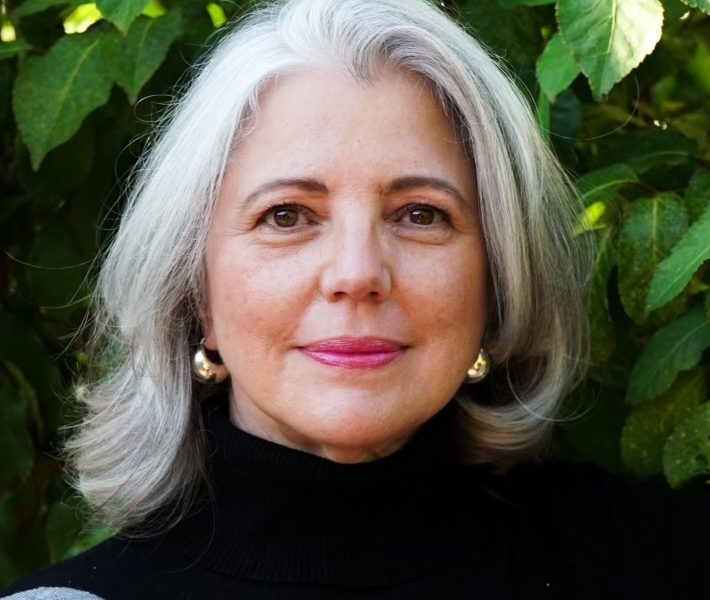
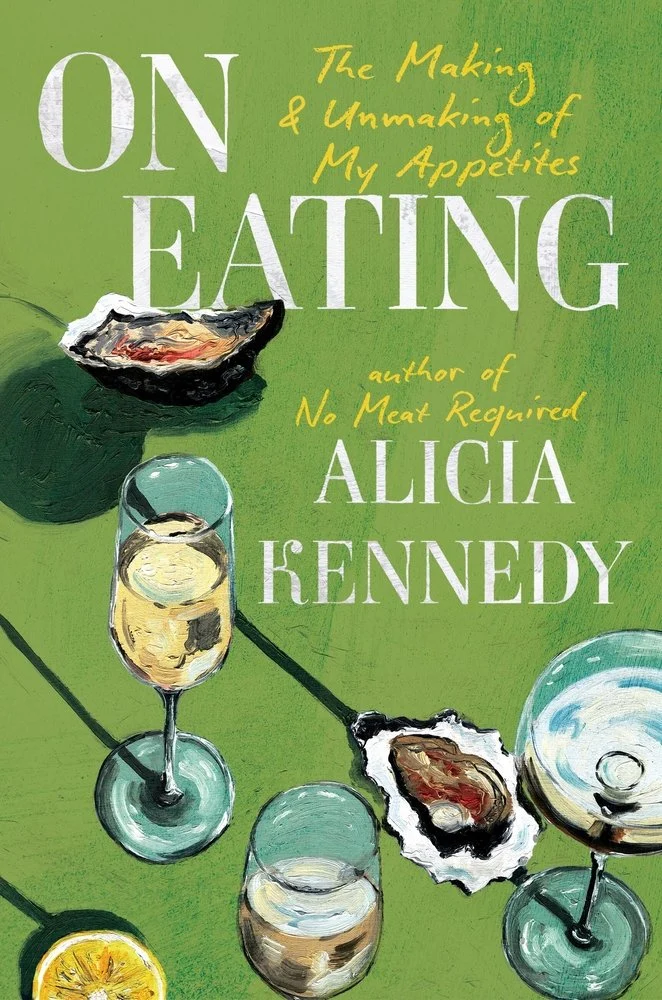
Alicia Kennedy has become a widely read food writer in part because of the realism in her work. She takes the everyday needs of a kitchen and the common concerns of diet and choice as her basis. What to eat, how to eat, what considerations to take into account, where those choices come from. From those common topics, she crafts writing that shares how the politics and culture of modern life are the politics and culture of the food system. Her popular newsletter, From the Desk of Alicia Kennedy, gained a following as part of the evolution in digital newsletters this past decade and because of her unique voice folding together those cultural, political, and culinary contexts. Her first book, No Meat Required, brought a cultural history to bear on the question of the carnivore’s diet and the vegetarian’s possibility. Her new book, On Eating, is a memoir about those things and more. Kennedy, who splits her time between New York and Puerto Rico, is both outside and inside the academy and is read across both. We caught up over Zoom for a conversation that considered how the public face of food writing stemmed from deep reading and academic considerations.
Ben Cohen (BC): The majority of Public Thinker interviews feature academics who think of their work as living beyond the academy. But some are the reverse, writers and journalists and public thinkers who contribute to the academy. So, thank you for talking with me in that vein, as a journalist and a food writer, as someone who has worked in publishing, as a teacher.
Alicia Kennedy (AK): Thank you, too. We’re actually talking as I’m teaching an online course called The Food Essay.
BC: Food shows are notorious for that performative pause where someone says, Oh, that’s really good. Is there a version of that in the food essay?
AK: Yes, but we’re not reading those ones. [laughs] Anya Von Bremzen is a food writer that I love, and she does a lot of travel writing. Her book, Mastering the Art of Soviet Cooking, is a memoir—she grew up in the Soviet Union—and she talks about how she retrained herself as a writer to remove that yum, yum. So I use that concept constantly: How do we get beyond “yum” when we’re talking about food?
BC: Where are you teaching?
AK: Boston University, in their gastronomy program. It’s interesting, it has a “food studies” focus too, not just gastronomy, though it still has a lot of hands-on food teaching in terms of cooking and wine. It’s people with a wide variety of experiences: some are working pastry chefs and working line cooks, some are writers and social media managers. So I have to approach the subject matter backwards, I have to make sure everyone has the same grounding on certain things—like an early week when everyone reads Virginia Woolf’s “On the Modern Essay”—and only then do we talk about food.
BC: You’re in Puerto Rico right now, though from Long Island, and you said you go back and forth a lot, and that gets me thinking about colonialism right off. Are you decolonizing food writing in your course?
AK: I love that idea, and the students come to it quite naturally. Because they choose what they’re drawn to, obviously, and finding out what they’re drawn to is a big part of finding out what kind of essayist they are going to be. They’re reading Anthony Bourdain, but they’re also reading Soleil Ho—and let’s call that assimilation food—and they’re reading Soraya Roberts on how the personal essay isn’t dead, it’s just not white anymore. So yes, I want students who are drawn to decolonizing food media to know that they have space to go there.
How do we get beyond “yum” when we’re talking about food?
BC: That’s encouraging.
AK: But also, I don’t really talk about it explicitly. Instead I talk about coming at essays from different angles, and, because I am a working writer, I talk about the ways financial considerations can shape writing in certain ways, how where the piece appears influences how it was written.
BC: Is that the larger idea of the class? How to craft an essay they can place somewhere?
AK: Basically, yes, the idea of this class is to have them come out with publishable pieces of writing. And because I’m more of an editor than an academic, I am approaching it like this: Okay, if you’re filing this essay to me as an editor, what would you say about it? How would you go about it? So it’s an exercise in thinking, but it’s also a little bit of an experience of being a working writer.
BC: I also hear in your answer a sense of decolonizing publishing, of who has a voice, of how gatekeeping works.
AK: I think that’s true, yes.
BC: I shoehorned a Puerto Rico nod in a minute ago, but I want to talk more about food and Puerto Rico, as in, how do you think about food systems from that geography, within that history?
AK: It becomes such a microcosm of all the problems everywhere. It’s a small archipelago colonized for over 500 years, there’s that for starters. A lot of the problems that other places can ignore, here they can’t be ignored. Everybody here understands the problems. Being on the front lines of climate-related disaster is one of those things. Being dependent on imports is another. There’s a statistic that 80 to 85 percent of the food in supermarkets here is imported. That stat has been problematized, because some people grow their own food, they aren’t putting it into the market. It’s a market-oriented statistic that misses those growers. But at the same time, it does touch on a truth: the food supply is too dependent on imports, and that’s common on small islands everywhere.
BC: As in, people and political structures made it so.
AK: Right, it’s an effect of colonial systems, and of pushing people out of agricultural and toward manufacturing work. Then think of specific experiences like after Hurricane Maria in 2017. There was no electricity for months, sometimes years in places. Mudslides and broken infrastructure made it hard to get to many places. Those experiences make people a lot more aware of how fickle food access is in an import-dominated system. Whereas for other people food is a thing in the grocery store, here you can’t ignore that food is tethered and connected to so many other things.
BC: How’s your personal living situation, food-wise, when you’re there?
AK: I have a unique food access experience because [my husband and I] live in Old San Juan, where there is a terrible supermarket because it’s mostly for tourists. It isn’t focused on people cooking for themselves, more like for people who need crap for their Airbnb. Yet on the weekends we have a great local farmers’ market, and we know our farmers well. We order certain things in advance. We see patterns of availability and how weather changes that availability and how during the summer, when it’s wetter and hotter, we won’t have greens that often. When there is a lot of rain, we don’t have arugula, for example. It gives us a chance to have a more intimate relationship to how farmers grow things, because we’re eating that produce every week. That access isn’t equally available to everybody. If it was, if people had certain benefits to buy those foods, that would be better for the farmers too, as they’d be making more money. But the food is expensive for a variety of reasons, many made worse because of the colonial structures that now lead to tourist dependency.
BC: A dependency on imports of people and food and dollars.
AK: Like, when the price of eggs skyrockets, as it has these past few years, they still might be local eggs but the inputs for that have gone up. Because the farmers rely on inputs that also have to be imported from outside, prices are out of control. There are even legal structures making things worse, like we have a law called the Jones Act, which influences the routes goods can take to get into Puerto Rico. That increases costs. And the time it takes for things to get here makes them more expensive. That usually shocks tourists because they think they’re going to live it up in the Caribbean but you just can’t.
BC: Where did all of this start for you, to be an editor and author and teacher?
AK: I was a copy editor at New York Magazine, that was for my first media job in 2009. I was a year and a half out of college when I started, and I worked there for a long time. I was also writing book reviews. I wanted to be a literary critic; and my idea about my life was I’ll be a copy editor at a magazine for my day job, I’ll write literary criticism at night, and I then maybe write some weird novellas and stuff. But I got bored working at home all the time. I felt an urge to do something with my hands, which led me to cook and bake a lot while I was working: I’d have my laptop on my kitchen counter and I’d be baking, and then I’d go back and I’d copy edit, and then I’d go bake again. I started to think, I don’t feel good about how many eggs and how much butter I used with this recipe. So I got interested in veganism, I got interested in vegan baking. And then I accidentally started a vegan bakery on Long Island.
BC: You accidentally started a vegan bakery?
AK: [laughs] Okay, so I was copy editing at New York Magazine and then started what we now call a micro bakery, where I was selling things at farmers’ markets and little grocery stores and making birthday cakes. I say accidentally because it was just something I started doing, not from a master plan or anything but just because of my work patterns and interests.
BC: Were you always vegan?
AK: No, no, I was an omnivore for my whole life up until 25. I always wanted to be a vegetarian and I thought veganism was cool too, but I’d never been in the right mode to actually do it. I was working from home in my own apartment, with my then boyfriend, who traveled for work a lot. When I was alone, I would have vegan weeks by myself, and I found myself thinking, Oh, I like how I feel. That micro bakery on top of a copy-editing day job was a lot of work. I’d be up at 5:00 a.m. every single day, making cupcakes, delivering cupcakes, and then sitting down and working for eight or ten hours as a copy editor. It was a lot. After a year—and this is literally in my new memoir—I ended up closing down the bakery and decided to try food writing instead.
BC: Which I guess is how I ended up finding your newsletter and reading No Meat Required.
AK: I guess so, right? My way of writing about food came through the experience of going vegan, accidentally running a small vegan food business, and then, incidentally, trying to run an ethically sourced vegan food business.
BC: Was there a notable thing you learned along the way?
AK: It’s a good question, if big. I can say, I learned quite a lot about the food system that I didn’t really understand before. The systemic nature of it, how interrelated and complex the pieces are. Because of that, my first food writing was about vegan people, vegan businesses, and vegan food, all together.
BC: Not one or the other, but their combination.
AK: Yes, and on the publishing front, because I had worked at New York and had done freelance writing, I could somewhat easily start pitching places and get assignments.
BC: What were some of the first ones?
AK: Like, Vice, the Village Voice, those kinds.
BC: Did you already know how to write pitches because you worked on the inside?
AK: No, I learned to write pitches because I read a book after college called The Anti 9 to 5 Guide, because I wanted to be a freelancer. My first byline was in Paste magazine in 2010. So I had known how to do that, but because I was able to say I’m an editor at New York Magazine, other people took me seriously automatically. And then because I was a copy editor, I would file very clean copy. The vegan stuff has always been the like real “meat” of my writing. The first food piece I published was a profile of Lagusta Yearwood, who is a vegan chocolatier in New York …
BC: New Paltz! I have some of that chocolate on my desk right now.
AK: Ah, nice! Actually, it’s been almost ten years exactly since I published my first personal essay in Vice about the bakery. I just kept working and from 2015 to 2020, I was freelancing at Food & Wine, Edible Brooklyn, Edible Manhattan. I signed with my literary agent in 2017 and then eventually sold what became No Meat Required in 2020, which is also the year I started my newsletter.
BC: You were a bit ahead of the curve for the now-common newsletter genre.
AK: Yeah, my newsletter is what opened up my world and my work. Not that I wasn’t able to do work that I liked and was proud of before, but I was not able to do as much of it as I can now in my own voice. Like, I was always happiest when I was writing essays and writing for literary websites, something like Hazlitt. Sometimes for Eater, which gave me space to go long and do some cool stuff. But it was harder to do that without being like a big name writer. The newsletter has been a way to let me to do that and write longer form, and be invited to teach and to talk. But it all started with baking.
The popular narrative around veganism and vegetarianism in the US is that it is a white thing, that it doesn’t have diversity of thought, of class … and that is just false.
BC: The setup to No Meat Required includes a commentary on the history of vegan or vegetarian writing that is a racial and gendered history. What is the racial structure of this writing? What is the gendered structure of this? And how did you get to that?
AK: I got obsessed with the history of vegan and vegetarian stuff when I went vegan and especially when I started to write about it. For me, the moment it gets really interesting, in the United States specifically, is 1971 with Frances Moore Lappé, because that’s when it becomes a more secular concern. Before that, a lot of it was religious. Now, the popular narrative around veganism and vegetarianism in the US is that it is a white thing, that it doesn’t have diversity of thought, of class, of et cetera, et cetera, and that is just false. I wanted to complicate the idea by going back to the Civil Rights movement, because it wasn’t just a white movement. So I went back, I was digging, digging, digging, because it was important for me to bring vegans of color and vegetarians of color into the conversation explicitly. That had always been glossed over, and for me, being in New York City, it was just so clear to me that that wasn’t the right way.
BC: Academics will talk about diversifying the syllabus. And your book and your newsletter are full of a diverse set of references and context points. It’s not just that your book helps diversify a syllabus but, inside, your book diversifies the conversation. Was it a conscious effort to interlace so many factors—race, gender, class, markets, environment—or is it just how you think about things?
AK: I’d say both. It goes back to how my career started. Copy editing for a general interest magazine meant I literally read about everything every single day. I majored in English, minored in philosophy at a time when theory was really important. I got used to thinking in an interdisciplinary way. Because I came to food writing as someone running a small food business—I did sourcing, I thought about pricing—I’ve always written about food in a way that acknowledges those things, that this is a concern, these are always multilayered concerns.
BC: From your viewpoint over the last decade-ish of writing, what’s become clearer in the ways people write about, say, food systems reform? Are there things that you find getting better or being expressed more clearly?
AK: It’s becoming clearer that everybody suddenly knows the phrase “supply chain” and has at least a vague sense of what that means. Everybody has started to think of eggs and bird flu and raw milk; and since people have to start thinking about these things, we need people who can explain them. Food writing can no longer just be “go to this restaurant” or “explain this dish or cocktail,” whatever. It has to go deeper, because the interdisciplinary nature of food is far less ignorable.
BC: If that’s a point about audience or readership, how are you thinking about the similarities or differences between food writing and more academic writing on similar topics?
AK: I’ve seen academics writing about food be snotty and snobby about food writing, present company excluded—
BC: Thank you, thank you.
AK: [laughs]—and about the ability of the public to understand complex issues in food. And that is a mistake. And I do think that there should be more conversation and more overlap in people working in food studies and people doing popular food writing; we have to talk to each other because we have a lot to learn from one another. Academics could certainly be better served by understanding that, yes, food writing for the public is different and it’s not going to meet every caveat that you could possibly think of, it’s not meant to pass double-blind heavily footnoted peer review. But it has a service to communicate to a broad audience. So how do we frame academic food studies for the public?
BC: As a better question than, How can we make food writing more academic?
AK: I think so.
BC: There’s a line early on in your book, “all stories about food are stories about appetite and nostalgia.” Can you say more about what that means?
AK: Yes, you have to appeal to either one of those things, in order to get to most people. Like you have to hit people either where they are in their hunger or in their desire to recreate something that they enjoyed or, well, about the past in their lives. But I do think that explains why food writing is different from academic stuff. Because I’m always trying to appeal to some emotional aspect of someone’s life. And when I’m only appealing to people’s intellect or ethical considerations, it won’t work as well as when I appeal to hunger or appetite or nostalgia.
BC: Actually, you’re the one I can ask this to, everyone picks on this trope: the standard format of the online recipe where you scroll for like 25 minutes to get to the actual recipe.
AK: I literally have a lecture about this.
BC: That seems like the flat version of the “nostalgia appetite” you mention, the family preamble, the “what the grandmother did” preamble.
AK: Appetite and nostalgia, yes, yes. A lot of food writing is just appeals to appetite and nostalgia. And that’s fine as a way to get people in. But if we can root those things in something more meaningful, or something more invigorating—in terms of deeper thought about how we eat and why—that’s useful.
BC: A lot of what we’ve been talking about is understanding the last generation, the last 25 years, and what’s changed through the local food movement, talking about decolonizing, thinking about justice. These focal points have hopefully evolved. Can we talk about visions of the next generation of food systems reform?
AK: Of course, yes.
BC: We’re short on time, but I think we can get to maybe one part of an answer to a much bigger question. What do you hope for, in the next decade or so, in the way that we write about food, the way that people understand or try to make changes in food?
AK: Okay, if it’s one thing, then I’ll say we need to focus on universal SNAP. As in, SNAP benefits should be a basic public service for everyone. Like health care should be. One of the things we got stuck with in mainstream food writing earlier this century was talking about local foods or seasonal foods or well-grown and cared-for food. But we were slow to pay attention to who gets such food. If you do universal SNAP—and Errol Shweizer, who writes the Checkout Grocery Update newsletter, is good on this—you’ll have a rich kid complaining about how it functions, and then that will change how things work for other people. Which is correct.
BC: How do you mean?
AK: I think that it just changes the narrative around how people talk about food, if everybody has a certain baseline level of access. And then obviously you have to talk about more farmers’ markets in more places and using SNAP at farmers’ markets. The next steps I see are building common interest and common investment in food access, and the idea of food as a human right versus food as something that we all have to make our separate choices about.
BC: Like we were talking about, it could be an academic discussion about food justice, distributive, procedural questions. But it can also be more direct, about basic dignity.
AK: More food-as-right discourse is necessary, because it’s a simple way of stating what food dignity is about without getting into the weeds. And it’s something that a lot of people could be on board with even if they’re uncomfortable with the idea of receiving a benefit, even if it’s something their taxes pay for. That would be a material change, to take away a big problem, which is people not having money or ability or time. Just universalize it, no means testing.
BC: These are structural issues. When I taught No Meat Required, you had a line that was helpful to orient the students around the bigger questions: “individual consumption isn’t causing the climate crisis; it’s the conditions of individual consumption that are causing it.” And you can see that in what you’ve said about Puerto Rico. The conditions that are in place mean it’s not a matter of the choice individuals make to buy one thing over another, but how they got that set of choices. What happened beforehand, what prior political economic choices created those possibilities.
AK: I ask readers, sure, there are conditions that are pretty locked in, but what conditions do you have control over? I think about consumption with food, of course, but I’ve started to think a lot more about consumption of everything else, of overconsumption. Whether its clothes or food or AI, we’re encouraged to engage with everything so mindlessly.
BC: As in, food just happens to be a focal point for a broader phenomenon.
AK: Yes. What I’m always trying to say is that you can be aware of the conditions, and you don’t always have to give in thoughtlessly to it. That’s the overarching point of my whole writing project: You can think about things. You don’t have to not think. 
This article was commissioned by B. R. Cohen.