Being reviewed:
Au bord de l'effacement: Sur les pas d'exilés arméniens dans l'entre-deux-guerres
Advertisement
Historian Anouche Kunth’s award-winning Au bord de l’effacement: Sur les pas d’exilés arméniens dans l’entre-deux-guerres (At the edge of erasure: On the trail of Armenian exiles in interwar France, La Découverte, 2023) engages an archive of Marseille, France–based administrative documents from the interwar period attesting to the arrival of stateless Armenian refugees from the Ottoman Empire following the Armenian genocide, during which roughly two-thirds of the population were killed. Simultaneously, this artfully written and methodologically innovative book tells the story of the historian’s contact with a rough archive and privileges the analysis of photographs, typed and scribbled texts and, of course, the ellipses of history.
Of gaps and holes, of the marginal and the meant-to-be-forgotten, Kunth lucidly renders the individuals and collectivity “at the edge of erasure,” those who narrowly escaped destruction in Turkey and arrived in France stateless—and stripped of everything else, for that matter: the senior citizen stripped of her five right fingers, the stream of orphans stripped of their parents, the victims of sexual violence who would die slow deaths from syphilis contracted during the deportations. And those who went completely mad—who could not bear to hear, see, or smell the world around them.
Kunth’s poetic prose and judiciously chosen references to art and theory (Paul Klee, Beata Umubyeyi Mairesse, Georges Didi-Huberman, Yannis Ritsos) render Au bord de l’effacement—a rigorous scholarly work grounded in meticulous research and deep historical expertise—a magnetic read. The book contributes to several fields, including the history of stateless peoples, that of administrative archives and specifically Ofpra (Office français de protection des réfugiés et apatrides/French Office for the Protection of Refugees and Stateless Persons), that of 1920s–1940s France, that of Armenians and, indeed, that of Turks, of whose history this gaping hole—the absent Armenians—remains an undeniable part.
That Au bord de l’effacement makes, of holes and gaps, openings, will inspire scholars and those personally concerned by such histories (and histories in the making), as will Kunth’s subtle narration on her experience handling this fragile material. Au bord de l’effacement was awarded the Prix Augustin-Thierry 2023 and was runner-up for the Prix Médicis Essai 2023. With support from the Albertine Translation fund, Lindsay Turner’s English translation of the text is underway and seeking a publisher. Anouche Kunth, a permanent researcher at the CNRS (Centre national de la recherche scientifique), is also the author of Exils arméniens: Du Caucase à Paris (1920-1945) (Belin, 2016). She co-edits the journal Sensibilités. Histoire, critique et sciences sociales (Anamosa) and previously worked in radio production at France Culture.
Laure Astourian (LA): What led you to write this book? Could you describe the rough archive in question, and how you engaged with it before and during the writing process?
Anouche Kunth (AK): My unexpected encounter with a mass of old papers is crucial to understanding the genesis of Au bord de l’effacement. Since that encounter did not come about entirely by chance, I’ll begin by saying a few words about what made it possible: my prior work on the Armenian world in exile.
My research is part of a historiography of the Armenian genocide that has been considerably renewed over the last decade, in that it approaches the genocide through the experience of social actors (deportees, perpetrators, witnesses). My own investigation follows in the footsteps of the survivors, who, it should be recalled, were “forbidden to return” to Turkey (by the nationalist regime of Mustafa Kemal, who came to power in 1923 on the ruins of the Ottoman Empire). Since the survivors were irretrievably expelled from their homeland and forced to live in exile, forming communities scattered across the globe, my investigation in their footsteps shifted accordingly—in space, of course, in time, and within the archive itself.
Indeed, my quest for data on these exiles led me to mobilize documentation issued in the countries where they lived or through which they passed: for example, documents linked to the actions of everyday life issued at the front desk of the police headquarters, on Ellis Island, at a social service desk—in short, wherever their evolving trajectories necessitated papers and thus led to administrative processes. In these circumstances, the refugees didn’t recount much—and I should specify that my aim has never been to make of a social service counter the site of a grand narrative or testimony about deportation. No, these individuals merely provided their names, places of birth, cursory information. Sometimes they answered questions about their loved ones or divulged the material difficulties they faced after losing everything in Turkey (where the state had seized all their possessions without the slightest compensation). But in doing so—and this is precisely what fascinates me—these individuals revealed some of the countless losses that continued to afflict them, such that the realities of an immeasurable crime came to cloud administrative records as well as medical and social work reports.
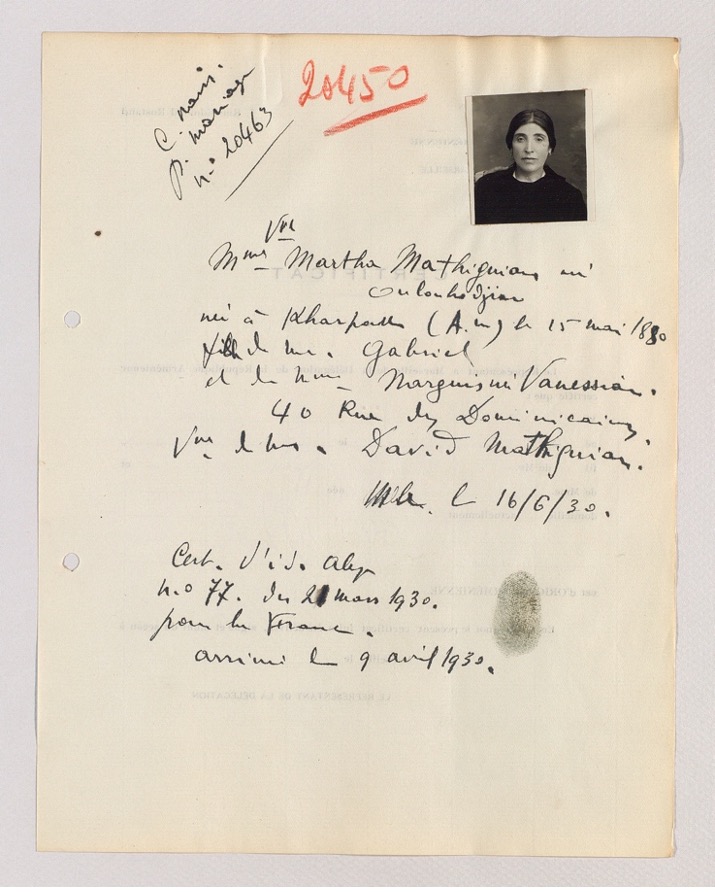
In these apparently “ordinary” archives, I track the traces of tiny lives and, through them, the traces of a violent past: through a mundane procedure, they were inscribed in the archive, as if unbeknownst to it. With this in mind, I turned my attention to old identity certificates that had been lying dormant for decades in boxes in the basement of a French administration office (Ofpra): a mass of around 12,000 documents marked with terse statements (surname, first name, address). I immediately recognized the richness of this source, provided I could give it a reading that was both exhaustive and indexed. But before doing so, I had to transform this mass of papers into a genuine archive, open to research—a task that a historian is rarely called upon to do!
LA: As you mention, your work as a historian was double: In addition to writing Au bord de l’effacement on the archival documents themselves, you undertook the immense task of going through and indexing each of them, making possible the organized, digitized archive that is now freely available on the Ofpra website. Could you reflect upon this aspect of your work and why it was important to you?
AK: To answer your question, I should first point out that my book is part of a series called À la source (At the source), for which historians are invited to tell the story of how they came to work with a raw source—a source that initially resists them. The concern is not so much to display knowledge as to retrace the path leading to that knowledge; thus, documentary exploration becomes the site of reflection, of a puzzle, of a methodology.
Of all the sources I’d ever consulted, I had a special bond with these 12,000 certificates. It’s no exaggeration to say that I knew them intimately, having handled them one by one, in the course of time-consuming indexing work. Initially, there were 15 boxes stored at Ofpra, marked “Office des réfugiés arméniens” (Armenian Refugee Office) and … that was all. They had not been archived, which is hardly surprising given that Ofpra is a French administration office to this day dedicated to managing asylum applications and protecting statutory refugees. That is to say, Ofpra is in no way an archive and only opens its doors to researchers by special dispensation.
In the 2000s, Ofpra realized the importance of its historical collections and took the necessary steps to digitize them. Once this was done, each digitized document still had to be indexed, to transform the whole into a genuine archive. I was responsible for indexing the Armenian collection. The 12,000 documents that make up the collection have all passed through my hands. I acquired an unparalleled knowledge of this mass of documents, the processing of which consisted, above all, of entering personal data (surname, first name, etc.). Yes, it was an important step for me as a historian: reading, deciphering and then recording in an Excel spreadsheet this multitude of names, place names, dates of birth, and marriage status. People from the past were finally emerging from obscurity. Box after box, they returned to us and would soon be put online on a portal accessible to all. Through a search engine, they could possibly answer our questions.
In the course of this work, marginal annotations, erasures, and other marks punctuating the surface of the certificates constantly caught my eye. I should note here that only the duplicates of the certificates were kept in these boxes. Hence their rough appearance. Lucky for us! As a result, in addition to the nomenclature (i.e., the wording appearing on the final version of the certificate), the duplicates are populated by handwritten comments tucked in corners: “orphan,” “slaughtered husband,” “missing father,” “safe-passage issued in Cyprus,” “Beirut passport,” and so on.
I have therefore proposed a historian’s reading of this double voice of the document, one rising from the center, the other leaning on the margins and the fragile, almost erased, yet insistent clues. These clues sometimes take the form of a punctuation mark below the words. Ellipses, for example: what do they tell us about a shapeless history, about the losses caused by mass murder, by the dislocation of a family and, more broadly, by the annihilation of a community? Au bord de l’effacement invites us to train our eyes. The formal properties of the source, which are rich in meaning, are integral to the book’s elaboration of a body of knowledge.
LA: Au bord de l’effacement is at once grounded in a group of documents and a broad phenomenon while punctuated by the delicately retraced fragments of individual trajectories.Simultaneously, you write about a specific archive (Ofpra’s Armenian collection), which serves as a stand-in for and a reminder of the innumerable that have been destroyed or lost. How did you balance the specific and the general, and what did this approach offer? Relatedly, how did absences (of individuals and of archives) shape—and even nourish—your writing?
AK: Certificates inherently carry a tension between too much and too little. Too many numbers, names, and standardized descriptions; too little of the very same descriptions and the details they contain. Historians (genocide historians in particular) must learn to tend to this tension when making their way through the past. Historians also know the value of working on several levels of analysis, which implies paying attention to the specificities of each one—macro, mezzo, or micro. Thus, it is essential not to exaggerate an individual case in order to draw broad conclusions, or, conversely, to flatten the truth of singular lives to make them fit into a general trend, which would erase differences that are nonetheless significant.
Au bord de l’effacement is concerned with these articulations. It pulls out individual threads to reveal, through cross-referencing, a common thread and recurring motifs, while at the same time showing tears and irreparable gaps. The loss of information is part of the phenomenon we have to analyze.
LA: Your use of quantitative examples (“les dures réalités du nombre,” or the hard realities of numbers) is striking. You highlight, for instance, the sudden end to recorded Armenian births in Asia Minor in 1915. Elsewhere, you underline that most Armenians included in the Ofpra collection were from the west and center of the Ottoman Empire, which is striking given that most Armenians came from the east, to which they were indigenous—in other words, they did not make it to the phase of exile, having perished. How did you build this elegant text which effectively combines artistic allusions, statistics, and brief passages offering contextual history?
AK : This book is an invitation to enter my historian’s workshop. In it, I explain how to bring back to life trajectories whose stories have not been told, and to do so, I mobilize various analytical tools and registers of thought; the human and social sciences are of course central, but I also embrace a semantics common to the language of art. Thus, for me, the archive constitutes a “territory of the pencil” (Robert Walser), the semiology of which summons Cy Twombly, Paul Klee, Saul Steinberg, Giuseppe Penone, and Wassily Kandinsky. Finally, the textile works of Anni Albers, to name but one, provide a framework for the strands of existence I unwind from old boxes. My historian’s eye is sharpened by contact with works of art or literature, in order to confront the invisible, the unspeakable. Taking these liberties is anything but extravagant: they support the work of research and accompany the intellectual endeavor, provided that historians never lose sight of their own framework of thought and never let go of their own scientific tools.
And to answer your question on the quantitative approach: yes, you’re right to point out the resurgence of statistical data in my text. Having benefited from substantial funding from the French National Research Agency in 2020–2023, I was able to hire an excellent research engineer to create a database from the 12,000 certificates. This considerably refined my knowledge of the collection and the group. I then set out to convey the shocking effect of the numerical data, which is so different from and yet complements the inductive approach used in the book. I brought together artistic drawings and statistics to elucidate the range of operations required to go from a raw source to a historical narrative.
LA: As you write, “It is in the course of migration and for the needs of a foreign administration that an abolished world was memorized.” While your book about Armenian exiles, it is a clear contribution to the study of 1920s–1940s French history. France, “and not the Turkish consulates,” preserves the knowledge on this group of foreigners given that, as you note, the Turkish state wanted nothing to do with the henceforth stateless Armenians who, prior to the genocide, were Turkish nationals. Could you elaborate on the contributions your book makes to the study of French history, and how it might be used in adjacent and subfields (for instance, the history of migration and administration)?
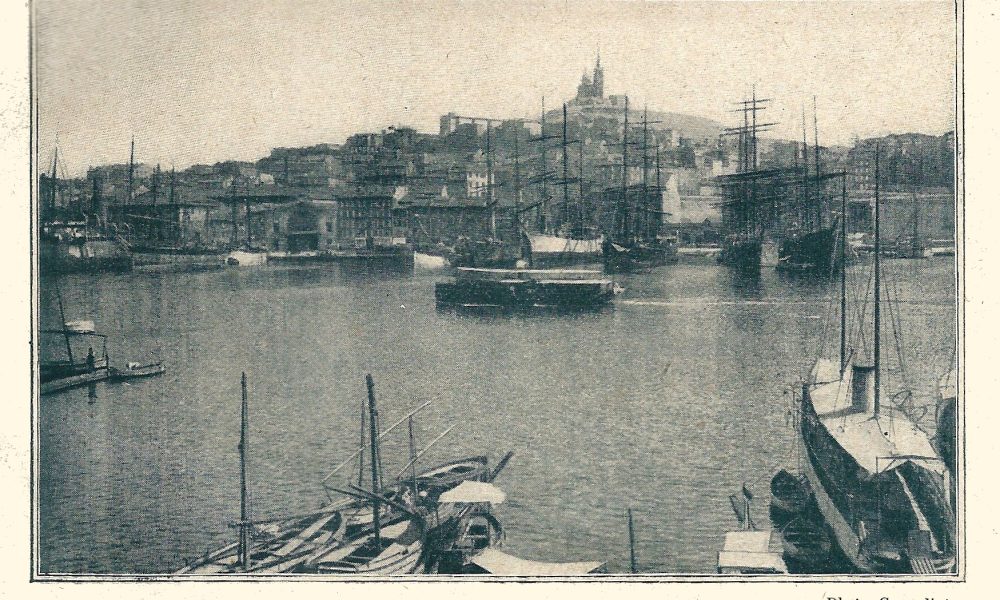
AK: The book interweaves several stories. The exile of Armenians from the Ottoman Empire is the first of these. This thread leads immediately to the genocidal violence, while the status of “stateless refugee” provides another structural framework. It also tells the narrative of their arrival in France and what life (material, marital) became far from the land of origin. Au bord de l’effacement is a book about migratory and social history that paints the portrait of a group in small strokes and, in the background, that of a city: Marseille between the wars, the gateway to France and the place where the certificates studied were issued.
Au bord de l’effacement also offers a history of the administrative identification of a foreign population and a history of the return to the common norm—to a new one, in fact, which was vague at first and slowly defined for stateless people by the League of Nations. The book does not, however, approach refugee status from the angle of international law, but rather in the light of “ordinary” documents. With them, a history is written of the day-to-day administrative management of extra-ordinary situations. Thus, affectless writings evoke the monstrosities of the past, authenticate troubled realities, issue death certificates to those killed in genocide, sometimes revive memories of an abolished world, evoke the plundering of the archives of the Armenian community, and propose a solution in the absence of parish registers. Administrative language salvages truths from oblivion, but it also resembles a theater of the absurd when, invariably, it ends with an official formulation, such as: “pour faire valoir ce que de droit” (“to assert what is right”)—which right, really?
LA: “Redonner place” is the term you use to describe your practice in this book. To give back a place to these individuals is a humane act. Would you also consider that it is a political one, given the will to erase them?
AK: Thank you for noting this expression, which enables me to evoke the stakes involved in an act of registration for people violently deprived of rights and even of a place, in the existential sense of the term. Let me explain.
“Redonner place” was first and foremost an administrative act, obeying its own logic: that of registering the civil status of an Armenian residing in France, then certifying his or her “Armenian origin” and, having done so, pronouncing his or her status as a “stateless refugee.” The aim, then, was to formulate in normative language the singularities specific to each individual, the better to guarantee him or her, in return, access to a protected status. And through this articulation of a personal identity within a new norm, the administrative act enabled an Armenian refugee to take their place in a new society.
A political question emerges in the background, relating to the place lost in the country of origin—lost because withdrawn, forbidden, plundered: for the Armenians, the transition from the Ottoman Empire to the Republic of Turkey meant the irrevocable disappearance of their community, a disappearance that was criminal, planned, and ordered. Their physical killing was accompanied by the engulfment their social, political, cultural, patrimonial, and historical markers. Now, in the constrained space of an identity certificate, a symbolic place opens: a statement recognizing for each (of the survivors) a seemingly banal thing that is a name, a filiation—precisely that which the genocide sought to annihilate. These administrative registrations stitch lives back together, situate the locality of origin, and disrupt the political plan for the absolute erasure of Armenians in lands where they had resided, where they had indeed been part of history, for over two thousand years.
“Redonner place” also concerns my work as a historian. In the book, I share what I refer to as “working documents”: photos, cut-out maps. These visual proposals are designed to help us think about the issues of place in the aftermath of genocide; the stakes of inscription in a context of dispersal.
And if I had to sum up the question that motivates me in relation to the survivors, I would say: How do we take our place again in a world where nothing remains of what was? Where even the “ordinary” is no more? The answers I put forward are those of a historian striving to take care of the past. Bringing formerly abused people into the light, and thus contributing to the development of mutual knowledge, is my way of contributing to society.
LA: Thank you for your time and for this important and generative book. I should also personally thank you as you’ve inspired and encouraged my own foray into the archives of Marseille and to my grandfather’s experience as a refugee there in the 1930s. There is indeed meaning in looking for and piecing together that which has been nearly erased yet survived in some form.
AK: Thank you very much, Laure, for having honored my work in such a pertinent way, with a deep, fine, and rigorous reading of its central stakes.