

Advertisement

A classic of French popular music of the 1980s, the New Wave hit “Paris Latino” mixes French, Spanish, and English lyrics. In so doing, Carlos and José Perez—founders of the funk-disco-rap group Bandolero, based in Paris—sketched a portrait of France’s “Latino” and Latin American influences when the song was released in 1983. They also showcased how migration from South America made Paris into a new capital for Latin American expats (who more commonly migrated to the United States or, due to linguistic factors, Spain).
But don’t just take Bandolero’s word for it. “Paris est la capitale de l’Amérique latine,” said Mexican essayist Carlos Fuentes; “Paris… gave me a new and resolute perspective on Latin America,” recounted Colombian novelist Gabriel García Márquez; and according to the Uruguayan literary critic Emir Rodríguez Monegal, “Paris is really the international capital of Latin America even today.”
Today, France’s Latin American migrant population is 250,000 (according to the French Institute for Demographic Studies), compared with the much larger number of 68 million in the United States. And yet, after North and sub-Saharan Africans, Latin Americans are one of the main migrant groups in France and Europe as a whole; some 3 to 5 million Latin Americans live there.
The term “Latino” was invented in the United States, argue scholars such as Laura Gómez, so as to meet particular social and political ends. Gómez has even argued that the term has little or no meaning outside of the United States. But that hasn’t prevented Latin American migrants in Europe from adopting the term, in part as a way of arguing that they are part of a broader transnational diaspora that includes Latin Americans in the United States.
But the term also has new meaning in Europe and is reshaping European identity politically, economically, socially, and culturally. “Latino” in France signifies the history of the Communist Southern Cone intellectual, as well as the nostalgic, utopian image of the Che-like revolutionary. As a sociological term, it is an all-sum category for geographical origin, not race, and is also bound up with the music industry, in Europe as well as in the United States. Today, one finds Spanish-language radio and print broadcasting, business services, activist organizations, and celebrations of South American cultural traditions, like Día de los Muertos (Mexico); Día de la Canción Criolla (Peru); Brazilian Carnaval; and even Día de la Revolución de Mayo (Argentina). These events range from the outward facing—events at embassies, film festivals, manifestations at the Bastille, public celebrations, and the like—to “somos Latinos” gatherings to discuss immigration logistics, business, and local politics, or simply to share food and music and “nostalgie du pays.”
As in many parts of the world, one can go to a club in Paris for musique latino, danse latino, danses latines, and noche latino, and also hear Afro-Caribbean rhythms like salsa, zouk, zouk konpa, and kizomba or listen to 99.0 FM, Radio Latina, the all–South American radio headquartered in Luxembourg, which once circulated a magazine. Other Franco-Spanish periodicals that served the Hispanophone community include Brazuca, Europa Latina, and Latino América al Dia.
France’s connection to South America dates to the colonial era, when France, under Napoleon, sought to strengthen its influence in the Western Hemisphere by claiming a “Latin” brotherhood with Latin America. Michel Chevalier, French political economist and 18th-century statesman, conceived of the “Latin race” to contrast Catholic peoples (from France, Spain, Portugal, and Latin America) with “Anglo-Saxon” Protestants and thus posit their commonality with one another as fellow Catholics. In 1861, Emperor Napoleon III famously launched a military campaign in Mexico to enact this “pan-Latin alliance” and expand the French Empire. Even though the effort failed due to Mexican resistance and US pressure, it led to the notion of “Latin America.”
Though France had once attempted to achieve some dominion over Latin America and the Caribbean, Guyana, adjacent to Brazil, was France’s only successful colony in South America. Today, it remains an administrative department of Outre-Mer (DOM-TOM).
During the Cold War, France took a different approach to Latin America compared to that of the United States, much to France’s benefit. During the 1960s and 1970s, connections between France and Latin America increased, with important consequences for European intellectual history. During that era, Communist, Maoist, and insurgent movements in Latin America fascinated French intellectuals on the left, including members of the Parti Communiste Français and those who were sympathetic to Marxist politics within the context of the upheaval taking place in France in May 1968. Cuba was a particular point of interest; French New Wave filmmakers Chris Marker and Agnès Varda famously documented revolutionary movements there in Cuba Si! (1961) and Salut les Cubains (1963), which featured images of Afro-Latin struggles.
Sociologists, anthropologists, and philosophers were also looking from France into Latin America. These included the historian Fernand Braudel; Régis Debray, who worked with Che Guevara in Bolivia; and the acclaimed sociologist Edgar Morin, who traveled through Brazil, Chile, Bolivia, Peru, and Mexico between 1960 and 1964, then analyzed their popular cultures in works like L’Esprit du Temps. Publishers such as François Maspero, owner of the radical Latin Quarter bookstore La joie de lire, and series like Théorie, directed by Louis Althusser, were go-tos for information about anti-colonial and Maoist movements on the former rue Saint-Séverin in Paris.
In Argentina, which had a historical relation to European psychoanalysis spearheaded by Italian immigration and figures like Oscar Masotta (1930–79), intellectuals were already reading psychoanalytic theory. “French Theory,” including history and anthropology, was popular among students and student activists in Rio de Janeiro and São Paolo, Brazil, which was founded in the 1930s by a French mission that included the anthropologist Claude Lévi-Strauss. Jacques Lacan traveled to Mexico in 1966 after visiting the United States; then, decades later, to Venezuela, in 1980, to attend the first international conference of the Fondation du Champ Freudien in Caracas, during his tour to connect directly with “grassroots” Latin American psychoanalysts who had heard about his ideas from across the Atlantic.
At the same time that individual revolutionaries were traveling to the continent, France famously welcomed exiled Latin Americans in masses. These included notable refugees of the repressive dictatorships in Chile, Argentina, and Uruguay, all instigated and reinforced by the United States. There were anthologists and literary critics, such as David Viñas (Argentina), and diplomats and politicians such as Héctor Tizón (Argentina), René Zavaleta Mercado (Bolivia), and, from Central America, Roque Dalton (El Salvador), Luis Cardoza y Aragón (Guatemala), and Sergio Ramírez (Nicaragua). But most famously, we know some of these éxilés as luminaries of the Latin American Boom. Julio Cortázar lived in Paris from 1951 until his death in 1984, and Gabriel García Márquez fled there from Colombia, Mario Vargas Llosa from Peru, and Ariel Dorfman from Chile. Carlos Fuentes, both a diplomat and writer, served as ambassador of Mexico in France, while Mario Benedetti fled Uruguay’s civic-military dictatorship in 1973, thereafter living in Paris, Buenos Aires, and Madrid. Some lived in Paris in exile, others passed through Paris to and from the South American continent and southern Europe. All these authors were canonized by French publishers like Gallimard and Actes Sud in their “World Literature” heritage series, which popularized literature from Latin American authors.
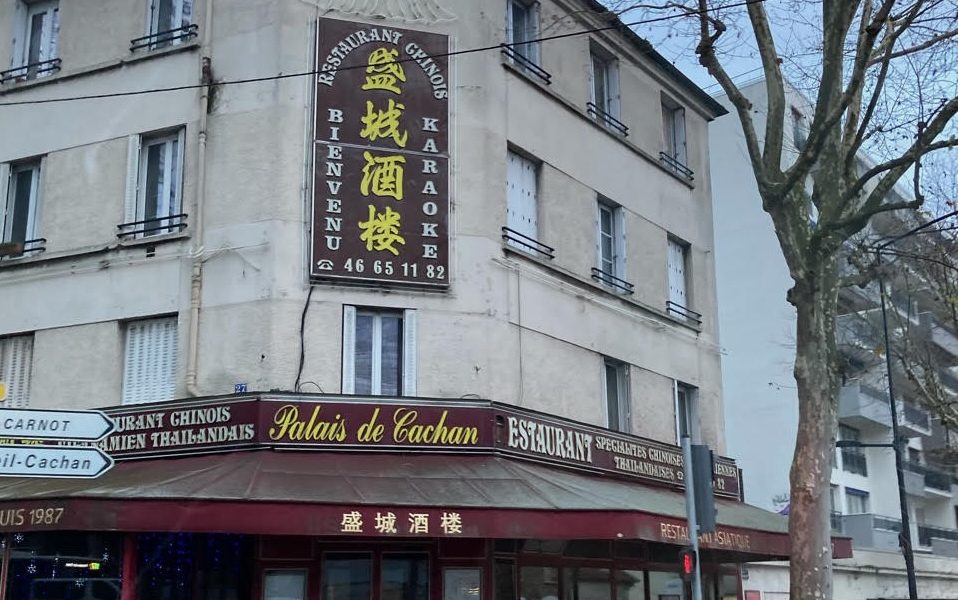
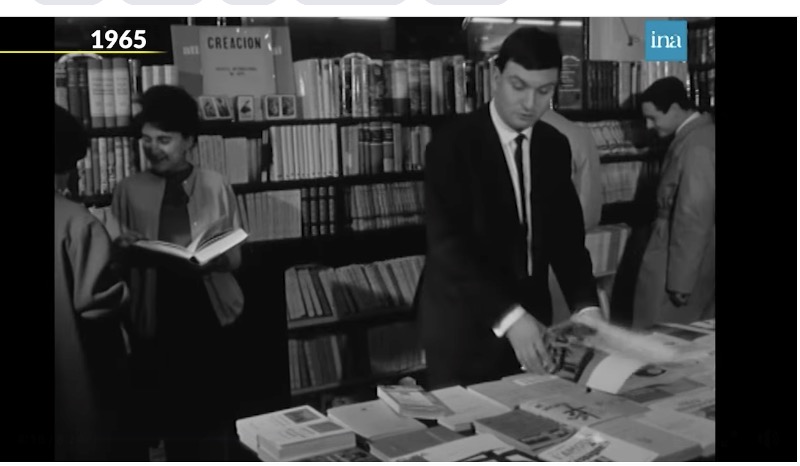
For these expatriates, political and literary activity went hand in hand. They embodied Sartre’s call for a “committed literature” in which authors “commit” their works to defend a political or social worldview. Like their peers from former French Indochina and Francophone West Africa—whose activities were associated with the still-extant bookshop and publishing house Présence Africaine—the Latin American exiles in Paris gathered around bookshops in the Latin Quarter. These included the bookstore El condor pasa, founded by the Argentinian José Antonio Berni, and la Librairie espagnole, at 72 rue de Seine. A gathering spot for dissidents, la Librairie espagnole carried publications such as Casa de las Americas, the anti-colonial and anti-imperialist journal based in Havana and founded in 1960, as well as Europe, inaptly named, as it focused on Latin America and Cuba. A special issue in 1963, for example, introduces revolutionary Cuban political and literary writers like Che Guevara, Alejo Carpentier, Guillermo Cabrera Infante, and Abelardo Piñeiro, along with documentary photos and reports produced from both sides.
Thanks to these bookshops, set within eminently walkable Paris, expatriated South Americans were able to meet a great many students, writers, and artists from other Latin American countries to a degree unthinkable in Buenos Aires, Mexico City, or New York. And so, remarkably, it was in Paris that they began to build “Latin American regional solidarity,” explains historian Michael Goebel: “a shared regional identity, which in turn formed a crucial bedrock to anti-imperialism.”
It was not only politicians, librarians, and renowned literary intellectuals who made their way to France from Latin America but also ordinary workers, according to the classification system for immigrants that was encouraged by the government during this era. Sympathetic to the political events on the Latin American continent, France ratified protocols broadening refugee status worldwide. This made it easier for those from Latin America to apply for asylum, especially after 1975, when the United States’ Operation Condor began supporting right-wing governments in Chile, Argentina, and Uruguay. Chileans held a special place in the eyes of the French, thanks to the popularity of ex-president Salvador Allende, who was idealized by the French existentialists. During Pinochet’s 1973 coup, Chilean refugees were welcomed to French territory via shelters where they received free medical aid and French lessons, as well as lessons on integration into French society. In the historically Communist ring around Paris, it is common today to find plazas and streets named after Allende and other Latin American leaders, for example Avenue Simón Bolívar (19th arrondissement), Ave José de San Martin (19th, in the Parc des Buttes-Chaumont), Rue Severiano de Heredia (Cuba, 17th), and Rue Che Guevara in Goussanville.
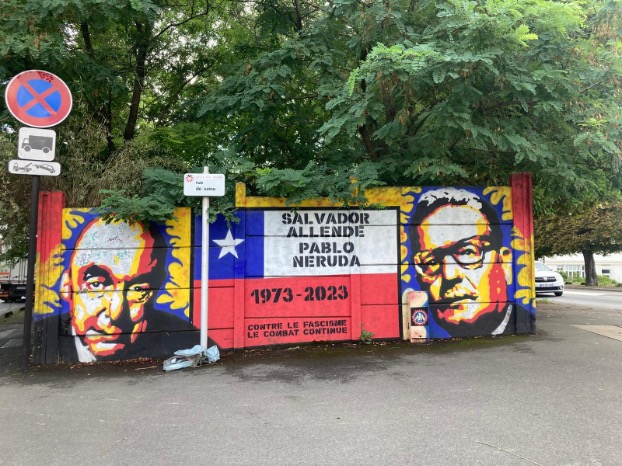
Even Argentinians—who had more familial links to Europe, particularly Italy—were welcomed in French territory. Militants fleeing persecution by the regime of the Dirty War, following Jorge Videla’s military coup in 1976, migrated with the help of personal and academic networks. Maoist Ricardo Piglia considered writing a doctoral thesis under Roland Barthes, only changing supervisors at the last minute. One group of experimental playwrights, including Oscar Castro (Chile), formed an artistic troupe called the Theatre du Soleil outside Vincennes, to the east of Paris. The generation of artists known as the “Argentines of Paris”—performing artists as well as dramaturges such as Copi, Jorge Lavelli, and Jérôme Savary, whose archives are now housed at the Institut Mémoires de l’édition contemporaine—were popular in the theater scene during the 1970s and 1980s. Others became philosophers and psychoanalysts via the renowned radical philosophical institution Université Paris 8, the birthplace of Deleuze and Guattari’s Mille Plateaux and the experimental psychoanalysis popularized outside of France.
In France, it is common knowledge that many Parisian Chileans and Argentinians migrated to Paris as exiles. Today, bilateral relations are a source of pride: diplomatic and economic relations between France and the geopolitical giant Brazil, following Emmanuel Macron’s multiple visits with President Luiz Inácio Lula da Silva, have recently increased. So have population transfers and talks between the EU and the trade alliance Mercosur, home to critical minerals and natural resources. Traffic in the red wine grape varieties Carménère (Chile), Malbec (Argentina), and Tannat (Uruguay), introduced by viticulturists from the South of France and then reimported to Europe, has also increased.
During the 1960s and 1970s, connections between France and Latin America increased, with important consequences for European intellectual history.
Etymologically, the term “Latino” does not appear endemic to the French language. Instead, it was introduced by way of North America. The Larousse dictionary contains two entries for “Latino”: “latino (adjectif et nom): Aux États-Unis, travailleur immigré originaire d’Amérique latine, and latino (adjectif) Familier. Relatif à l’Amérique latine. (On trouve aussi le féminin latina.) : La musique latino.”1 “Latino” could also be understood to be of French, Spanish, Italian, and Portuguese origin—especially the latter, who are often also considered “Latino” in northern Europe and have a sizable presence in France and the Parisian banlieue, thanks to the mass immigration of largely blue-collar Portuguese workers to France under the dictatorial regime of Salazar; and those from Italy, for economic reasons. A person from France might consider themselves “Latino” in terms of sharing a “Latin” heritage, or simply because it would be desirable to have a “Latin lover,” the Hollywood term for a handsome man of southern European heritage.
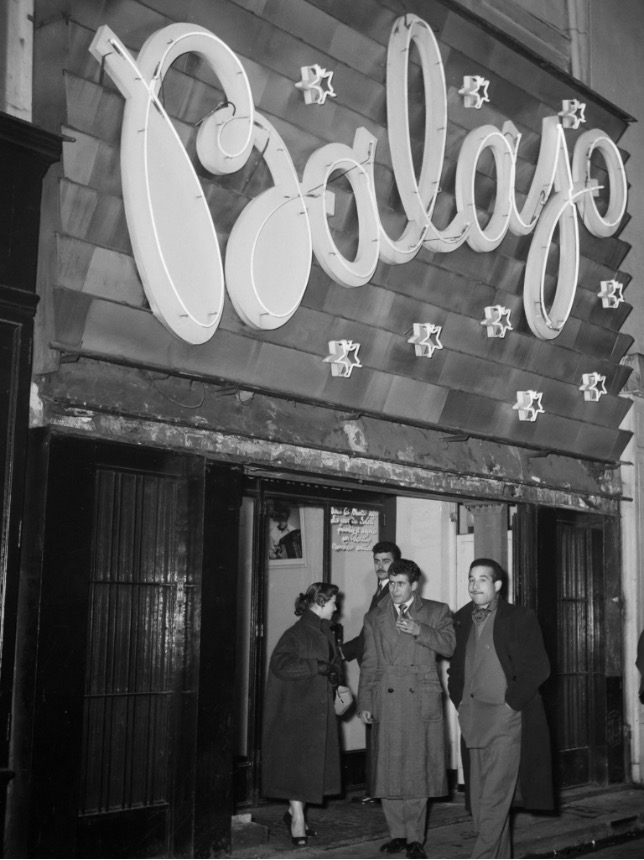
In terms of music, New York and Miami are major hubs of Latin culture in North America. In contrast, Paris offered a musical melting pot where “Latino” was mixed with “Afro-Caribbean.” Just as it was a hub for jazz artists like the North American–born Josephine Baker, French Caribbean zoukers like Kassav’, and sub-Saharan artists like Koffi Olomidé, king of Congolese rumba, Paris was essential to the establishment of various Latin musicians. They performed in historic nightclubs with mythic names like Rancho Guarani, rue Descartes; the Balajo, 9 rue de Lappe, near the Bastille; “Le Latina,” renamed the Luminor, near Châtelet, formerly a tango salon in addition to a cinema for Latin American and Italian films; the salsa house La Cabane Cubaine (9e); and L’Escale cabaret along rue Monsieur le Prince (Quartier Latin), later purchased by the Spanish, Peruvian, Costa Rican, and Italian band Los Machucambos, and where García Márquez supposedly played the maracas while writing his many books.
These nightclubs were meeting places for “persons of all nationalities“ (despite differences in social status between African, Latin American, and European populations). They also mixed in other hole-in-the-wall-style bars-turned-music-venues in the Latin Quarter, home to no longer extant bookshops and frequented by students and literary types as well as performing artists. Taken together, these different spots carried three types of Latin music, according to French ethnologist and historian of music Michel Plisson in Les Musiques du Monde en Question: folkloric (Peruvian, Bolivian, Mexican); tropical (Brazilian); and tango (Argentinian, yet which was sometimes presented in an European milieu due to the Viennese origins of the waltz).
The art of Latin America was also of interest to Parisians.2 The Maison de l’Amérique latine or Casa de América Latina (217 bd Saint‑Germain, 7ᵉ) was founded in 1946, right after World War II, to recognize Latin American support for France’s liberation. Today, it remains a contemporary hub for Lacanian cartels in Spanish. Meanwhile, Saint-Germain-des-Prés was still lined with antiquarian stalls selling African and Latin American art, where Latin American modernist and Surrealist artists like Agustín Cárdenas (Cuba), Ronaldo de Juan (Argentina), Perán Erminy (Venezuela), Rodolfo Krasno (Argentina), Wifredo Lam (Cuban of Chinese descent), and Silvano debuted. The work from modern artists such as Lora (Dominican Republic), Roberto Matta (Chile), Alicia Penalba (Argentina), Oswaldo Vigas (Venezuela), and Enrique Zañartu (Chile) is now housed in the Musée d’Art Moderne. Both the ethnological objects and the paintings would have been a rarity in France in 1924, when the Musée Galliera hosted the first survey of Latin American art ever to be held anywhere in the world, and were coveted for representing and introducing the foreign and the distant. Wifredo Lam—the Cuban-Chinese “métis” who fled the military dictatorship in Cuba for Madrid and who embraced Aimé Césaire’s theory of “négritude” in his African-inspired tribal motifs mixed with gestural abstraction—was particularly celebrated in the Parisian art world.
Since the mid-20th century, South American migration to the “European Hexagon of Attraction” has changed, as globalization has increased and people increasingly migrate for economic incentives. Salvadorians and Guatemalans arrived in the ’80s, fleeing civil war; Peruvians in the ’90s, fleeing inflation and civil unrest after “La crisis de los 80,” the catastropic preceding decade. Today, the new immigrants are mostly Colombian, Ecuadorian, Peruvian, Brazilian, and sometimes Mexican, countering the migration that is traditionally oriented toward the United States, like Colombians and Venezuelans, who number among the largest and often undocumented Latino diasporas in the United States. Some enter by birthright, claiming citizenship by way of the Italian diaspora to South America and then moving to France for economic opportunity.
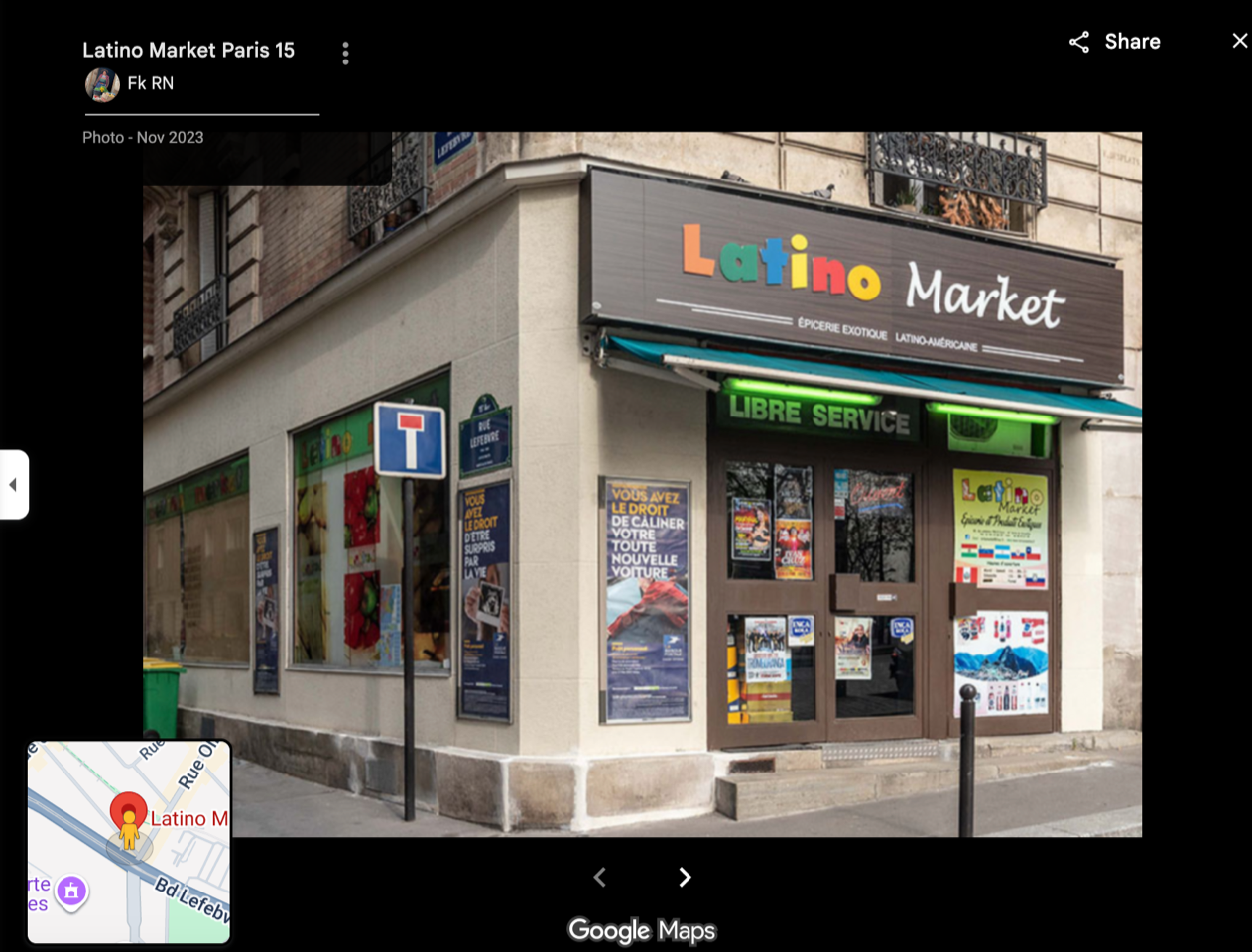
Unlike the historical Chilean, Argentinian, and Uruguayan éxilés, these new migrants are not necessarily refugees or famed literary intellectuals. Instead, they were like in North America independent emprendadors, opening shops to sell South American goods: hence, the neighborhood “Latino market” (or épicerie Latino). They are popular among the French, who enjoy the stories they tell of themselves about social integration within the Fifth Republic, and associate these markets with a nostalgia for ’60s-era France welcoming activists of the anti-colonial, anti-Communist, and anti-imperialist bloc (as an echo of this kind of nostalgia for a militant Latino America, in the welcome of the Mexican Zapatista movement in 2021).
And it’s not just France, but more widely found in Europe—the “European Latino.” Others migrants have opened shops selling specialty products and trinkets, or restaurants like the La Fábrica empanadas shops in Spain, Brazilian capoeira masters and Argentinian tango maestros, Central American coffee shops in the Netherlands and Belgium.
New viral videos are appearing on TikTok, performing and debunking myths about the “German Latino,” “British Latino,” and other new types of hybrid identities, or reframing walks through cosmopolitan European cities, the Turkish in Germany, and the Caribbean neighborhoods in South London, where Brazilian salgados meet Jamaican patrons from the ex-British Empire.
What do the United States look like for a European Latino, that is, a South American immigrant naturalized in Europe? Luis Sanz, host of a well-known outdoor milonga in front of the Odéon Theater in Paris, and Peruvian immigrant from the 1990s, naturalized French, says, “Les français nous accueillerons … ils aiment notre gastronomie et musique … ils sont sympathiques [comme nous] les Latinos, on s’entend.” (“The French welcome us … they love our food and music … they are friendly [like us] Latinos, we understand one another well”). For Felipe Rocha, a Colombian-French DJ profiled by the Asso Colombia, “In Paris, there are many Latinos, and the French really appreciate our culture,” he says happily. “Here, people love salsa and enjoy reggaeton parties. They like the warm, festive Latin atmosphere. At first, people are shy, but dancing generates emotions they aren’t used to in France.” Students, meanwhile, note that while visas for long stay in Europe are hard to come by and precarious, nevertheless, the politics of immigration are tougher in the US.
In Europe, the “Latino” is newer. Moreover, it is not necessarily associated with the same stereotypes as in the US, and certainly not a widespread effort to categorize this population group, which still identifies largely based on country and geographical origin, or in cases of Spain and Portugal, integrate more easily with the population. There are also other types of the “European Latino”: the German Latino, the Italian and Portuguese Latino (already Latino), and the European gringo, lover of Latin American culture.
In the case of France, “Latinos” meet a different cultural history, thanks to a particular history of expatriation in the 1960s and the appeal toward “Latinidad” working in their favor. If anything, others face more difficult assimilation. There are the North Africans—who ironically are mistaken for the “Latino” of Europe, and famous for the street food called the “French taco” (a kebab sandwich inspired by the “Tex Mex” of the United States, but made with Emmental cheese), invented in Lyon, France—and sub-Saharan Africans, who also took inspiration from the French Communist Party during the Cold War, but are not recognized in the same way as the militant leftists from South America, a kind of distant Latin brother.
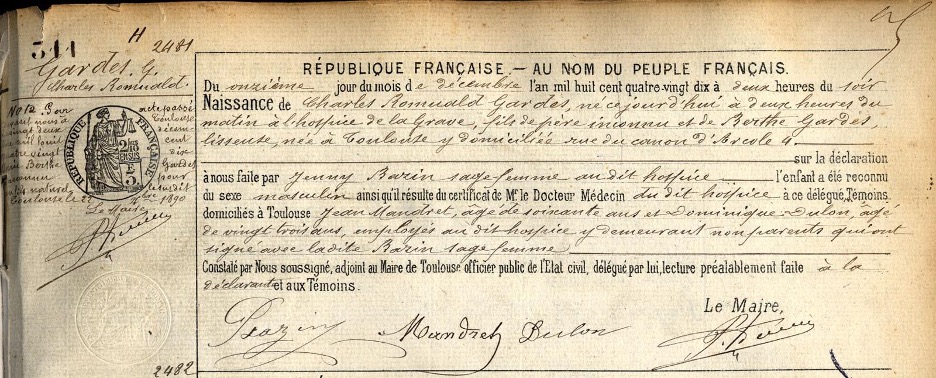
In contemporary migration to the continent we see the legacy of “Latinidad” at play, in festivity, diversion, and the embrace of these positive stereotypes around Latin America, and perhaps a different way of thinking about the lineage between Latin America and Europe ranging from the cultural to the geostrategic, begging a potential strategic realignment that serves Europeans and South Americans casting away the yoke of North American dominance. At least, from the threshold of Europe, one realizes how the idea of the Latino is dominated by the US-based construction like the historiography of “Latin music” is dominated by North America (the equivalent of something like Fania Records to salsa) as is the idea of the Latino. Continuing with musical metaphors, the tango is actually a good example of the claim between Europe and Latin America—the tango singer Carlos Gardel is claimed to be Argentinian, Uruguayan, and French, a high point of exchange between the French Army and the Rioplatense region; the milongas and dance culture of Europe (the capitals Paris, London, and Berlin) were essential to the recognition of the “Latin” dance in Argentina and then to the United States. In the 19th century, Nicaraguan poet and lover of French letters Rubén Darío declared in his autobiography, that “Je rêvais de Paris depuis mon enfance … Paris était pour moi comme un Paradis où l’on respirait l’essence du bonheur sur la terre” (I dreamed of Paris since my birth … Paris was for me like a Paradise where one could breathe the essence of happiness on earth). 
This article was commissioned by Geraldo Cadava.
- A search for two similar terms, hispanique (adjectif et nom): Aux États-Unis, personne originaire d’Amérique latine and gringo nom masculin (espagnol gringo) Péjoratif. Nom donné, par les Mexicains, à un étranger (surtout un habitant des États-Unis). ↩
- In 1850, the Louvre opened a dedicated hall to pre‑Columbian art, initially focused on Mexico, renamed “musée américain” in 1851. It closed in 1887, but its early display of Latin American artifacts was a first of its kind in Europe. The Musée du Quai Branly—Jacques Chirac, a museum of ethnography, hosts a collection of ethnographic objects, along with the Maison des Cultures du Monde. ↩