Category
Podcast
-
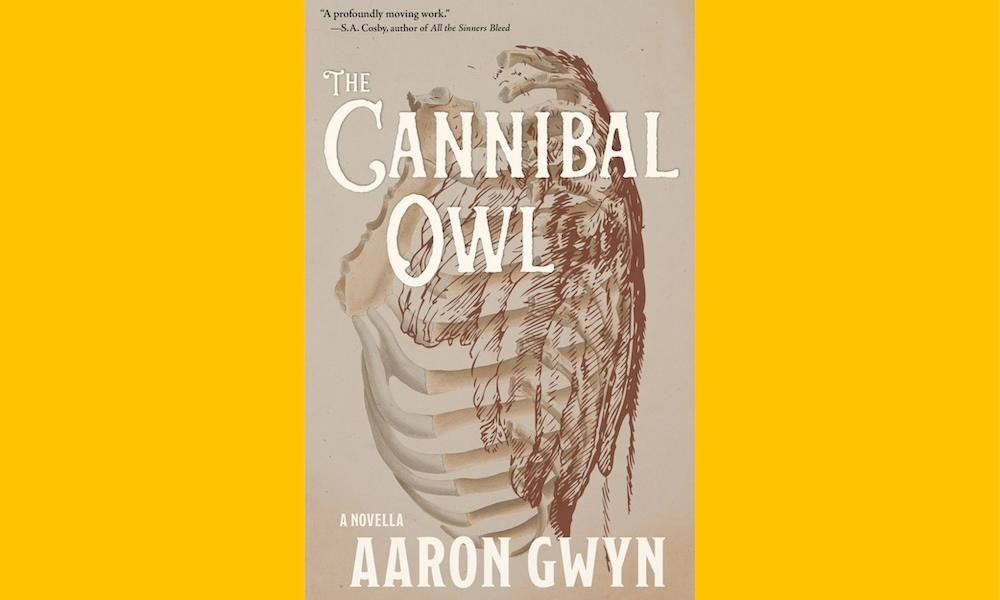
Mirta Ojito on “Deeper than the Ocean”
“I gave her my love for Spain, and particularly the north of Spain, and particularly the city of Santander. And I gave her my fears. I too, fear the ocean.”
-
Proust Curious: “The Captive“
“The possession of what we love is an even greater joy than love itself.”
-

Aspire to Magic but End Up with Madness: Adam Ehrlich Sachs Speaks with Sunny Yudkoff
“I’m aiming for something emotional, psychological, but I want it as an emergent property.”
-
Proust Curious: “Sodom and Gomorrah”
“It was only at that moment, more than a year after her burial, because of that anachronism, which so often prevents the calendar of facts from corresponding to the calendar of feelings, that I became conscious that she was dead.”
-
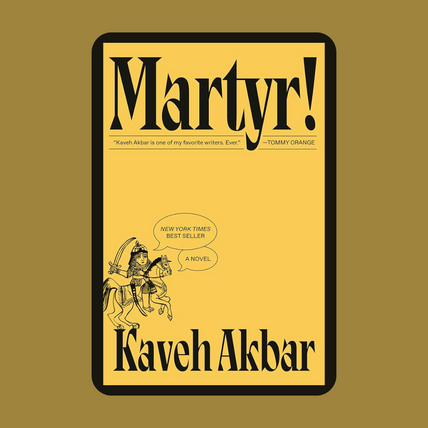
To Gallop Again and Again into Failure: Kaveh Akbar and Pardis Dabashi
“What can be said with language, a human invention, about something as ineffable and ephemeral as love or desire or rage or loneliness or despair, fear of God?”
-
Proust Curious: “The Guermantes Way”
“So, too, the truth in politics, when one goes to well-informed men and imagines that one is about to grasp it, eludes one.”
-
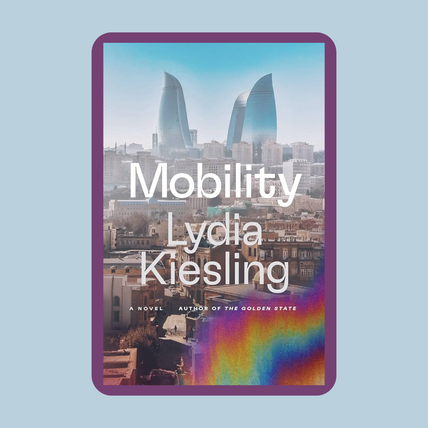
Dirt Bag Novels: Lydia Kiesling in Conversation with Megan Ward
“When I think about the novels that sort of shaped me as a younger reader, they’re often books that I call the dirt bag novel, which is sort of a reformulation of the bildungsroman.”
-
Proust Curious: “In the Shadow of Young Girls in Flower”
“Thus it can be only after one has recognized, not without having had to feel one’s way, the optical illusions of one’s first impression that one can arrive at an exact knowledge of another person, supposing such knowledge to be ever possible.”
-
Proust Curious: “Swann’s Way”
“The memory of a particular image is but regret for a particular moment. And houses, roads, avenues are as fugitive, alas, as the years.”
-

Karla Cornejo Villavicencio on “Catalina”
“I find human behavior fascinating. I find it interesting. I find all of it confusing, every single aspect of it.”
-
Jamie Figueroa on “Mother Island”
“The greatest way to honor another is with this intense complexity of truth, of love, of forgiving.”
-
Sarah McNamara on “Ybor City: Crucible of the Latina South”
Sarah McNamara’s new book Ybor City: Crucible of the Latina South is a deeply personal history of the Florida city where she grew up. In this episode of Writing Latinos, we talk about her Cuban grandmother, the family storyteller and archivist of Ybor City’s Latino community. When McNamara was a little girl, her grandma brought…
-
Escape Velocity: Sarah Manguso in Conversation with Tess McNulty
“It’s still a vast mystery to me how one can write knowing anything at all what they’re about to write.”
-
Luis Miranda on “Relentless”
“I learned early on in politics … that all politics are local. You don’t need to speak with one voice to the Latino electorate.”
-
Machine, System, Code: Masande Ntshanga and Magalí Armillas-Tiseyra
“Literature has this remarkable, almost miraculous, ability to distill human experience.”
-
Not Prophecy but Inversion: Omar El Akkad and Min Hyoung Song
“What matters to me is fidelity to something else entirely, which is how human beings are and how human beings should be and the chasm between those two things, which I think is what literature is for.”
-
Melissa Mogollón on “Oye”
“There is a fixation on our self worth that is really tied to our physical body. … I [wrote] the extreme, the product of what that does to your psyche.”
-
What Do the PDFs Say about This?: Brandon Taylor and Stephanie Insley Hershinow
“What are the systems of power in this fictional context andthe story world I’m making? What are the stakes? What are the values?”
-
Cecilia Márquez on “Making the Latino South”
“Using non-Black as opposed to white is acknowledging that Latinos can be both nonwhite and benefit profoundly from white supremacy.”
-

You Write Because You Want to Feel Free: Katie Kitamura and Alexander Manshel
“I grew up with this very firm sense that there were multiple places that I could consider a home, rather than homes simply.”
-
Andrew Boryga on “Victim”
“It was definitely in demand, this narrative of explain to me your oppression, you know, explain to me how hard you had it.”