

Being reviewed:
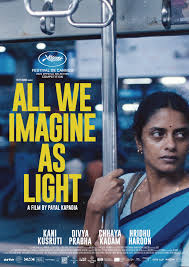
All We Imagine as Light
Advertisement

“I have lived here maybe twenty-three years. But I am afraid to call it home. There is always the feeling, I will have to leave.” Thus begins Payal Kapadia 2024 film, All We Imagine as Light. Set in the port city of Bombay (now Mumbai), the film opens in a documentary mode: with the multilingual voices of migrant workers narrating their stories of arrival as the camera moves through a row of street hawkers.1
A man from the state of Bihar recounts the quarrel with his father that prompted his subsequent departure for Bombay, where he lives with his brother who works in the city’s dockyards. A woman speaks in Marathi of her experiences as a domestic help in the homes of the city’s elite. Another—speaking Malayalam—mourns a heartbreak but is thankful to the city for its gift of forgetfulness. “The city takes time away from you,” says one migrant. “The city helps you forget,” says another, as the moving images on the street give way to the familiar scene of a crowded local railway station and then to a Women’s Only compartment where passengers sit chopping vegetables, chatting, or even sleeping.
Kapadia’s opening sequence—with its multilingual chorus of migrant voices and their everyday experiences—thrusts All We Imagine as Light—and Bombay itself—right into the heart of India’s political present. One of South Asia’s largest metropolises, with a population of almost 30 million people and the capital city of the state of Maharashtra, Mumbai has long been the imaginative epicenter of the nation’s literary and cinematic life. Once home to some of South Asia’s iconic writers and artists like Saadat Hasan Manto, Ismat Chughtai, and M. F. Husain; center of the Hindi Film Industry; and the thriving ground for many activist movements, Mumbai remains unparalleled in South Asian cultural and political life.
Yet, literature and art on the city are haunted by an unmistakable consciousness of decline, coupled with a nostalgia for what the city was and grief at what it has become. In his book Mumbai Fables (2010), historian Gyan Prakash traces an arc from Bombay as a cosmopolitan center, in the heyday of decolonization, to its neoliberal transition into today’s “world-class city.” This change has hastened the decline of Bombay’s working-class politics, and the steady rise of communalism in the city: most clearly seen in the communal violence of 1992-3 following the demolition of the Babri Masjid in the city of Ayodhya. While its origins lie in the 1960s, the ’90s marked the ascendence of the Shiv Sena Party with its nativist call for a “Maharashtra for Maharashtrians” and its celebration of the figure of the “Marathi Manus” (the Marathi Man). All this has led to increased violence and alienation of working-class migrants who are perpetually touted as outsiders to the city. The afterlives of this history mark today’s Mumbai.
Kapadia’s film stages this fraught history by reconfiguring belonging in the city through its portrayal of the lives and friendships of three generations of migrant women. In doing so, All We Imagine as Light takes up another quintessentially Mumbai story—its reputation as the safest city for women in India. Prabha (Kani Kusruti), in her 40s, and twenty-something Anu (Divya Prabha) are nurses at a city hospital, and the oldest woman, Parvaty (Chhaya Kadam), is a cook. The nurses are from the southern state of Kerala and speak Malayalam, while Parvaty hails from the Maharashtra countryside. All three struggle to learn and speak Hindi at their workplace.
From afar, the protagonists’ lives are seamlessly entwined with the rhythms of the city. We first see Anu and Prabha on a Mumbai local train. Anu sleeps with abandon, while Prabha stands at the compartment door. The camera zooms in for a close-up shot of Prabha, looking out at the city with a hint of longing.
This scene marks the beginning of a pattern of representation: nocturnal Mumbai in motion, its tall buildings glowing with light, seen through the window of the moving train. One may even read this representation as somewhat ironic, since we access it through Prabha’s life, which, despite her constant movement through the city, is eclipsed by stuckness. Alternating between close-up shots of her face and the city of lights in motion, Kapadia purposefully contrasts the promise of the big city and the alienation of its working-class inhabitants.
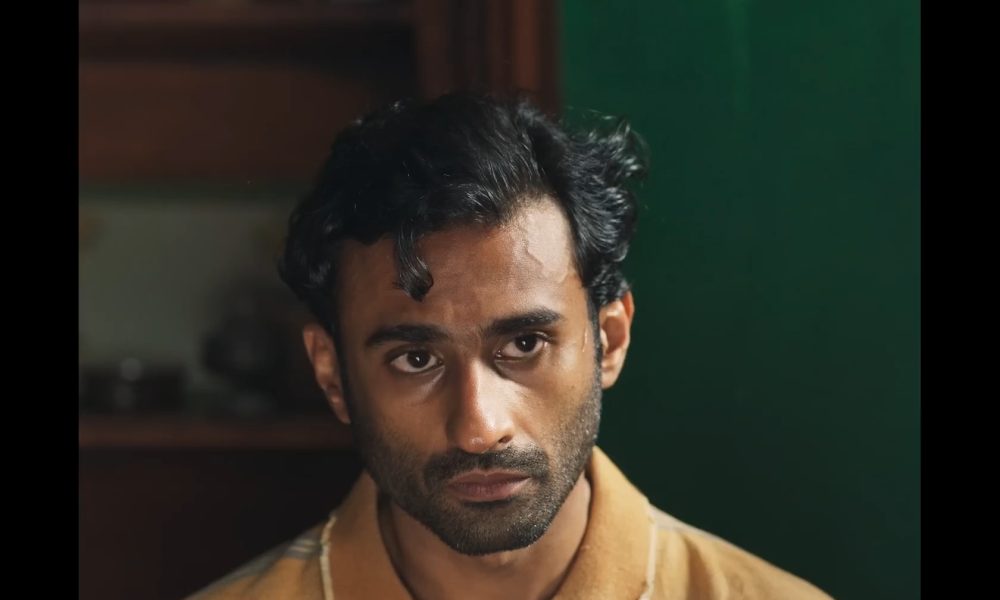
In between the flat and the hospital, Kapadia’s Mumbai is produced by women’s labor and in the shadows of their deferred desires. Prabha and Anu share a bed in a small flat, barely making rent. Meanwhile, Parvati struggles against being evicted from the house she has lived in for 22 years, since the death of her husband. The nurses’ labor is a central motif in the film. Prabha cleans bodily fluids, feeds elderly patients, and trains junior nurses to facilitate childbirth. Anu dispenses advice about sex and family planning to the patients at the hospital. These embodied scenes of care stand in contrast to the suspension of the women’s intimate lives. Prabha is a married woman with an absent husband. Anu secretly dates Shiaz, a Muslim man, while struggling to find a space for intimacy in the city.
The still frame of the film’s poster put these desires at the center of the film’s plot, desires that are brought to light with the arrival of a package at Anu and Prabha’s flat. The two peer at a bright-red rice cooker that arrives with no notes attached. The “Made in Germany” label introduces us to Prabha’s dilemma: her husband, who left to work in Germany soon after their wedding, stopped calling in the past year. Since then, he has disappeared from her life entirely.
The shot’s composition is a set of contrasts—the bright-red hues of the rice cooker against the faded blues of the women’s clothing—with the city lights gleaming through the windows in the blurred background of the flat. The women’s clothes match those of the hospital uniform; and despite its banal domesticity, the rice cooker is staged as an erotic intervention.
The city’s affective landscape reenacts these oppositions. As opposed to the familiar trope of the urban as a site of freedom and self-realization, in Kapadia’s film, the workplace and the street both emerge as spaces of sexual surveillance. Against the backdrop of workplace gossip about her affair, Anu traverses the big city, watching her back in fear of social censure. She asks Shiaz not to wait for her near the hospital, looks around before holding his hand, and makes plans to meet him at home when his family is away.
Feminist scholars Shilpa Phadke, Sameera Khan, and Shilpa Ranade draw attention to the contradictions between security and surveillance in their critique of the discourse of safety on Mumbai’s streets in Why Loiter?: Women and Risk on Mumbai’s Streets (2011). They argue that the reputation of Mumbai as a safe city for women is less an indicator of women’s autonomy and more of conservative class and community structures whose narrative of security is embedded in the fear of women forging consenting relationships with those their communities deem to be undesirable men. In connecting the dots between the regulation of women’s autonomy and the vilification of the marginal citizens of Mumbai, Phadke et al. write how “the focus on safety allows the erasure of questions both of class safety and unwanted sexual affiliations across class and communal lives.”
Kapadia’s film draws out these contradictions through failed plans, delayed trains, and infrastructural failures that keep the lovers apart, interrogating, in turn, the limits of the city as a space of sexual liberation for its women.
Kapadia’s film draws out these contradictions through failed plans, delayed trains, and infrastructural failures that keep the lovers apart, interrogating, in turn, the limits of the city as a space of sexual liberation for its women.
It is in political desires that All We Imagine as Light opens up a realm of possibility in the big city. Kapadia highlights the continuities of older urban labor movements with ongoing ones through the arc of Parvati’s struggle against eviction.
While Prabha watches the city in motion, the older Parvaty is represented as standing still against the changing city. In one shot, she stands outside her tenement dwelling, and shiny apartment buildings rise all around her. In another scene, she sits in her dark house, rummaging through old documents, hoping to find the correct paperwork that would allow her to keep the home, as the sounds of the city invade the quiet of this enforced darkness. This home, the target of real estate developers, belonged to her late husband, a worker in a textile mill, who received it as compensation for the loss of his job. The 1982 Great Mumbai Textile Mill strike, organized under a Communist banner, saw the mass firing of about 300,000 mill workers, forever altering the texture of Mumbai. In Parvaty’s inheritance and her inability to keep her house, we painfully recall the defeat of the mill workers’ strike and the shadow it casts on contemporary Mumbai.
Despite the strike’s failure, the iconic Parallel Cinema auteur Saeed Akhtar Mirza’s film Albert Pinto Ko Gussa Kyun Aata Hai (Why does Albert Pinto get angry?) lauds the coming into consciousness of a young mechanic: the son of a textile mill worker whose desire to be one of the ruling classes is gradually transformed through witnessing his father’s participation in the strike.
A similar scene echoes in Kapadia’s film, when Parvaty joins in the chorus of workers brought together by the hospital staff union: “We built their buildings. We cleaned their gutters … and did all the work they refused to do themselves. But when we ask for a home near theirs, they can’t stand it. Ours are the hands that built this city.” The camera focuses on Prabha amid the throng of listeners. Her tired face lights up on the screen as she adds her voice to the chorus.


As a film about migrant care workers in urban India, All We Imagine as Light is marked by its own itinerant status in national cultural discourse. The first Indian film in three decades to play in the Cannes film festival, AWIaL won the 2024 Grand Prix but was passed over by the Film Federation of India (FFI) for the nation’s entry to the Oscars.
Instead, the 13 members of FFI’s all male jury noted that AWIaL is like a “European film taking place in India.” Their citation for Kiran Rao’s Laapataa Ladies, India’s final nomination for the Oscar set in the North Indian countryside, applauded the film for its “Indian-ness” and its supposedly authentic representation of Indian women as a “strange mixture of submission and dominance.” The FFI’s bizarre characterization of Indian women and its commentary on AWIaL’s purported foreignness reflects a familiar trend where cultural production and political actors critical of the governing regime are posited as performing for the West.
The day her film won the French Grand Prix, Payal Kapadia was still facing disciplinary action by the Film and Television Institute of India, where she was put on probation for having protested the right-wing leadership of the institute, one among many instances of the Hindu Right’s push for installing ideologically aligned leaders in the nation’s universities and major cultural institutions.
Despite its primary setting in Mumbai, All We Imagine as Light finds much of its resolution in Parvati’s hometown, Ratnagiri, a coastal village in the Maharashtrian countryside. It is here that the oldest of Kapadia’s protagonist returns, after losing the battle for her house in the city. She is joined by her friends who travel to the countryside to help set up her new home.
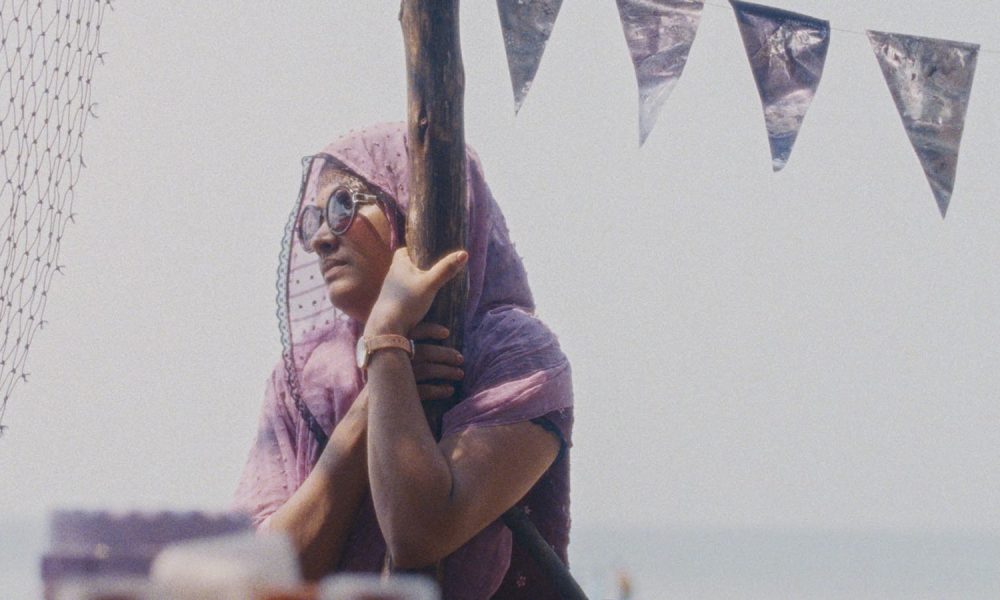
While the scenes set in Mumbai are almost all nocturnal, the village is shot in the daylight. Compared to the city’s cramped spaces, the countryside is spacious. Beyond the city’s alienation, the country is represented as rooted in community. Here, the women rediscover their playfulness—they drink, dance, cook, and sing. Anu and Parvati frolic in the expansive sea while Prabha watches from the shoreline. Shiaz follows Anu to the countryside, and they have sex. In a somewhat dramatic twist, Prabha saves the life of a man washed ashore by the sea. The scene where she tends to him transitions into a dreamlike sequence with the stranger transforming into Prabha’s absent husband, who explains his absence and seeks an apology. Lingering between fiction and reality, she refuses forgiveness and is able to accept the end of her marriage.
One cannot help but notice that the resolution of All We Imagine as Light is primarily symbolic, made possible only through the referential logic of “the seashore.” The transgressive possibilities of the shoreline as a transformative meeting and resting place have been pointed out by scholars as a place where questions of identity, belonging, death, and rebirth are frequently played out.2 It is no surprise, then, that while Kapadia’s visual engagement with the city is through her concrete attention to detail, her representation of the countryside feels more abstract: a psychological return to the place of stuckness that must be addressed before the protagonists can move forward.
The seashore is mapped through several sites, including a cave and a dhaba (shack / food stall). As Anu and Shiaz walk by the sea, they discover some old carvings in a cave. Contemplating the image of a woman carved on its walls, Anu says, “It’s like she has been stuck here forever. As if she is waiting for something to happen.” It is Prabha she has in mind. Indeed, Prabha’s poetic sequence with the stranger saved from the sea is a similarly abstract resolution.
As a foil, the countryside exists not so much as a resolution to the city but instead, for Kapadia’s three protagonists, the seashore is a space for defamiliarization, for revisiting what prevents one from fully envisioning a future.
Rather than the illusory lights of the city and the compulsive euphoria it demands, All We Imagine as Light concludes with a nocturnal scene of witnessing. The lovers who have been evading society’s gaze find acceptance among the community of women.
Even as All We Imagine as Light refuses a redemptive story framed in terms of urban arrival, its visual assemblage of Mumbai is nevertheless a celebration of the myriad textures of the city.
In an evocative scene of a procession marking the end of Ganesh Chaturthi a ten-day Hindu festival central to Maharashtrian cultural life, the narrative voice says, “Some people call this the city of dreams, but I don’t. I think it is the city of illusions.” The camera aims up at the grand statue of Ganesh headed for submersion in the sea, and the sounds of dancing and chants recede into the background as the voice continues, “There is an unspoken code in this city—even if you live in the gutter, you are allowed to feel no anger. People call this the spirit of Mumbai.”
Even as All We Imagine as Light refuses a redemptive story framed in terms of urban arrival, its visual assemblage of Mumbai is nevertheless a celebration of the myriad textures of the city. The long nocturnal shots of train stations, the rain-drenched evenings, the small eateries with big portions, and the streetside markets all draw sighs of recognition from those who have lived and experienced Mumbai.
While Kapadia inverts this illusion of the big city of lights, what does she offer us in lieu of an alternative? The film registers the biggest gift of the city in the communities it makes possible. In South Asian society, defined and represented overwhelmingly through images of the heteronormative family, Kapadia’s Mumbai offers us a vision of alternate relationalities, women’s communities that expand the crowded spaces of Mumbai for its protagonists. The tiny flat enables a friendship, the home at the cusp of loss enables solidarity. In turn, we are invited to reconsider the urban promise not as one of unadulterated individualism but instead of the joys of being witnessed and cared for beyond the structures of the heteronormative family.
In its strangeness, its perpetual foreignness, Kapadia posits the city as an imperfect answer to women’s desires, their need to belong. All We Imagine as Light powerfully documents its protagonists’ attachments to the city as a place of liberation away from the constraints of the family. Yet, Kapadia does so without nostalgia, interrogating too the heavy weight of these attachments, its cruel optimisms, the difficult living with impermanence that characterizes its protagonists’ precarious lives.
As the youngest Anu asks Prabha, “Could you ever move back to your village? I don’t think I could.” In following Parvaty’s journey, her return home, though not without a substantial struggle, the film holds on to its object of attachment gently.
During her last dinner in Mumbai, Parvaty sums up her decades in the city. “It feels as if this place isn’t real. These days nothing is real without papers. If you disappear, no one would know.” In a disappearing city that becomes more unfamiliar by the day, it is migrant women’s lives lived and imagined in its interstices that inspire Kapadia’s film. Like Prabha’s assurance of remembrance, All We Imagine as Light, too, is a promise to the women, migrants, and working people of the city. That if they were to disappear, we would know. 
- In 1995, the conservative Shiv Sena party renamed the city of Bombay to Mumbai in a nationalist attempt to rid the name of its colonial vestiges. In this essay, I use Bombay when referring to the city before 1995, and Mumbai for references after 1995. ↩︎
- Brady Hammond and Sean Redmond, “This Is the Sea: Cinema at the Shoreline,” Journal of Media and Cultural Studies, vol. 27, no. 5 (2015). ↩︎