
Being reviewed:
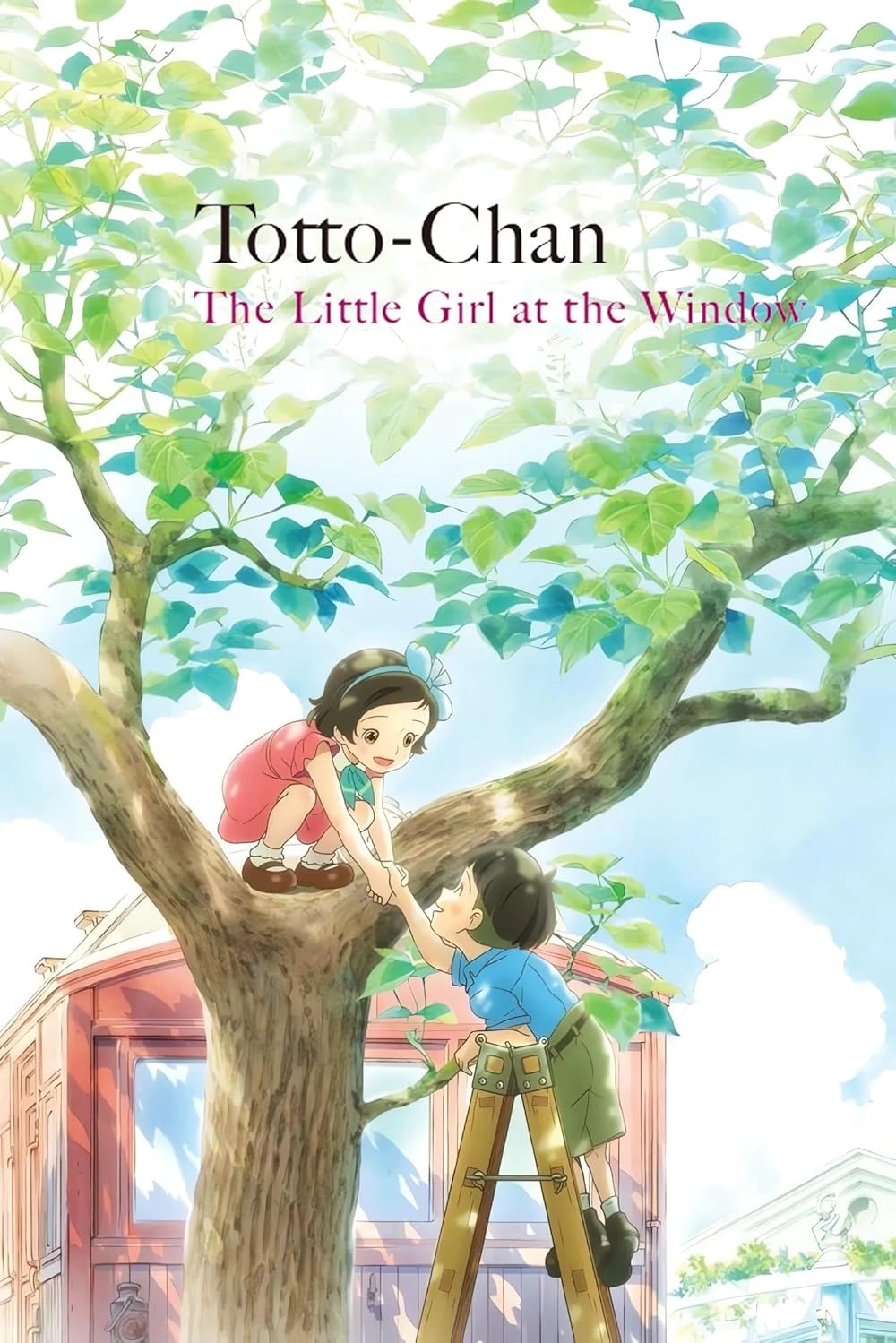
Totto-Chan: The Little Girl at the Window
Advertisement

I used to think the story of Hans Asperger, the Austrian doctor for whom “Asperger Syndrome” was named, would make the perfect movie. This was back when it was believed that Hans Asperger was working to protect his neurodiverse patients and students from the Nazi death camps. The original 2015 edition of Steve Silberman’s book NeuroTribes gives an overview of the old understanding of who Asperger was: he operated under Nazi rule but never joined the party, and when speaking to Nazi officials, he highlighted the most gifted kids on the autism spectrum in hopes that this would spare those of all functioning levels from eugenics. That understanding of Asperger as a savior of the neurodivergent changed with the 2018 publication of Asperger’s Children by historian Edith Sheffer, which contained the bombshell discovery that Asperger referred several of his more severely disabled patients to the Am Spiegelgrund death camp.
Suddenly this history seemed a lot less inspirational and movie friendly. After this revelation, the term “Asperger’s” went from a merely dated diagnostic term for hyperverbal forms of autism to something uglier—most people wouldn’t want to describe their disability with the name of a eugenicist Nazi collaborator.
Halfway across the world, at the same time Asperger was operating his clinic/school in Vienna, another man, Sosaku Kobayashi, was doing what few others were doing in providing comprehensive education for children with a variety of abilities—and he was doing all he could to protect even his most vulnerable students from Japan’s authoritarian government. The story of Kobayashi is the inspirational cinematic tale that I once envisioned Hans Asperger’s story being, and it turns out an amazing movie of this story already exists. I got to attend the US premiere of Totto-chan: The Little Girl at the Window at the 2025 New York International Children’s Film Festival, where it won the festival’s Animated Feature Grand Prize. It’s the best new movie I’ve seen this year, and its portrait of discrimination, caregiving, and war-making is one that we desperately need right now.


For half a century, Tetsuko Kuroyanagi has hosted Tetsuko’s Room, Japan’s first TV talk show, winning a Guinness World Record for most TV broadcasts by the same host. Born in 1933, she didn’t receive any formal diagnosis of neurodivergence as a child. But in her 1981 memoir—a common text in Japanese elementary schools—and in the 2023 anime based on that memoir—Totto-chan: The Little Girl at the Window—the young Tetsuko shows clear signs of ADHD, and possible signs of autism. Affectionately called “Totto-chan,” the young girl can’t sit still, can’t read the room, and says whatever pops into her mind. On her first day of school, she drives her teacher crazy by fidgeting loudly with her desk, and nearly falls out a window when she sees street musicians pass by. Within the first week of first grade, Totto is expelled.
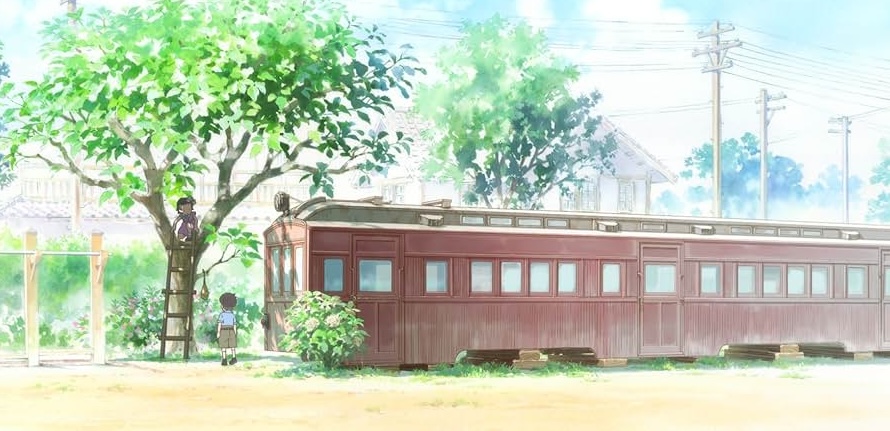
After being dismissed from regular school, Totto fortunately transfers to Tomoe Gakuen, a progressive elementary school teaching students with a wide range of abilities. When she first arrives, she’s excited to see the school’s classes are held inside a train car (like many a neurodivergent kid, she’s very into trains). Her first meeting with the school’s headmaster, Sosaku Kobayashi, confirms that Tomoe is the place she needs to be. Mr. Kobayashi lets Totto talk about whatever she wants for hours, eventually leading her to talk about her biggest fear: that she might be a “bad kid.” The headmaster assures her that she’s a “very good kid.” This is the first part of the movie where I get close to tearing up.
When writing about her time at the real-life Tomoe Gakuen, Tetsuko emphasizes how the school sheltered its students from the horrors of the outside world—World War II was accelerating all around this small Japanese school—until it became impossible to do so. “Terrible things were beginning to happen in various parts of the world,” reads one passage from the memoir. “But as the children discussed their tiny field, they were still enfolded in the very heart of peace.”
Totto-chan ends with Tomoe Gakuen being burned to the ground in the firebombing of Tokyo. Totto and her family flee the city by train, while Mr. Kobayashi looks upon the destruction with the promise that the next school he builds will be even better (he never did get to build another). This refuge for outcast children within an authoritarian state ultimately gets destroyed by the armies at war with said state—the same fate met by Hans Asperger’s school in Vienna, except Tomoe Gakuen seems to have been a true refuge for all its students and not just the ones who could pass as “normal.”
These are terrifying times for people with disabilities. “Totto-chan: The Little Girl at the Window” shows a hopeful vision of how it’s possible for us to thrive even in terrifying times.
“I don’t hear [Republicans] talking about making sure disabled kids have access to a public education,” remarked Jessica Tarlov, the host of Fox News’s The Five, on March 20, 2025. In response, Greg Gutfeld—who now says he identifies as a Nazi—gave the game away: “Because we’re against it.”
As I write this piece in October 2025, reports are spreading that the entire department of special education at the Department of Education—the whole of which the Trump administration has previously threatened to destroy entirely—has been eliminated. In America today, “DEI” (diversity, equity, and inclusion) has become the right wing’s go-to slur, and many of the anti-DEI orders stealthily add an extra letter to the demonized acronym: “A” for accessibility. Trump claims that after the Department of Education is destroyed, special education will now be handled by the Department of Health and Human Services, which is run by Robert F. Kennedy, Jr., a conspiracy theorist who blames autism on vaccines, Tylenol, and circumcision.
At the same time, the richest and most powerful man in the world, who helped lead this assault on disability services earlier this year back when he was in charge of the Department of Government Efficiency, claims a diagnosis of autism as his excuse for doing Nazi salutes.
I’d joke that Elon Musk was our “first autistic president,” if not for how many psychologists suspect Thomas Jefferson was probably also autistic. Someday, G-d willing, we’ll have an autistic president who’s not extremely racist. Now let me process the shame that, by the same “who’s actually making decisions for Trump now” standard, Stephen Miller might be our first Jewish president …
A relevant clarification: when Musk came out as autistic on Saturday Night Live in 2021, he specifically described himself as having “Asperger’s.” While some grace should be given to people who stick to whatever diagnostic language they were first given, in Musk’s case, it’s hard not to think about the divide between those autistic people Asperger sent to the camps and those he did not. On the one hand, Musk brags about his “Asperger’s”; on the other hand, he stripped services from other autistic people. For Musk and those like him, “Asperger’s” isn’t just an excuse for doing a Nazi salute: it’s part of a belief that those disabled people deemed useful to the Reich get to live, while the others can perish.
Where the book repeatedly states terrible things are happening outside the children’s understanding, the movie finds different ways to imply the effects of World War II on the margins of that understanding. The movie cuts a chapter contrasting English lessons from an American student at Tomoe with the outside culture deeming English the language of the enemy; in its place, we get a scene of Totto’s parents warning her against using English words already part of her normal vocabulary.
The book mentions how Josef Rosenstock, the Jewish conductor of the orchestra Totto’s dad played in, fled Hitler’s Germany for Japan; the movie gets across this information by showing Josef confronting two of his musicians celebrating Japan’s new alliance with Germany. In one movie-original scene, Totto’s surprised to see a woman at the train station in the place of her usual ticket taker—viewers can infer the young man got sent off to fight.
The film is not just morally courageous, but cinematically brilliant. Director Shinnosuke Yakuwa handed select sequences to other animation directors. The animation is high quality throughout the film, but these stylized expressionistic moments push it into downright breathtaking. An early fantasy sequence by Yûta Kanbe expresses Totto’s excitement for learning in a manner befitting the aesthetic the internet has dubbed “Utopian Scholastic” (think the DK Eyewitness intro or the old Discovery Channel store). Kunio Katō, director of the Oscar-winning short film La maison en petits cubes, lends similar joy to an underwater fantasy during the school’s pool day (though I would not be shocked if this sequence is the reason the film still lacks an American distributor—Tomoe Gakuen allowed skinny-dipping as a lesson in body positivity, but any school that tried the same here would get a lesson in lawsuits). Setsuka Kawahara uses cut-out animation, reminiscent of the witches in Puella Magi Madoka Magica, for a nightmare in which Totto processes the growing wartime horrors through the lens of Uncle Tom’s Cabin, the last book her friend Yasuaki lent her.
I cry for real twice in the subplot exploring Totto’s friendship with Yasuaki, a well-read Christian boy who has a weak arm and leg due to polio. Totto loves to climb trees, but Yasuaki has never even thought of doing so for obvious reasons. The scene where she figures out a way for him to climb a tree with her made me cry from its beautiful kindness and commitment to radical inclusivity. The second Yasuaki tearjerker scene is much more brutal, and should be required viewing for any parent having even the slightest doubts about the necessity of vaccinating their kids.
Before knowing the truth about Asperger’s involvement in Nazi eugenics, I thought his story would have been perfect movie material. Turns out Sosaku Kobayashi’s story is the one that actually needed a movie. This was a man who wanted everyone to have the best education, who designed sporting events where a student with dwarfism could take the lead, who encouraged kids playing in the dirt so poor students wouldn’t be judged for lacking clean clothes, who spoke in favor of gender equality and confronted students misbehaving with curious understanding rather than cruelty. I don’t know if Mr. Kobayashi had some secret dark side that Tetsuko remains unaware of in her nearly saintlike portrayal of the headmaster, but I can rest assured he probably couldn’t have been as bad as Asperger: for all the many problems with Imperial Japan, at least they weren’t sending disabled citizens to death camps.
As for how Mr. Kobayashi got away with running his school with such freedom in a decidedly unfree society, Tetsuko explained in the book’s postscript, “Mr. Kobayashi hated publicity, and even before the war did not allow photographs of the school or any publicity about its unconventionality. That may have been one reason this small school of under 50 people was allowed to continue. Another was that Mr. Kobayashi was highly regarded at the Ministry of Education as an educator of children.”
These are terrifying times for people with disabilities. Totto-chan: The Little Girl at the Window shows a hopeful vision of how it’s possible for us to thrive even in terrifying times. It also shows how things get much scarier when the food runs out and the bombs start falling; the director has spoken openly about the relevance of those parts of the film to the current conflicts in Ukraine and Gaza.
I hope that professionals working with disabled children follow the example of Kobayashi—of the old myth of Asperger—rather than that of the real Asperger or of the likes of RFK, Jr.
And for those of us with disabilities, struggling to make it through these scary times, I hope we can follow the lead of Totto. In the scene where a group of bullies sing insults about Tomoe Gakuen, Totto flips their own song against them, turning words of bullying into words of celebration. Her classmates join in and sing along with her, the group of them overwhelming the voices of those who tried to mock the “weird” school with the “weird” kids.