Being reviewed:
Advertisement
Five years ago, the Supreme Court handed down a landmark decision in McGirt v. Oklahoma, which Robert J. Miller (Eastern Shawnee Tribe) and Torey Dolan (Choctaw Nation of Oklahoma) call “likely the most significant Indian law case in well over 100 years.”1 McGirt affirmed that the Muscogee (Creek) Nation’s reservation had never been disestablished, meaning much of eastern Oklahoma remains tribal land. The ruling was celebrated for restoring treaty promises and affirming the legal endurance of tribal sovereignty after centuries of settler encroachment and legal erasure. But it has also ushered in a new era of jurisdictional entanglement: tribal governments were suddenly tasked with exercising criminal jurisdiction over vast swaths of land—including serious felony cases involving Native defendants—without the infrastructure, legal humanpower, or federal funding necessary to match state prosecutorial capacity.
For many tribes, the 2020 decision poses a paradox: sovereignty is reaffirmed, but so too are the burdens of governance under inequitable conditions.2 That’s why there’s now a major debate in contemporary Indigenous political theory, asking whether sovereignty can still serve as a radical framework, or whether it has already been co-opted by the settler state.3 Especially in the aftermath of McGirt, a pivotal question for Indigenous political leaders is how to ensure that Indigenous sovereignty does not calcify into the same punitive logics, bureaucratic violences, and elite self-perpetuation that have long defined colonial rule.
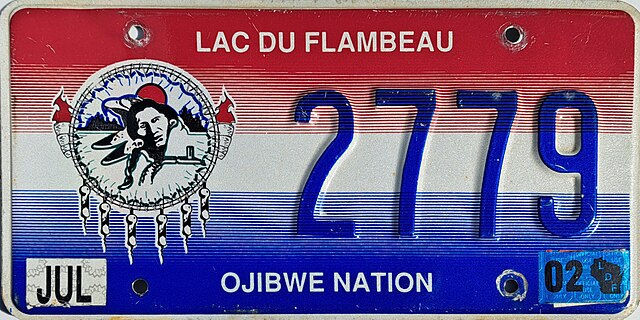
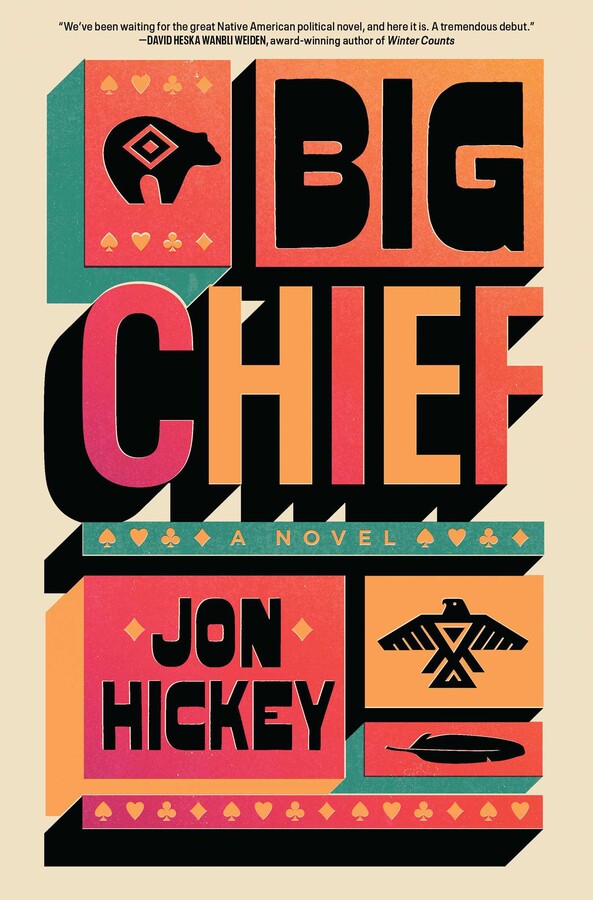
That question of sovereignty is answered by Jon Hickey’s 2025 novel Big Chief, which considers how Native self-determination navigates the same institutional forms that have long suppressed it. Sovereignty is the problem of Big Chief, but to be sure, Hickey, an enrolled member of the Lac du Flambeau Band of Lake Superior Chippewa Indians, refuses to add any simple buzz to that too-often-essentialized word. As its front-cover blurb by David Heska Wanbli Weiden puts it, Big Chief may be “the great Native American political novel,” but in the process it complicates some of the rudimentary political aims of Native peoples today.
What does it mean to seek shelter on stolen land? In one of the climactic scenes of Hickey’s Big Chief, Mitch Caddo has been practically left for dead in the northern Wisconsin snow after a violent encounter with another member of his reservation. Now, to survive, Mitch must break into a cabin, “abandoned for the season,” with the uncanny charm of a “fairy-tale gingerbread house.” But once inside, the external aesthetic of rustic tradition gives way to a climate-controlled condo outfitted for leisure. Here is sanitized wilderness for a “chimokomon who fishes and mows down nature in a loud four-wheeler ATV but feels naked without the comfort of their suburban home.” Mitch enters the house and, ruminating on its owner’s absent presence, reveals the political stakes of Hickey’s novel, and of much contemporary Native literature: “You don’ want to be advertising to the darkness outside that someone has intruded on this perfect home. But isn’t that what they’re doing? Intruding on this sovereign nation?”
Yet the most powerful sovereigns in Big Chief wield sovereignty in deplorable ways. Mitch, for instance, is hardly an ideal spokesperson. Working for his childhood friend, the standing tribal president Mack Beck, Mitch pays teenagers to steal the campaign signs of Mack’s rival Gloria Hawkins, uses burner accounts to question her tribal enrollment, and drafts banishment orders against protesters and enemies. Mack, for his part, bulldozes sacred protest sites and orchestrates the banishment of his white adopted father, Joe Beck, with a smug authoritarian flair. Together, they show us sovereignty as spectacle; reform is swapped for retribution. In Mitch and Mack’s hands, sovereignty devolves into settler cosplay. They weaponize enrollment rolls, giving DC paranoia a tribal spin.
Hickey’s portrayal of morally ambiguous Native people is not complexity for complexity’s sake, but it is also not a new feature of Native literature. American culture has long propagated the myth of the “noble savage,” the idealization of Indigenous peoples as inherently innocent and morally superior because they supposedly live close to nature. But Native novels since, at the latest, Joaquin Murieta by the Cherokee novelist John Rolin Ridge (1825–1867) have parried this trope—in Ridge’s case, by showing the Mexican bandit responding to American incursion with compromised acts of vengeance.
Hickey renders Mitch and Mack ironic versions of what Deborah Miranda (Ohlone/Costanoan-Esselen Nation) terms “bad Indians,” her reclamation of the derogatory label that titles her memoir.4 Like the subjects of Miranda’s book, Mitch and Mack are part of a critique of the colonial state, but for Hickey, their badness is the essential part of that critique. Their refusal to be exemplary unsettles the cultural demand for Indigenous figures to serve as moral counterpoints to colonial violence. Mitch and Mack resist both racism and the trap of positive caricature by being morally suspect. They affirm a fundamental Native ethical contingency that must be emphasized in response to a long-standing American tradition of stereotyping, whether negative or idealizing. Hickey complicates the valorization of self-determination that expresses itself by electing these squalid operatives. How can words like sovereignty not become noble savages, too?
Thus, Big Chief is many kinds of novel: the political novel, as Weiden crowns it, but also a family drama, a legal thriller, a cancer book. It refuses to determine itself as one genre and likewise refuses to make any simple claims about self-determination. Hickey proposes that sovereignty is a systematically ambivalent formation: having achieved sovereignty, these leaders on the Passage Rouge Reservation are caught between empowerment and the snares of administration.
Mitch and Mack have gained hold over the master’s tools, but seem hardly interested in dismantling the master’s house. Mack’s actions and rhetoric reveal this deeper issue most cuttingly: he enacts a nation-state model, a governance focused on borders and interdiction. Technically, these are expressions of sovereignty, but they reproduce the disciplinary logic of colonialism—the usage of territorial rights to benefit a cabal of insiders.
Hickey’s portrayal of morally ambiguous Native people is not complexity for complexity’s sake, but it is also not a new feature of Native literature.
This center will not hold, not least because, over the course of Big Chief, there are simply too many eyes on the governing administration on Passage Rouge. There are FBI agents investigating fishy land deals; there are the voters who believe in Gloria’s boilerplate Green-esque, “granola party” candidacy (“Gloria things,” Mitch explains, include “trying to get the tribe’s construction company to go all in on solar panels and carbon-negative concrete”). But the rot is visible from within, too. Mitch works best as a compelling protagonist when he is a skeptical insider, raising his eyebrows at Mack’s definition of sovereignty: “We ain’t sovereign if we don’t exercise sovereign rights of self-determination. We ain’t a nation if we don’t control our borders. We ain’t a nation if we can’t enforce basic fuckin’ black-and-white, right-and-wrong laws.”
By the novel’s end, Mitch will denounce this punitive definition. In a moment of reflection that directly counters Mack’s swagger, Mitch finally recognizes “the flaw” in their machinations, perhaps spurred by experiences like his legally dubious intrusion of the house: “We were working with the wrong tools, ones that were imposed on our people years ago. Judging our destinies by these imperfect and misleading measurements—who’s in charge, who goes to jail, who gets to be in the tribe, and so on—is an affliction.”
Here, Hickey diagnoses the problem that has plagued his protagonist all novel long. Unlike Mack, Mitch is marked as salvageable—the novel’s locus of hope in formation: “If there’s a medicine for it, a ceremony, a song, I want it, but it still eludes me.”


As a counterpoint, the book also fleshes out a less cynical version of sovereignty. It’s an answer to the queasy sovereigns who cannot carry the novel’s hopes—at least, if Hickey is to guide Indigenous sovereignty forward. Big Chief’s second vision of sovereignty, which asserts self-determination as the entry point into relational caretaking, is partly represented by Gloria. But it finds its more interesting articulation in her aide: Layla, Mack’s sister and Mitch’s on-again, off-again partner, with whom he shared a magical summer and a pregnancy scare.
What Layla recognizes is that moving past the loathsome form of sovereignty expressed by Mitch and Mack is contingent on a rethinking of time. One must, as Mark Rifkin puts it, go “beyond settler time,” into the space that Layla identifies as the time of dreaming.5
In a conversation between Mitch and Layla, she identifies the real reason they never got together: “You don’t know when to be serious or when to just let yourself dream.” Mitch’s obsession with realpolitik—however justified by trauma—has killed something between them and in himself. His response to Layla’s accusation reveals his self-aware entrenchment in a nonrelational form of political determination: “Just say it, Layla. Just say, run away with me. … Here I am having these cruel thoughts and unfair expectations from her, wanting some wildly unrealistic quid pro quo: save me and I’ll save you.”
In contrast to this rhetoric, Layla’s capacity to dream, tinged by Gloria’s sense of hope, casts her as Hickey’s moral center. Reflecting on the brief moment when she thought she might be pregnant, Layla insists on dreaming’s importance for imagining continuity: “I was thinking about names. Dreaming about them. I was thinking about what it would be like … But it didn’t happen. I was okay with that, and you were okay with that, but you seemed like you were too okay with that. I didn’t want you to be okay. I wanted you to ache like me. Just because you’re dreaming doesn’t mean you’re unrealistic. Didn’t anyone ever tell you that?”
Layla justifies what grizzled cynics like Mitch might call idealism by maintaining the beauty of her momentary dwelling in potential. Layla dreamt of a child: the dreaming existed and mattered, even if the child never materialized. The imagined child represents what Indigenous studies scholars call speculative kinship, the practice of forming kin outside normative structures that often emerge from settler cultures. Speculative kinship allows for the formation of ties through a memory of shared dispossession or ceremonial obligation, rather than through a strict, state-sanctioned version of bloodline. It shows up when an aunt is not an aunt by birth but through years of caretaking, or when solidarities form between Indigenous and Black communities resisting environmental violence on shared land.
Layla’s demand of futurity counters Mitch’s capture by settler logics of domination; and it does so by reorienting sovereignty away from jurisdictional enforcement, and toward relation. Layla suggests that sovereignty’s gift of self-determination could be the capacity to sustain and imagine kinship: even across time fractured by settler dislocation, as when burial grounds are flooded for hydroelectric dams, or when families were broken by boarding schools severing children from land and language.
Their conversation, unfortunately, is interrupted: a phone call comes in, Hickey’s reminder of the urgency with which business as usual breathes down one’s neck. Sovereignty based in control crowds out the attentiveness that relation requires. For sovereignty not to reproduce deplorable forms of governance, it must avoid the alarms of settler temporality.
What if, instead, one dreams after the alarm goes off? Layla contradicts the temptations of cynicism by demanding time for grief, a dreaming that dignifies what never was, and thus what might still be. 
- Robert J. Miller and Torey Dolan, “The Indian Law Bombshell: McGirt v. Oklahoma,” Boston University Law Review, vol. 101 (2021), pp. 2049, 2051. ↩
- Miller and Dolan, “The Indian Law Bombshell,” p. 2051. Their framing of the case’s potential emphasizes contingency: “But if the state, the tribes, and the United States can adjust to this new reality, it is possible that under settled case law and the example of other states that also have numerous Indian nations and reservations within their borders, this new situation can be managed and ultimately work well for all the governments and peoples concerned” (emphasis added). ↩
- Glen Coulthard (Yellowknives Dene First Nation), for instance, warns that state-sanctioned recognition risks reinscribing colonial authority, while Eve Tuck (Unangax̂, Aleut Community of St. Paul Island) and K. Wayne Yang argue that even “liberal advances in representation and inclusion” can fall prey to the “complacency of voyeurism” and end up obscuring or deferring decolonial demands. See Glen Coulthard, Red Skin, White Masks: Rejecting the Colonial Politics of Recognition (University of Minnesota Press, 2014), p. 3; Eve Tuck and K. Wayne Yang, “Unbecoming Claims: Pedagogies of Refusal in Qualitative Research,” Qualitative Inquiry, vol. 20, no. 6 (2014), p. 817. ↩
- Deborah A. Miranda, Bad Indians: A Tribal Memoir, expanded ed. (Heyday, 2024). ↩
- Mark Rifkin, Beyond Settler Time: Temporal Sovereignty and Indigenous Self-Determination (Duke University Press, 2017). ↩