Being reviewed:
Advertisement
“Talk english—as much as it hurt’s you, [sic]” so urged the skittish teenaged protagonist of Discomania to her dying friend. Dancing through the night in 1980s “Los Angle’s,” Olivia Englewood and her friends might as well have walked straight out of Grease: there’s a girl with titian-colored hair dating a pothead, there’s a prodigal gay hippie in love with Olivia’s boyfriend. The teenagers talk oddly, beginning almost every sentence with “hey,” in a slang that almost sounds American.
Yet even on a first pass, something feels off about Discomania. Every night, teenage discogoers go mad and start murdering each other, though we never find out why. The characters have no past, no future, no memories, only fleeting feelings. The teens run away from cops, start riots in classrooms, take LSD, fend off pedophile truckers—and they always return to the disco. The dialogue is snappy and peppered with absolutisms: “Shaddup, shaddup,” “We want disco we want disco we want disco,” “Die young. stay pretty.” And along the seams of race, the novel begins to slip. The teens, who are all implied to be white, refer to Black characters as “colored,” as one once did in British English. On their road trip, the kids stay with a colored family who, strangely, only eat British fare like kippers and hot tomatoes for breakfast.
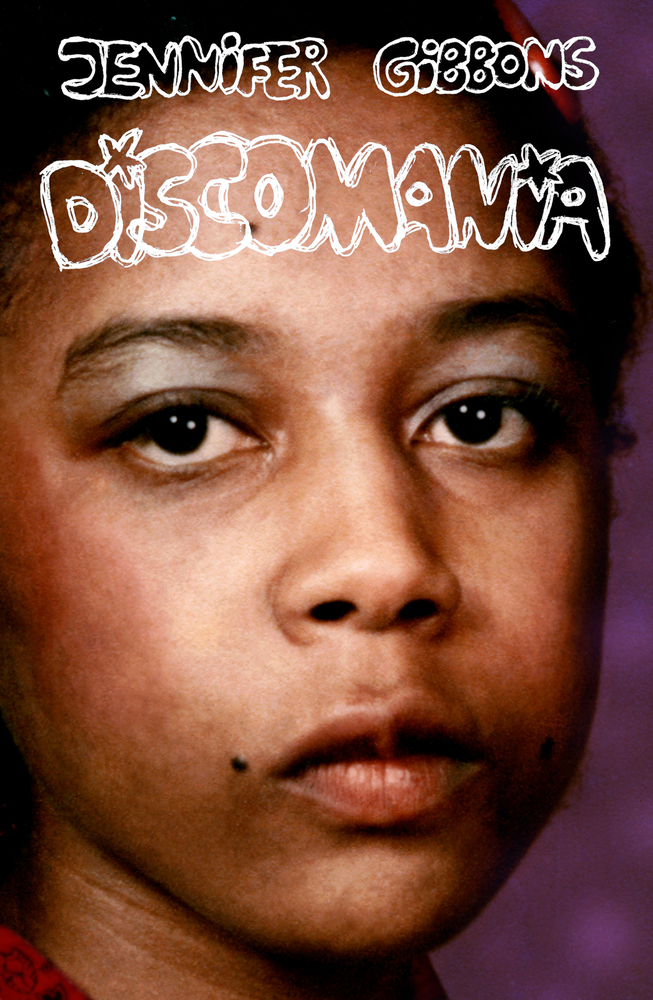
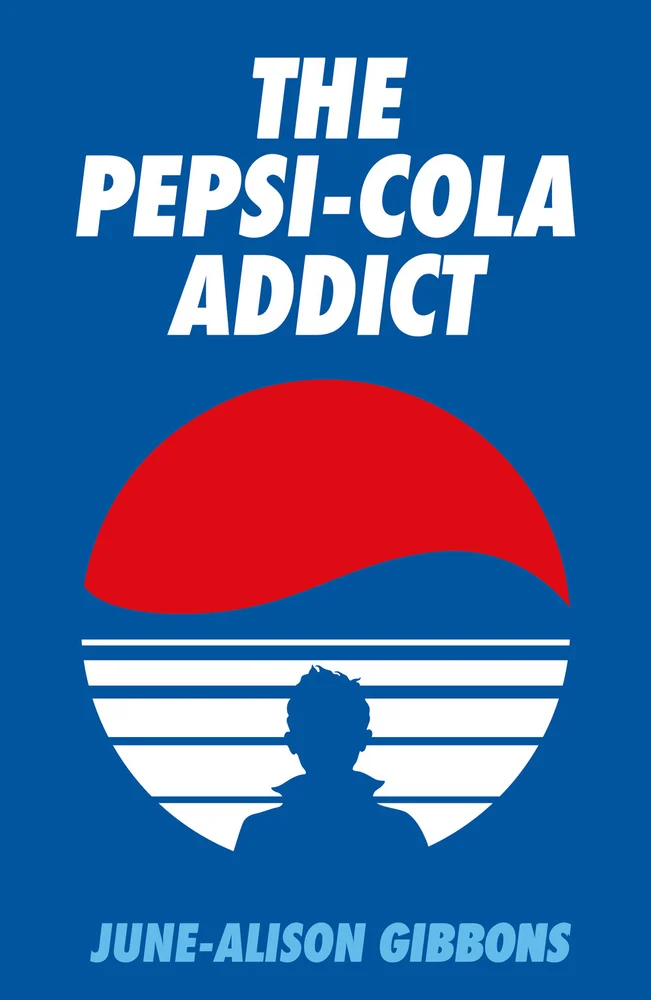
Explaining the novel’s utter strangeness starts, predictably, with the author. On the cover of Discomania, a Black teenage girl clenches her mouth tightly. Her name was Jennifer Gibbons; the novel will be published 33 years after her death. Jennifer wrote Discomania in 1980 over a few summer weeks, in a bedroom she shared with her twin sister, June-Alison, who was writing her own novel, The Pepsi-Cola Addict (2023), beside her. As June-Alison wrote in her diary, they were “two twins of history; coloured girls.” They were going to be famous writers.
Discomania and The Pepsi-Cola Addict don’t quite read like outsider fiction. Instead, they feel more like juvenilia of mature works that never arrived. Since the lonely teenage writer often has so little to work with, the material of juvenilia is fantasy—and the drive to reify fantasy by any means possible. And for the Gibbons sisters—who were the only Black children in their neighborhood, who were subjected to racist bullying in school and dropped out to stay in their bedrooms all day, living on the dole, writing novels and playing with dolls, speaking to no one but each other—literature seemed like a more accessible conquest than life itself.
And so when Jennifer declared that Discomania was “specially created for today’s and tomorrow’s teen-ager . . . . . . . . . . . and has also been written by a teen-ager,” she was inviting others like her to read Discomania not as a novel, but as an experience in its own right—an experience more real than life itself. A mechanical obsession with sex and violence propels Discomania—a sensationalism so often found in talented young writers biting off more than they can chew. June-Alison’s The Pepsi-Cola Addict is similarly sensorial: a teenage boy from Malibu spends a summer on the beach, drinking a lot of Pepsi-Cola, rejecting his gay best friend’s advances while having an affair with his sexy teacher.
Together, these formal quirks betray an author who’s using fiction to rehearse a life she couldn’t have lived otherwise. Discomania—like so much of today’s fanfiction, fantasy, romance, erotica, and YA—is a novel about leading an otherwise impossible life through an otherwise impossible body. Perhaps that’s why, despite its pulpiness, the novel’s tone and pacing can feel surprisingly flat: the novel is written at the pace of quotidian life. At one point, the reader follows Olivia as she literally keeps track of all of her friends at a club. The twins’ characters were like the teenagers in ’80s Hollywood movies: Californian, not British; white, not Black; popular, not loners; disco-dancers, not shut-ins. Discomania’s narrator reads like a Mary Sue fanfiction archetype, a girl so beautiful and popular, with a relationship so perfect that “all the disirer’s underneath the sun could’nt even describe what it was like.”
And, indeed, the Jennifer and June-Alisons of today can log onto Archive of Our Own (AO3), which just surpassed nine million registered users, and immediately start writing for an audience. Fanfiction is undoubtedly the largest body of juvenilia in the world. In fact, I wouldn’t be surprised if most working novelists of my generation first started in fanfiction: many bestselling YA slop just read like fanfiction with the names changed, and as someone who grew up reading stuff like that—we can always tell. Though most fanfiction writers are terrible and reading them is arguably Bad Education, fanfiction is in every way a healthier literary community for young writers than the Real Literary Context I now write in as an adult. There was always someone who cared, there was always comments and criticism for work, and there was an infinite appetite for risk.
When I was a teenager in 2010s China, all the most well-read girls I knew wrote fanfiction online. Like the Gibbons twins, they were rehearsing the relationships they’d like to have and lives they would like to lead, using prose to try on different personality traits and ways to be in the world. And like Jennifer and June-Alison, they were writing predominantly for other teenagers. They worked through their own sexual frustration, loneliness, and awkwardness through the bodies of the Other—that is, by writing unbelievably explicit BL stories about Japanese anime boys, or Draco Malfoy and Harry Potter. (Using fanfiction to process one’s own problems through nonspecific characters is even explicitly satirized in Gossip Girl Fan Fiction Novella, 2022.) Like Jennifer and June-Alison, the girls I knew all wanted to be famous writers. And as a teenager, I read their fanfiction with the same seriousness I read my Baldwin and Fitzgerald and Shakespeare.
But I don’t know where they are now. Maybe life became fuller than fiction and they found no point in continuing to write. Maybe they kept writing fanfiction but didn’t see a future in the Real Literary World—because its doors were closed to them, or because it really has no future. My point is, precocious writers like Jennifer and June-Alison Gibbons drop off the map all the time. Most people don’t become writers.
It’s common for teenage fantasy to find an engine in fiction: Discomania and The Pepsi-Cola Addict are propelled by such a strong authorial drive, so absolutely assured in their language and world, that they only took the Gibbons sisters a few weeks to write. But teenage fantasy runs out. Most people don’t become writers, for reasons known and unknown, for circumstances within and beyond their control.
“If we were to express ourselves,” June-Alison said in a later interview, “we would do so in our books, and do something to make our family proud of us.”
Born in Yemen to parents from Barbados and raised in a pallid Welsh town, the twins were daughters of the Windrush generation. After dropping out of school at 17, they lived on the dole and took correspondence writing courses, and spoke to nobody but each other in a private language: a mixture of Barbadian slang and English spoken very fast. Linguists considered their language as an example of cryptophasia, a secret language developed and spoken only between a set of twins, though June-Alison later disputed this, saying that they merely had a speech impediment. “If we were to express ourselves,” June-Alison said in a later interview, “we would do so in our books, and do something to make our family proud of us.”
The twins both wrote in a transatlantic English scratched off of teen movies and British colloquialisms, consistent in their misspellings and misplaced apostrophes, alongside precociously bizarre adjectives the twins possibly got from older books (“summarly” appears 60 times in Discomania). This English was not unlike what you’d read in fanfiction by non-native English writers, where the errors so often become a grammar of their own.
At 18, a year after writing their novels, Jennifer and June-Alison would have a summer as breathless as Discomania itself. They drank, smoked pot, and took taxis to a town 10 minutes away to hook up with the only American boys they knew, “Leonardo DiCaprio lookalikes.” After the boys moved back to America, with nothing else in store, the twins turned to committing petty crimes. They were soon sentenced to indefinite detention at Broadmoor, a notorious high-security psychiatric hospital west of London, where they would spend the next decade of their lives.
Just a few hours after she was released from Broadmoor, Jennifer Gibbons died of heart inflammation at just 29 years old. But the girl on the cover was going to become a famous writer. Her stare, timid and hungry, seems to just miss the camera.
Books like Discomania and The Pepsi-Cola Addict are what I call “experiential fiction,” because they are often read as a surrogate to specific lived experiences. (An apt Chinese Internet literature term is 爽文, which roughly translates to “fantasy-fulfillment fiction.”) Unlike traditional novels, experiential fiction has usually very little by way of interiority or subjectivity. Most people—Mark McGurl excluded—read Fifty Shades of Grey not to glimpse into Anastasia Steele’s existential condition as a young woman navigating love, work, and adulthood in a disenchanted neoliberal capitalist society (they’d read Normal People for that), but to use the prose as a crux to plausibly imagine experiencing BDSM dynamics through her young, hot body.
As such, experiential literature tends to be strictly functional. The focus of the narration is minimal on beliefs, history, and memories, but heavy on feelings, action, dialogue, on what happens to the character and how they react, on relatable feelings and exciting plot points. The prose wraps not around the shape of a mind but around the shape of a body. It’s true that Fifty Shades sold 150 million copies and Normal People sold 3 million, but the formal similarities—minimal interiority, all action dialogue and feeling and of course, the body, the body, the body—make both of these novels experiential literature. Experiential literature succeeds when the author correctly taps into some universal fantasy and reifies it through a sufficiently generic body-of-the-protagonist, into a world that offers you at once control and release. What types of lives, what types of bodies are in vogue today? Are the kids still into Pride and Prejudice–style slowburn love-triangle-enemies-to-lovers, or should we do the same story but plug in some bodies of color instead?
Experiential literature is the literary form of our age—the age of point-of-view TikToks, day-in-the-life videos, where the medium of communication is no longer language itself but a video that documents a lived experience. We can easily inhabit another person’s life as fiction—move through the world as bodies that aren’t like ours. Today’s teenagers grow up with memories of experiencing life in millions of other places, through millions of other bodies—except, perhaps, their own. Experience is increasingly detached from subjectivity. We fetishize the static image, then fantasize about inhabiting the image. In experiential fiction, the literary subject is the image, not life itself.
Naturally, this culture produces readers—and we should be grateful that it produces any readers at all—who read literally everything as experiential literature. Thankfully, good novels stay good even if their contemporary readers find them through fanfiction tropes. Critics are wrong to overlook form in favor of the market dynamics of it all. Lonely older women bored by the men in their lives read 50 Shades for the same reason early college-educated twentysomething women bored by the men in their lives read Normal People: people seek out experiential literature explicitly to fulfill a lack, to run the course of a specific fantasy. It could be ways to look that never can come to pass, feelings, speech patterns, behaviors they want but for some reason are not capable of; exciting relationship dynamics that never transpire. We read to inhabit another body that can make the image real.
And because we only really care about how the image makes us feel, verisimilitude is secondary. Discomania’s feelings are so fervent that the factual inaccuracies in the novel are true to the twins’ lives, true to everything we get wrong about the world as teenagers. The teens go on a road trip, inexplicably hitchhiking from West Virginia to “Olkhoma” and “Tennesee,” then back to “Santa Barbabar” and “Los Angle’s” in just a matter of days. The novels made a new English out of their formatting and spelling mistakes, alongside new Americas of their own, where teenagers have absolute freedom to the point of absurdity. The fantasy Americas freed their authors from everything about the remote, all-white Welsh town they were stuck in. It’s all very other voices, other rooms. Other lives, other bodies.
Which brings us back to the fact that Jennifer and June-Alison’s protagonists are all white.
In the 19th century, one of the only four Black writers to be published in America was Sarah Farro, born around 1859 in Illinois. A newspaper clipping at the time mentioned her in the same breath as Ida B. Wells and Sadie T. M. Alexander, reporting that Farro’s favorite authors were “Holmes, Thackeray, and Dickens.” Like Phillis Wheatley’s poetry, Farro’s novel received recognition in the US and the UK on the grounds of being by a pioneer Black writer. We don’t know much about her life, except that she never wrote another novel.
Farro’s first and only novel, True Love: A Story of English Domestic Life, was published when she was 26. True Love—much like Gibbons’s Discomania—does not fully “pass” as a British domestic novel: the characters celebrate Thanksgiving and quote their incomes in dollars. While emulation of other literary works is a hallmark of juvenilia, Farro and Gibbons’s emulation of white people as Black writers without access to a Black literary consciousness seems closer to Homi Bhabha’s formulation of colonial mimicry, “the desire for a reformed, recognizable Other, as a subject of a difference that is almost the same, but not quite.”
Almost the same, but not white: at the heart of True Love’s and Discomania’s fictions is the process of writing as deracialization. For Farro and Gibbons, writing fiction seemed to involve a conscious masking of their non-white racial origins from the narrative: either by marginalizing the element of race from the work’s social logic, or writing characters who are either explicitly white or racially unmarked.
Certain things are easier to do in other bodies, in other countries. No writer understood this better than James Baldwin, whose novel Giovanni’s Room is perhaps the most famous example of deracialized fiction in the English language. At the time of its publication, Baldwin had already achieved acclaim among white and Black literati alike for his debut novel, Go Tell It on the Mountain, a bildungsroman set in his native Harlem. Following it with a novel about white male homosexuals in Paris was seen as an act of race traitorship to Black critics and a sexual scandal to white critics. Eldridge Cleaver called Baldwin’s homosexuality a “racial death-wish.”
By deracializing his own homosexuality in Giovanni’s Room, Baldwin accomplished the impossible task of responding to the white racist sexualization of Blackness and the homophobia in the Black community. As Baldwin later said in an interview, to include Paris, homosexuality, and “The Negro Problem” in the same novel was “quite beyond my powers” at the time.
In Giovanni’s Room, the metaphors for homosexuality and Blackness are virtually interchangeable, notes scholar Josep M. Armengol: “Race is deflected onto sexuality with the result that whiteness is transvalued as heterosexuality, just as homosexuality becomes associated with blackness, both literally and metaphorically.” Perhaps this temporary deflection—and what it taught the American reading public—acted as a literary Wittgenstein’s ladder of sorts. In his later work, Baldwin wrote about Black homosexual characters in relationships with other Black homosexual characters.
In contrast, the deracialization in Discomania seems to come from a place of alienation rather than systematic oppression. Gibbons associated partying with “white,” “American,” and “dancing,” because TV and films kept telling her so. Bhabha, quoting Lacan, writes that “the effect of mimicry is camouflage.” Perhaps the twins deracialized their characters because they had no idea how to write about how Black teens like themselves would talk, feel, and behave among a group of friends; they simply had nothing to work with. A girl who looks like Grease’s Sandra Dee, however, was much easier. They already knew all that from TV.
Curiously, deracialized fiction seems to be having a moment in contemporary Asian Anglophone literature—there are examples from science fiction (Ted Chiang, Kazuo Ishiguro) to alt lit (Tao Lin, Ottessa Moshfegh) to popular American Novels™ (Celeste Ng, Hanya Yanagihara). In literary fiction, an even more curious trend emerges: a writer whose early work features searingly Asian American protagonists “graduate” onto writing novels featuring mostly either racially unmarked characters (Yiyun Li, Susan Choi, Katie Kitamura) or explicitly white characters (Alexander Chee). The unspoken rule seemed to be: get tenure first, and then you can write about white people (or plausibly white people). Absent everywhere in these authors’ mature works is the “privilege” or “joy” of representation that the publishing industry chimed about for the better parts of the last decade. Instead, the unspoken fluidity and minimal reference to race in these authors’ late fiction imply that bondage of Asianness seems to be the final cage that authors are excited to rid themselves of, a coming of age of sorts: they are finally not just Asian writers in the industry’s eyes, but real writers with really universal subjects.
All this implies something pretty depressing about writing in English as a person of color. Doesn’t matter whether you’re a no-name teenaged writer like the Gibbons twins or the Chinese Internet femcels I knew, or a tenured Asian American Writer™ who get to teach upper-middle-class American college kids how to write fiction, or literally James Baldwin himself—there’s something so difficult and so unspeakable about the racial experience, that a writer must circumvent it altogether at some point in order to do the work they’d like to do. For Baldwin, writing about a Black gay man was at one point impossible to the point of paralysis. Asianness weighs you down, it constricts the potentials of fiction—at least, the fiction of tenured Asian American Writer™—rather than expands it. Race complicates the narrative, compels the writer to worldbuild, explain, and excuse, in fiction as well as in life.
In an article for Post45 titled “Melancholy Transcendence: Ted Chiang and Asian American Postracial Form,” Christopher T. Fan notes that most of Ted Chiang’s stories feature racially unmarked characters with Western last names. Chiang often wishes to keep his characters somewhat default or universal: in a sci-fi story, race seems to be all but a distraction. Yet Fan’s close reading of Chiang’s most famous story, “Story of Your Life,” shows that Chiang’s fiction remains highly Chinese.
At times, Chiang’s characters behave Chinesely even when they’re named Dr. Louise Banks and Ian Donnelly; other times, they want the exact opposite things that Chinese people want—Louise wishes that her daughter would become an English teacher instead of a financial analyst. To even think of those careers as opposite choices, Fan argues, is a highly Chinese thing to do. I’m inclined to agree: as Fan writes, “every enunciation of the postracial is an enunciation of a specific racial relation.”
Racial ambiguity, in these narratives, is often a simplifying force on the social world of the novel. The author bypasses the inherent complication of moving through the world as a racial minority by removing race from the narrative’s subject matter altogether. More often than not, this move universalizes a particular racial subjectivity, as in the case of Ted Chiang. Everyone thinks Chinesely because no one in the story is Chinese. To no longer be constrained to one’s subjectivity opens up space in the narrative, freeing the author to work out a problem through other bodies and memories—a problem that might very well be the experience of race itself.
In 2009, in that very particular moment of liberal-literary discourse during the Obama presidency, theories of a “postracial society” briefly caught on. Even Colson Whitehead was pinning New York Times op-eds about “living postracially,” preparing, aesthetically and culturally, for a society where race is no longer a cogent social category. We no longer live in that world.
And so we must take everything more seriously.
To no longer be constrained to one’s subjectivity opens up space in the narrative, freeing the author to work out a problem through other bodies and memories—a problem that might very well be the experience of race itself.
Like the twins’ lives, the publication history of Discomania and Pepsi-Cola Addict seem nothing short of bizarre. In 1980, June-Alison paid to have The Pepsi-Cola Addict published through a vanity press with her dole money. Discomania, on the other hand, was rejected by serious and vanity presses alike for being “too violent, too sexual, and too futuristic.”
The novels’ recent publications came about after June-Alison, who now leads a quiet life in her hometown, somehow befriended David Tibet of the neofolk band Current 93. Tibet and his partner, Ania Goszczyńska, took it upon themselves to release the twins’ novels. The Pepsi-Cola Addict was published in 2023, and Discomania, long thought to be lost, will be published in May 2026 after June-Alison produced a manuscript. (The pair is involving June-Alison in their other art as well—she provided vocals in some of Tibet’s music, and the pair runs her Instagram account with her permission.)
From the outside, the partnership seems more like an artistic conservatorship over June-Alison than a genuine collaboration. Yet, from the host of people who, by way of interview, intervention, or cure, attempted to excavate the twins and impose their own meanings on them, Tibet seemed among those who were more interested in their own voices. Freed from the twinship at last, June-Alison started giving interviews and speaking to others after Jennifer’s death. The British public jumped to sensationalize their silence: Marjorie Wallace, a white journalist, caught on to the story in 1982 and wrote endless newspaper articles about the girls. Her 1986 biography, The Silent Twins, remains the sole source available on much of the twins’ lives. (A movie of the same name was made in 2022.)
We will never know to what extent Wallace sensationalized the twins’ lives. At Broadmoor, the twins seemed to be anything but silent: they had boyfriends and were known as “The Queens of Broadmoor.” Had the Gibbons sisters had a little more encouragement, they might have gone on to write mature works that developed the solipsistic, sensational talents of their novels, like a Clarice Lispector or a Breece D’J Pancake. But they never had the luck to meet other British Caribbean writers like Andrea Levy and Beryl Gilroy, and never stumbled onto the nascent Black British publishing scene. They would never know that a world away in America, Alison Mills Newman, a young Black actress in her early 20s, had penned her own autobiographical novel Francisco (1974) about loving and living in Los Angeles, using a nonstandard English as passionate and as lyrical as the Gibbons’ sisters’.
Instead, they only had each other as editor, reader, and sister. The twins hated each other and depended on each other, even getting jealous of each other’s boyfriends. Both novels explored this dynamic through a straight boy rebuking an obsessive homosexual friend’s advances. They wrote their diaries with a self-mythologizing devotion, writing drafts and editing them as they would their novels, but nobody cared. With no external feedback, the sisters’ talent withered. Like Sarah Farro, June-Alison has not written another novel.
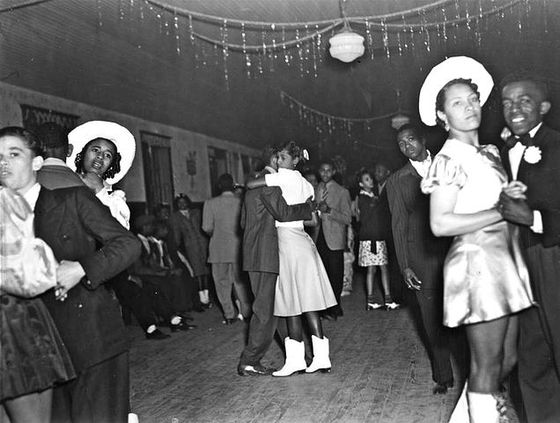
Despite all that, life goes on in Discomania and The Pepsi-Cola Addict. In that dreamless California disco, Gibbons’s white party girl saw “Almost every culture … There were. Orient’s, Asian’s, colored’s, canadian’s and red indian’s all simply haveing a mighty good time. There were even a few beatnik’s, gay’s and hetersexual’s all haveing a good time to the music.” True to life, disco music freed its dancing bodies from the weights of race, sexuality, and class—like the Gibbons sisters’ novels freed them, however briefly. Jennifer Gibbons would never go to a disco like that herself, but she made sure that every reader of Discomania experienced it to the full. And that’s the party ethos of the deracialized disco: if there’s a life I could never live, I might as well write it into being for others. 
- Featured image by mcgowanm89 / Flickr Creative Commons (CC BY 2.0)