

Being reviewed:
Advertisement

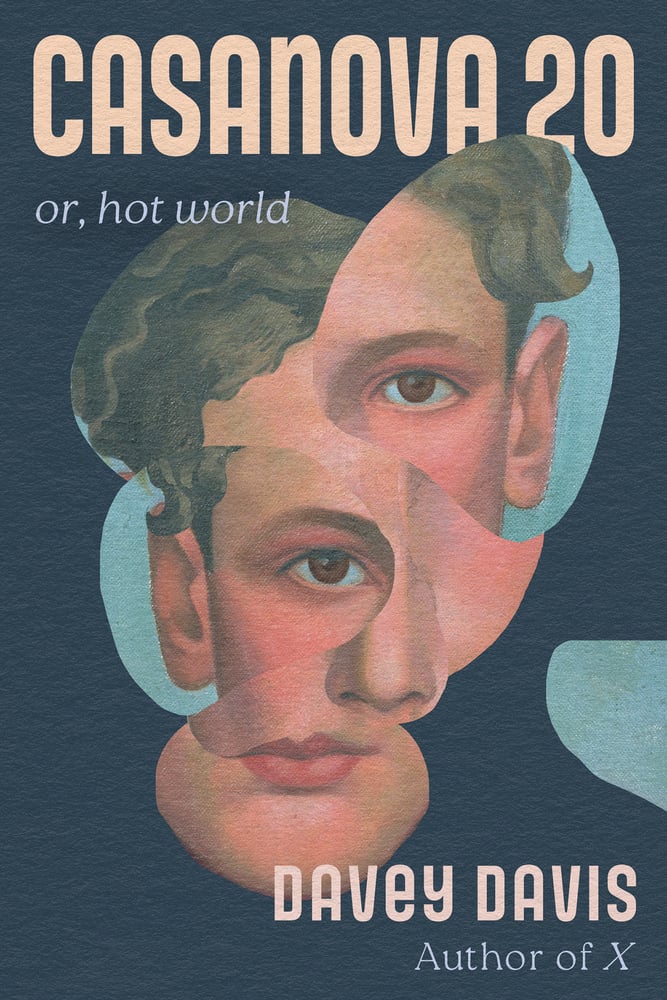
Is there some reason why an author hitherto classified as writing “trans literature” and “dyke drama” shouldn’t publish a sprawling novel about a preternaturally sexy straight cis man, Adrian, and his dying older gay friend, Mark? Of course not. And if you search within Davey Davis’s Casanova 20: Or, Hot World for relevant terms just to be sure, you’ll only find references to “the transition from sick to dying,” a morning that has “officially transitioned from warm to hot,” and eyes that have “transitioned from her phone to her computer.” I swear Davis inserted these as a little (pointed) joke.
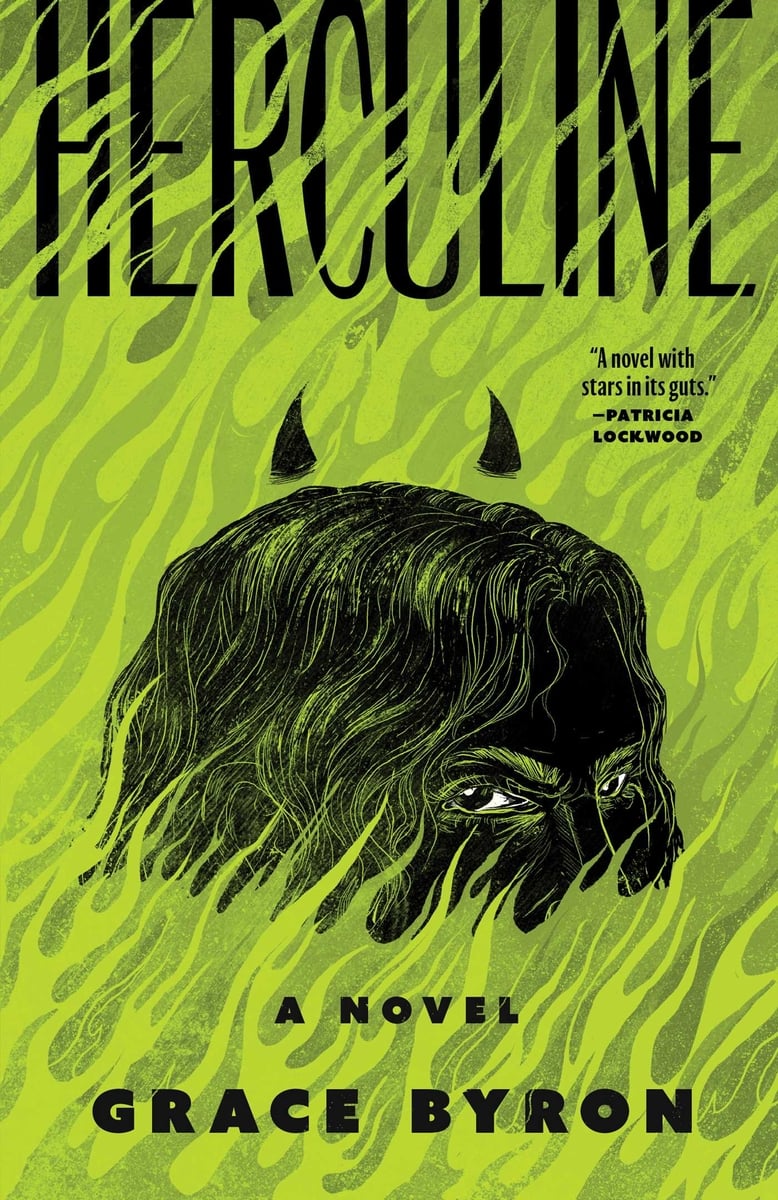
Another joke of sorts can be seen in Grace Byron’s self-described “allusion to a performative trans history that tries to claim ‘trancestors’” in her debut novel, Herculine, set on an Indiana commune run by and for trans women. This “doll” farm where the women live is named “Herculine,” after one of the “trancestors” disparaged by Byron (Herculine Barbin was a 19th-century intersex woman whose memoirs were translated by Michel Foucault). The women at Herculine pool resources, make porn to sell to make ends meet, eat “watery macaroni and paper-rot green beans,” and talk incessantly about “t4t” solidarity, all of which the unnamed first-person narrator of Herculine—a hater—generally considers naive, corny, and gauche. She is a lapsed Christian, and an oil-cross-drawing amateur demonologist. She drinks hazelnut bodega coffee and hails from Indiana, whither she ultimately must return to join her poisonous lesbian ex, Ash, and confront her snake-like conversion therapist, Bill.
Contemporary trans literature—as Casanova 20 and Herculine should make clear—is thriving in a highly freewheeling manner. This has been true at least since 2021, in the wake of the breakthrough mainstream novel Detransition, Baby by the wonderfully weird writer Torrey Peters, who has since been able to return to experimental form. From the body horror hits of Gretchen Felker-Martin and Alison Rumfitt, to the slant realisms of Shola von Reinhold, Emily Zhou, Jeanne Thornton, and Casey Plett, to the psychedelic offerings of Jordy Rosenberg, Jackie Ess, or Andrea Lawlor, fiction by or about transgender subjects has newly been receiving something of the critical acclaim it has—in obscurity—so long deserved. How revealing, then, that the New York Times staffer David Brooks recently suggested that literary fiction has been declining in quality, because of its supposed progressivism—i.e., novelists’ “conformity problem”—and “a general loss in confidence and audacity across Western culture.” Given Brooks’s lament, we must ask: Is the cissexual literary world okay?
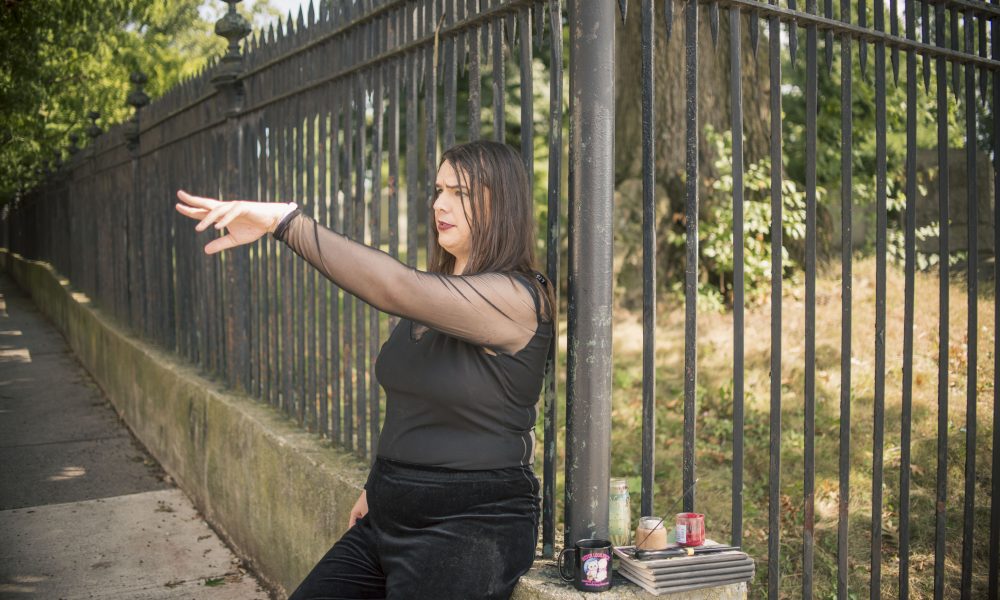

Of course, at the same time as this literary flourishing, a genocidal global politics has coalesced against trans life, catalyzing what critic Harron Walker notices is a strain of communalist escapism and trans separatism in some of the books in question. “If cis people don’t want to live with us? Fine. Let’s give them what they want,” muses Walker, discussing Byron’s Herculine alongside Mattie Lubchansky’s similarly themed graphic novel Simplicity (2025), and Torrey Peters’s newly reissued short story about a trans enclave, “Infect Your Friends and Loved Ones.” “But would that in the end solve anything at all, or is it just a nobler delusion?”
This question is precisely what Herculine leans into: via the medium of a horror adventure at a lesbian land project, a demon-slaying quest doubling as an ex-ex-gay road-trip bildungsroman. But veering in the opposite direction is Davey’s Casanova 20. Previously, Davis’s apocalypse romance the earthquake room (2017) and queer noir X (2022) both featured leads with an explicitly drawn relationship with transsexuality; one of the lovers in the former lesbian scenario tried to be a man for a while, for example; meanwhile, quips the BDSM-desiring narrator of X, “I can’t think of a bureaucratic process flexible enough to confirm my gender.” How remarkable, then, that Casanova 20 departs from its author’s previous two “trans novels” (as it were) by declining to name cisness or transness at all.
Here, it seems, is where Davis and Byron overlap. For her part, Byron persuasively insists on the importance of trans writers writing “about poorly behaved trans women” and eschewing not only the dreaded commonplace of the trans “sob story” memoir but all forms of “easily digestible trans narrative.” When it comes to fiction, she recognizes perhaps better than anyone what the worries are in having—as she does in Herculine—“a trans woman be the villain in a book about trans women, especially in this political climate.” After all, she has written a great deal of earnest nonfiction for the New Yorker about trans gun ownership, trans art, trans health care, and antitrans legislation; as a strong new voice in this so-called culture war, she has, as Dazed put it recently, “built an impressive reputation in a relatively short time.”
Still, Byron told BOMB recently, “But I do find myself in the camp of saying, ‘I’m a writer who is trans,’ rather than, “I am a capital-t Trans Writer.’ It’s a great starting point, but I don’t think it should be an endpoint.”
Both books quietly exalt real friends above other conceptualizations of love.
Today, writers who are trans “want to write more cis characters,” as Byron remarked in another interview. One such writer is, as I said, Adrian: Davis’s eponymous himbo “Casanova.”
Adrian looks so good that, during his infancy, his mother harbors “a nearly unspoken regret for the tiara-crowned prizewinner her pretty son might have been.” He is, at any rate, possessed by a mysterious power of attraction known only as “it,” a gift he does not control but feels whenever it thrums to life, magnetizing passersby. It compels all kinds of people; Adrian, however, prefers women. Casanova 20 is hence sub-subtitled “a heterosexual novel,” notwithstanding the thousands of male one-off hookups Adrian “burned through” in adulthood.
How Davis arrived at this premise is explained on their newsletter David: the experiment of “giving” the burden of genderqueerness “to someone else” for the purposes of their third book. In an essay reflecting on experiences in the publishing industry of being “disappeared before I could even be dismissed” (i.e., circulating as a “TRANS writer of TRANS fiction—someone whose genre is necessarily informed by my genitalia, which I find to be so very unchic…”), Davis asks:
What is the, or at least a, trans experience without trans people? … I realized that one way to replicate what the world presents to gender nonconforming people as our best case scenario for a trans public life—that is, a permanent, rigid, and violent sexualization, objectification, and infantilization—was to curse my protagonist, a straight-identifying white cis man, with an extreme and unrelenting beauty.
Davis’s character of Adrian is constantly fielding (from everyone but his friend Mark) an onslaught of extractive, incurious, and shallow adoration. As such, Adrian is a cis-het white male version of a perfectly exoticized trans character: “the most beautiful mirror in the world.”
It is, ambiguously, a lightning rod for pure fetish, a dog whistle for chasers of all sexes. Often, he enjoys it; sometimes, he really doesn’t; and above all, tragically, he fears losing it, especially after spending such long years learning to master and wield it for fun. The book opens with the utterly transfixing account of it first manifesting itself in Adrian’s infancy, much to the consternation of his embarrassed and resentful family. Later, adult women and men alike follow the child home from school, embrace or stroke him, attempt to kidnap him, and call the house only to breathe heavily down the line, declaring love to him, or swamping him with “amorous potscards, billets-doux, poems, and death threats, sometimes with cash enclosed.” Waiters in restaurants touch his hair, and lifeguards administer unneeded CPR to his body. These bewitched individuals, whose desire persists unabated until it mysteriously falters amid the coronavirus pandemic, are Adrian’s “friends.”
Yet, specifies Davis, Adrian does not actually belong to the “class of beautiful people,” insofar as the ability to leverage looks as a commodity is concerned. What Adrian has is more occult, not the same as looks: “it was a sturdier, sexier thing than the skin stretched over his skull.” It is reducible neither “to his appearance or to his personality.” It lets him absorb “admiration without question.”
Whether he is out fucking strangers, accompanying Mark somewhere, talking to Mark’s also sick and dying sister Ruth, or hanging out with his lesbian friend Cora at the bar she tends, Adrian is intermittently pinned by the gaze of the friend kink, as opposed to friendship. He barely works, always drinks, and frequently is housed, for free.
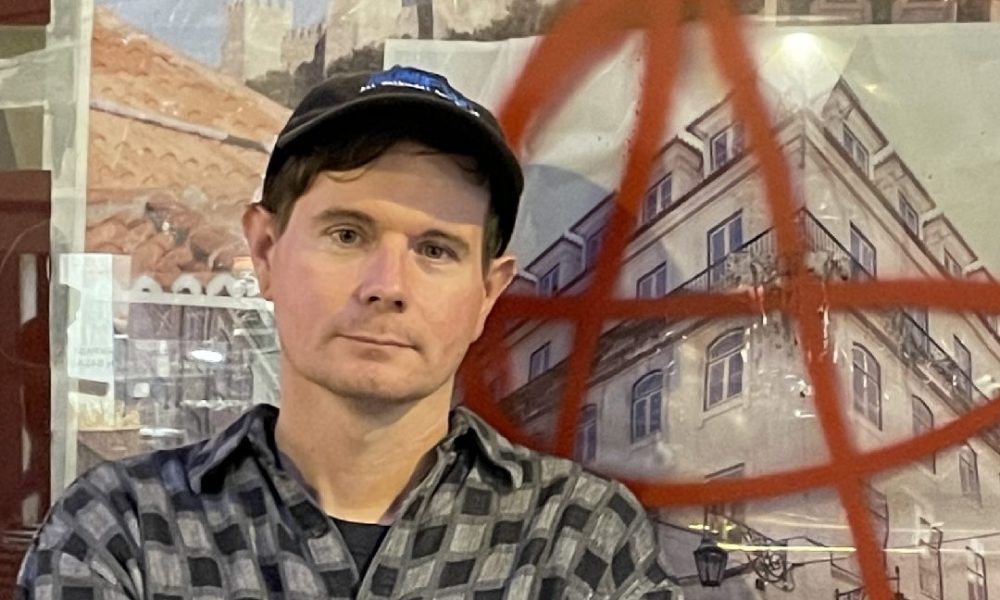

Fists occasionally fly at Adrian, and, once he is queer bashed at a laundromat. Still, mostly, Adrian is bombarded with compliments. But Herculine’s anti-heroine is treated very differently (or so it seems). Immediately in Herculine, we read how “a man standing in front of the ice cream section yelled something obscene about cutting me open and feeding me to the pigeons.”
Similarly, Davis’s Adrian neither reads nor knows art of any kind. Still, such is his beauty, he can hobnob with anyone: Mark himself, the chosen kin whose sickness and slow death occupies the other half of the novel (opposite all the sex Adrian is having) is a famous painter. By contrast, however, Byron’s self-described “slut” thinks with Greer Lankton, David Wojnarowicz, Ursula K. Le Guin, and Assata Shakur; and yet no one is giving her a book deal, let alone a TV pilot, and no one seems to want to love her. Also, she has to contend with “endless medical appointments where my dead name swung from the rafters,” seething jealousy of successful writers, sleep paralysis, the obsessive compulsion to make lists, a landlord, a transmisogynistic boss who lays her off, and the various other subtypes of misogyny on display from men (specifically those she fucks, prolifically, via apps). Superficially, then, it would seem that New York ensures Casanova 20’s Adrian will want for nothing, while it spits Herculine’s Midwestern transplant back out to the no-place (u-topos) whence she came.
For all the obvious formal and topical differences between Davis’s and Byron’s novels, though, a striking similarity emerges. Firstly, both share the non-pathologizing and sex-radical orientation toward the pursuit of the erotic for both “slutty” and abuse-surviving protagonists. Secondly, both quietly exalt real friends above other conceptualizations of love. Not a cult, nor the cult of the couple-form is what is most needed for human flourishing; rather, what these novels call for is friend-love—beyond even the mutual mothering-imperative—without any onus to heal or repair.
To be sure, the damage our subjects bear is undeniable. Billy used to jerk his “patient” off when she was a teen, sadistically daring her to stop him even as she dissociated and cried. Despite or conceivably (in part) because of the hurt here inflicted and overcome, sex is now a source of self-fashioning for this survivor in adulthood: it has become her “magic release valve,” whether it’s with men in the city or with fellow conversion-therapy survivors at the rural cult. Slower magic, however, reveals itself when friends show up from Brooklyn—Xiomara, Hazel, Nora (some of them, we suspect, currently fucking each other)—to help orchestrate the escape from Herculine.
For all its avowed cynicism, Herculine holds for a love neither gender-defined nor gender-abolished—“not because of my gender or out of my gender”—but rather a love delivered through the body, in friendship as much as in courtship, “so my body does not feel like loss.”
At one stage, it felt necessary, in order to heal, to repudiate Billy’s contention that sexuality isn’t fixed. Now, however, our girl feels no need to excuse her queer proclivities with reference to a born-this-way ontology. So what if traumas made her (choose to be) queer and trans? “I can have my pussy and eat it too.”
For his part, Adrian’s sexuality is inaugurated early in life when he is waylaid by a perfumed female stranger “that day in the bookstore bathroom, the day he chose his own adventure.” There follows a deflowering of sorts with a man—when Adrian is just eleven—in a car, “under a flowering saucer magnolia” near Adrian’s school. This assault, ambivalently, is conveyed in symbolic fragments; the petals turn into “vermiculated mulch” during the encounter (“though Adrian was not aware of this”) and the memory retains “some white crumbly crud erupting from the armrest’s metal trash receptacle.” As for the man from the car: we briefly follow him back to his home, where he weeps tears of shame over the sudden irruption of pedophilia in his life. He is never mentioned again. And yet, the experience does not, as far as we can tell, wound Adrian. It merely helps “solidify his preference for women” while simultaneously cementing his “deep, if distant, compassion for men as a group.”
Davis is here respectfully leaving space for what the philosopher Avgi Saketopoulou would call a traumatophilic approach to the bad things that others do to us. This particular child’s sexual career is neither defined by, nor unshaped by, the afore-described abuse of adult power.
In adulthood, Mark and Adrian’s unsexual bond of mutual care, both for each other and for Mark’s cat, carries the old gay man all the way to death’s door—and beyond. (Incidentally, Davis writes this cat, George, with astonishing tenderness; he was one of my favorite threads in the book.) Assumptions and insinuations from the public about the nature of their “age gap” signify little in the midst of the sponging, vomiting, collapsing, feeding, and nursing through which this love breathes.
Does it make sense to characterize this intimacy—between a celibate gay widower and a heavenly stud who takes (in Mark’s phrase) a “gay approach to a straight life”—as heterosexual? As much sense as anything about gender makes sense, I guess. As much sense as the separatist logic and policing of queerness at a place like Herculine. “As gay people,” Davis wrote recently, “we are often forced to reconstitute straight notions of ‘the family’ in order to survive, and many of us do that by integrating it with the sexual and romantic. [Hence,] in my families, we fuck our siblings or parents or (adult) children, or maintain relationships with our ex-lovers, or engage in platonic romances, or raise children (minor and otherwise) alone and with non-romantic partners.” Davis says they put a “curse” on Adrian, fating him to inhabit a queer universe, in the body of a normative demigod.
If there is wisdom to be drawn from this, it echoes the moment of realization in Herculine that comes in response to the ex-girlfriend—Ash the cult matriarch—explaining the particulars of her collaboration with Satan. “So you brought demons here to make us cis?”