Being reviewed:
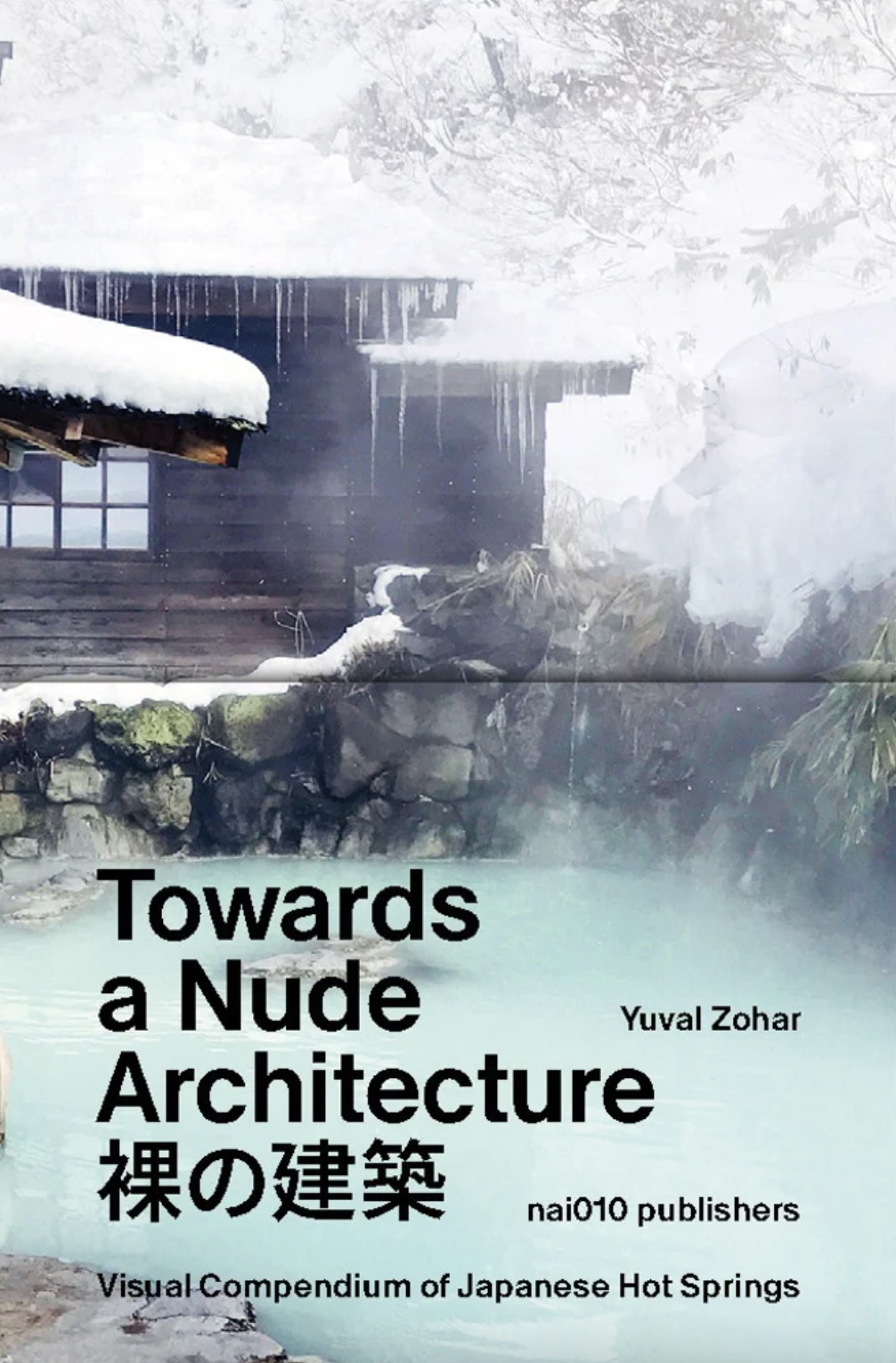
Towards a Nude Architecture: A Visual Compendium of Japanese Hot Springs
Advertisement

Just in the past two years, my home city of New York got eight new communal bathhouses. Tribeca’s AIRE Ancient Baths added an Upper East Side location; Othership, which started in Toronto, now has spaces in Manhattan’s Flatiron neighborhood and Williamsburg, Brooklyn, with a third planned for the Upper East Side; Bathhouse, which started in Williamsburg, opened a new location in the Flatiron; Akari, a sauna and cold plunge spot that also started in Williamsburg now has a second facility in Greenpoint; the members-only Lore Bathing Club is now up and running in NoHo; QC NY bring bathers over to Governors Island via ferry; and Brooklyn Bathhouse, where you can see a live show in addition to getting a soak, opened in Prospect Lefferts-Garden. At least two more spaces are slated to open by 2027: Sund, inspired by the abundant geothermally warmed outdoors pools in Iceland, will open in an as-yet undisclosed location, and the Altar will give the Flatiron its third bathhouse.
There is, in fact, a surging global interest in communal bathing: whether in pools, steam rooms, or saunas, not to mention cold plunges and ice baths. Each of these contemporary communal bathing experiences draws on ancient and often highly specific traditions from across cultures: whether it be the unique sauna practices rooted in Finland or Southern Estonia; Korean hanjeungmak, a type of sauna now incorporated into the enormous and widely popular facilities called jjimjilbang; the Jewish mikveh; the variety of hammams that endure across many parts of the Muslim world; or countless other traditions. And yet, you might struggle to get a sense of those rich histories when walking into one of these spaces, which tend to cater to a wide-ranging audience of consumers and often lean on vague insinuations of cultural otherness without any sense of adhering to traditional practices or beliefs.
These nouveau bathhouses are also, invariably, expensive to visit. You may or may not be surprised to learn that a meaningful slice of the current bathhouse trend is driven by the tech industry and those adjacent to it. Crypto mining is what heats the pools at Bathhouse facilities, along with a small but growing number of other pools. Othership was founded by someone who moved first through hedge funds, start-ups, and crypto, before getting sober and starting to host sauna parties in Toronto during the early years of the Covid-19 pandemic, which led to the idea for a physical business. And the Lore Bathing Club is the brainchild of one of the founders of NeueHouse, the bicoastal members-only club and coworking space that raised millions in venture capital funds in 2015, only to abruptly shutter this September (the same month the Bathing Club opened), subsequently filing for bankruptcy. At a time of staggering economic inequality—driven in no small part by the tech industry and its funders—along with a crushing affordability crisis, one might wonder if Roman baths and the fall of that particular empire are a better cultural trope to make use of in this proliferating market.
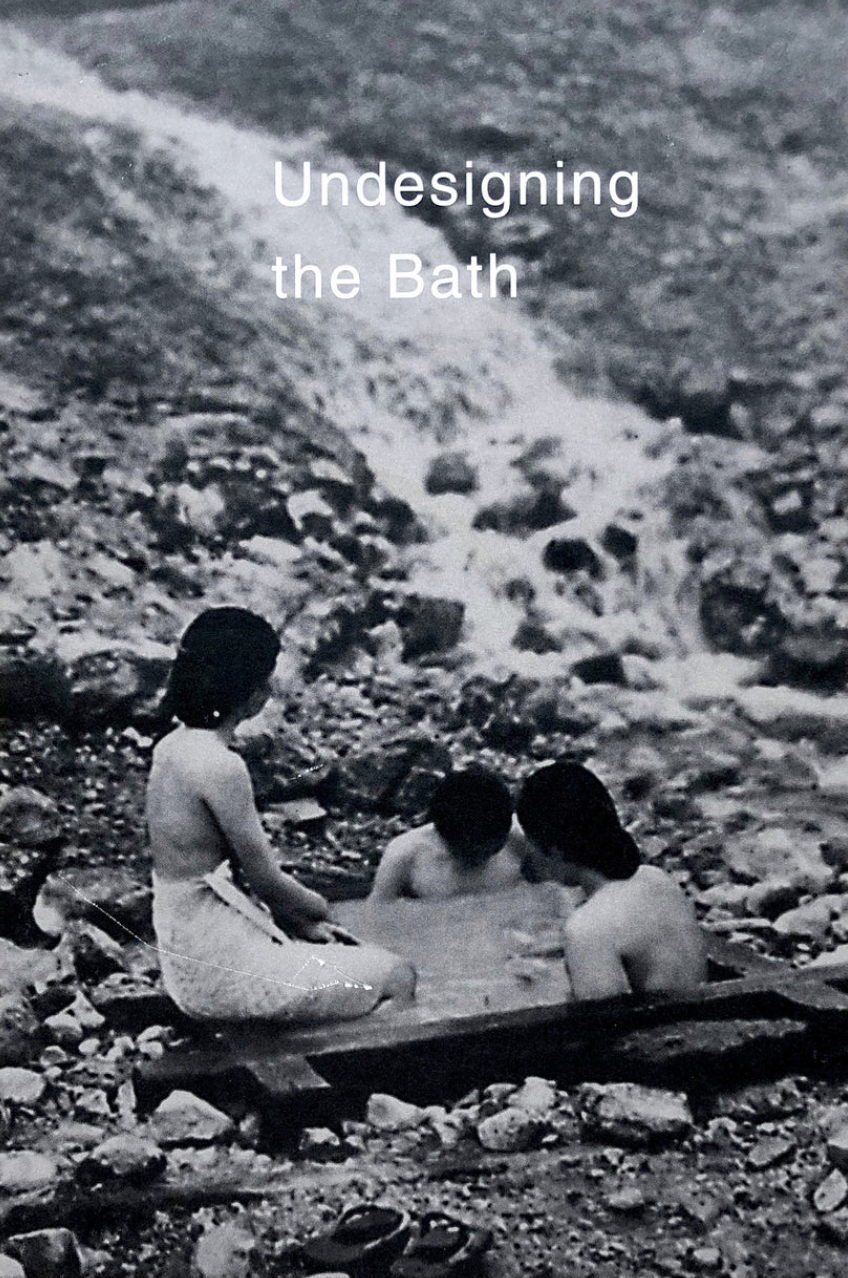
Given all the above, I was interested to spend time with a couple books focused on bathing traditions to see what insights or counterpoints they might have to offer. The first one I picked up was Towards a Nude Architecture: A Visual Compendium of Japanese Hot Springs, which includes writing, photographs, and architectural renderings by Yuval Zohar. And the second was the decades-old Undesigning the Bath by artist and designer Leonard Koren, who was also the founder and publisher of WET: The Magazine of Gourmet Bathing, an important but very tongue-in-cheek compendium of design and culture. Both authors share an interest in celebrating and appreciating unique practices tied to one of our most basic needs—cleaning and caring for our bodies—yet they approach the topic from very different angles. At the end of the day it’s clear that Zohar is yet another person selling an aestheticized “experience” that few can access, even as his book gestures toward accessible alternatives. Koren, meanwhile, continues his decades-long endeavor to poke fun at the haughty connoisseurship he was pressing against with WET, an early mirror for the high-end experiential consumption proliferating today. All of that said, a central point underlies both books, and the recent surge in interest in these spaces: that communal bathing facilities could potentially provide a unique means of bringing people together at a time of heightened isolation, political polarization, and extraordinary disparities in wealth. But if that’s the pitch, then the product has to live up to it, and so does the price point.
It’s no accident that lack of access to public restrooms and shower facilities in the US is among the key barriers homeless Americans face when trying to get jobs and connect with services. Public parks and the amenities they provide are one of the few shared places we have, but these spaces are increasingly being privatized and are often heavily policed in ways that dramatically limit some populations’ ability to use them or relax there. One of the only other models we have in the US for anything approximating a shared sanctum are public libraries, and not only do they carry too much of a load because of that singularity, they are also coming under attack precisely because they are intended to serve everyone. So while the topics of these books could seem esoteric or epicurean, the truth is that providing affordable, egalitarian spaces of rest, renewal, care, and human contact—things that are central in many of the cultures from which these new facilities are taking ideas—could offer a model of shared public space and cross-cultural exchange that doesn’t require carbon-spewing plane rides to far-flung places or other types of privatized, individual consumption.
Towards a Nude Architecture: A Visual Compendium of Japanese Hot Springs is too small to be a coffee table book, not comprehensive enough to be an authoritative English-language guidebook, nor is it the architectural manifesto the title might lead you to think it is (playing as it does with the title of Le Corbusier’s seminal volume, Towards a New Architecture). Instead Zohar’s book lays out a lot of useful and enticing information, along with copious imagery focused on communal bathing traditions in Japan. An architect who has lived and worked in a number of countries around the globe, Zohar transited Japan to gather the photos and information that make up this book and now calls Yugawara, a small coastal Japanese town with a number of onsen, his home.
There are two primary types of public bathing facilities in Japan. First are onsen, which are baths and pools fed by naturally heated sources, typically with inns attached, that dot the Japanese landscape. And then there are sento: a more utilitarian public bathhouse, which grew out of a time when most of the population did not have baths in their homes, later becoming an embedded norm. Sento are most often tap water fed and, in their heyday, were far more widely available than onsen, numbering roughly 18,000 at their peak, with tightly regulated pricing to keep costs low for attendees (currently set at about $5 per visit). Ultimately, Zohar presents himself as a connoisseur of onsen, driven by an interest in the specifics of how the Japanese make use of and have built culture, aesthetic language, and meaning around the copious hot springs gushing out of their extremely volcanic geography. He largely eschews the pragmatic sento, seeming to claim the less common and typically far more expensive onsen (prices per night for the inns you must stay in to access most of the spring-fed pools typically range from $100 to $500 per night) as the more authentic way to appreciate Japanese bathing culture.
Zohar’s proposition comes across as yet another luxury experience, wrapped in an aestheticized interpretation of a cultural tradition rooted a few thousand miles from Midtown.
Yet, there’s a central paradox at the center of his book that echoes in the language around the new wave of US bathhouses. Even as Zohar leans heavily on the Japanese concept of hadaka no tsukiai—roughly translated to “naked friendship,” which he describes as “the unspoken bond formed at the dissolution of social hierarchies as both clothing and status are removed when immersing in the waters of a public bath”—the reality is that an idealized cross-class and cross-caste experience is not possible on a regular basis when the price of admission runs to a few hundred dollars per dip.
Perhaps given his trade and the particular time we’re living in, it’s not surprising that the book ends with Zohar’s own proposal for a New York City bathhouse, a city he lived in for part of his life. Apparently there are a growing number of people with the means and connections to do so who just can’t resist the temptation to build a bathhouse all their own. In Zohar’s case, inspired by the onsen he has studied for years, he wryly posits making use of the municipal steam pipes that throb beneath the city’s surface as an endemic heat source that mimics the hot magma heating Japan’s pools.
There seems to be a somewhat joking tone in aspects of his proposal for a new bathhouse, as there is a sly sense of humor in much of his book, and yet, Zohar informed those of us in the audience at his US book launch at the Japan Society that he was in talks with investors to make the idea a reality. And so, Zohar’s proposition comes across as yet another luxury experience, wrapped in an aestheticized interpretation of a cultural tradition rooted a few thousand miles from Midtown. When someone more interested in creating a space for the kind of meaningful connection described by “naked friendship” might, instead, suggest dozens of well-designed municipal steam sento instead.
Notably, Zohar’s book doesn’t once reference the work of Leonard Koren, even though it was he who helped to popularize certain aspects of Japanese culture in the US. Koren was especially important in popularizing Japanese bathing and the concept of wabi-sabi, a Japanese philosophy embracing imperfection and incompleteness, which he wrote about in his 1994 book Wabi-Sabi for Artists, Designers, Poets & Philosophers. As noted earlier, Koren was also the founder and publisher of WET: The Magazine of Gourmet Bathing, a wide-ranging and cheeky endeavor that ran from 1976 to 1981, becoming highly influential in its time and after because of its ethos as well as the designers, artists, and writers who contributed or were featured.
Like Zohar, Koren was trained as an architect and produced his own volume on bathing spaces, Undesigning the Bath, which references Japan’s hygiene cultures but also extends far beyond that country’s borders. The book is relatively light on text, emphasizing the author’s interests and preferences through black-and-white photographs (a fair amount of which were originally featured in the pages of WET). Koren is just as interested in the shoveled-out mud pit or loosely arranged rocks and crumbling dirt walls surrounding a natural spring as he is in more formal bathing architecture. He summarizes part of his ethos this way: “Great baths require that the creator leave his or her imprint as discretely and unobtrusively as possible.” And he goes so far as to title one of his chapters “Why Designers Don’t Make Great Baths,” and in that chapter offer a direct critique of architecture’s tendencies toward “fraternity and convention” and the “nonstop selling of ideas.”
It’s not at all surprising, then, that Koren does not include a pitch for a luxury bathing establishment in his book. That said, he does catalogue his personal beliefs about the elements required to create a “superior bath,” such as pleasure, safety, timelessness, and animism.

Given how influential Koren has been on the topic of bathing, particularly from a design and architectural standpoint, and the even-in-jest kinship Zohar is claiming with Le Corbusier, it felt like either gross oversight or intentional omission not to acknowledge Undesigning the Bath or WET anywhere in Towards a Nude Architecture. Particularly because there are many shared interests between them. Both writers employ their own brand of humor and extensive knowledge of their subject. Both are interested in understanding the long and varied histories of bathing practices, along with some of the spiritual traditions that underpin them.
It’s also notable that both books spend a portion of their time talking about traditions that were ultimately adaptations. Take Japan’s bathing cultures as an example: Zohar acknowledges that it was the introduction of Buddhism into Japanese culture that led to regular, ritualized bathing practices in the country. Yet he doesn’t mention that Buddhism came to Japan by way of Korea and China, nor does he offer any consideration of how practices in those countries might have informed Japan’s traditions. For his part, when writing about hammam architecture, particularly examples from Turkey, Koren notes the specific ways in which hammams reuse and adapt Roman bath architecture, shifting the primary mechanism from the Roman preference for pools of water to the Ottoman preference for wafting steam.
This last point seems particularly relevant to New York City’s bathing cultures, and perhaps American culture more broadly, given the direct or vague cultural references that are often a key component of the marketing associated with bathhouses here. You may already be familiar with the fact that a very popular vacation rental website now spends almost as much of its digital real estate encouraging you to book “experiences” as it does places to stay. These add-ons most often emphasize the authenticity of the person, place, or activity you will encounter.
At this point, there’s a common, if largely unspoken, understanding that this yearning for both novelty and the hoped-for meaning embedded in these experiences is born of a world in which cultures are homogenizing, enshittifying, and polarizing in ways that strip away the human, the regional, and the specific. The ouroboros-like offering of these experiences simultaneously invites people to engage in conspicuous consumption while acknowledging a deep desire to step outside of endless cycles of unfulfilling consumption. Walmart, Google, and Amazon are the daily cross-class feeding trough for the vast majority of us living in the US. Strip malls filled with the same stores now line the roadways of just about every city and town in this country, including New York City. And that same reality is extending out globally.
Early in the first decade of the 21st century, as Amazon marked its first profitable year, UNESCO was crafting its Convention for the Safeguarding of the Intangible Cultural Heritage. This treaty, adopted in the fall of 2003 and ratified in early 2006, focuses on cultural practices as “a mainspring of cultural diversity and a guarantee of sustainable development” and notes “the invaluable role of the intangible cultural heritage as a factor in bringing human beings closer together and ensuring exchange and understanding among them.” Among the traditions UNESCO has added since starting the list are a handful of hygiene practices that are deeply rooted among specific peoples and places: from the centuries-old tradition of crafting olive oil soap in Nablus, Palestine, to the smoke saunas of Southern Estonia, to the Chinese practice of Taijiquan, or Tai Chi, as it’s more commonly known to English speakers.
Cultural specificity matters, particularly in New York City. We are among the most diverse cities in the country, most especially in the outer boroughs, and one of the most glorious things about this city is the ways in which its extraordinarily varied immigrant communities have brought their traditions with them, adapting them for their new home. This allows residents and visitors to share meals and be invited into spaces and practices that would otherwise only be available by crossing oceans and continents. The oldest operating bathhouse in the city, the Russian & Turkish Baths, was built in the late 1800s in a former tenement to serve an immigrant population that was used to communal bathing, sometimes lacked in-home facilities, and wanted to be able to keep long-held and familiar traditions. Similarly, it was Korean communities’ more recent embrace of non-Korean customers at jjimjilbang such as Queens-based Spa Castle and Jersey-based King Spa that helped popularize communal bathing in the city in the decade before this new wave of bathhouses. These establishments have adapted and continue to adapt to US culture, giving the communities that founded them a taste of the familiar while also developing a taste among those from outside that culture for the pleasure, relief, and shared experiences they provide.
It is pretty easy to critique many of the new bathhouses for their mix-and-match appropriation and exoticizing, simultaneously offering, within the same facility a bather’s strip mall, Finnish sauna through one door, Japanese onsen through another, and “hammam-style heated benches” in another. They could just say they have saunas, hot and cold baths, and heated benches, but they are claiming a kind of cachet in referencing these “authentic” non-US cultures. Your one-stop shop for vague references to the intangible. But it is also true, for instance, that the CEO of Iceland-inspired Sund is in fact Icelandic. It’s tempting to generalize, but not so straightforward in a global city that is ever evolving. And I don’t think we can or should simply dismiss the fact that many Americans are desperate for a sense of meaning and connection at this particular time in our history, and that this often involves reaching for non-US cultures as a guide or antidote, particularly when our young American culture is, for better and for worse, already a complicated stew of adaptation and appropriation.
At the end of the day, both books—along with every new bathhouse I’ve seen so far, in one way or another—seem to make a claim at considering this point from that UNESCO Convention: “The invaluable role of the intangible cultural heritage as a factor in bringing human beings closer together and ensuring exchange and understanding among them.” But what becomes a little too obvious, without scratching far below the surface, is that these trendy new spaces carry a price tag that means they will never live up to that ideal. These new bathhouses are ultimately creating spaces for a certain class of people to spend time among themselves. And you see this play out in the numerous press pieces about these facilities, such as the Wall Street Journal feature in 2024 extolling their virtues as networking spaces for those in the tech industry.
The trend may speak to a genuine desire worth paying attention to, but, alas, America has to go and ruin a good thing by making it an aspirational product that few can obtain. It becomes yet another out-of-reach form of “self-care” that only the wealthy can participate in. Even the Russian & Turkish Baths, which cost $20 in the 1990s and $48 in 2018, has in recent years raised its prices to $60 per visit, plus taxes and fees. And it was easy to get discounted tickets to Spa Castle for between $30 and $40 per visit pre-Covid, but prices today range from $85 to $110. Which makes those visits a very occasional or entirely out-of-reach luxury for most New Yorkers, rather than a regular place to cultivate the kind of community and connection they profess to be creating.
The more likely places in New York City to find shared watery spaces are our public pools and beaches, the latter offering year-round communal bathing experiences of always-varying temperature. Pull up to the shores of Brighton Beach any day of the year and you will surely find someone, usually of advanced age, floating in the waters, all for the low, low price of zero dollars. And after your dunk, for much less than the price of admission to Bathhouse, you can rub elbows with your neighbors at any number of grocery stores and restaurants while you sample the foodways of Georgia, Kazakhstan, Bulgaria, and far beyond.
As an avid user of these public facilities and my local YMCA, it makes me wonder if our new mayor and his administration could levy a tax on these luxury spaces, along with high-end gyms, that would directly fund our public facilities. Such levies on luxury “experiences” could mean that our truly communal facilities flourish: our outdoor pools could be open more of the year (currently we get a paltry two months in the summer, despite ever-increasing heat thanks to climate change), and our indoor pools could expand, even adding features adapted for the cultures and communities in their neighborhoods. Because for all the lip service this new wave of disruptive bathers pay to bringing people together, the same capital they are amassing could instead be invested in public facilities that are truly for everyone, rather than for the few. “Some people attack gourmet bathing as a bourgeois indulgence,” Koren wrote in 2012, “missing the point that gourmet bathing is in fact an ‘egalitarian’ indulgence, available for cheap or free to anyone who will let his or her guard down. The key ingredient is not equipment but attitude.” After all, it was widespread private investment in public libraries that first made them a mainstay in our culture. Maybe it’s time we adapt that same model for our physical maintenance.