
Being reviewed:
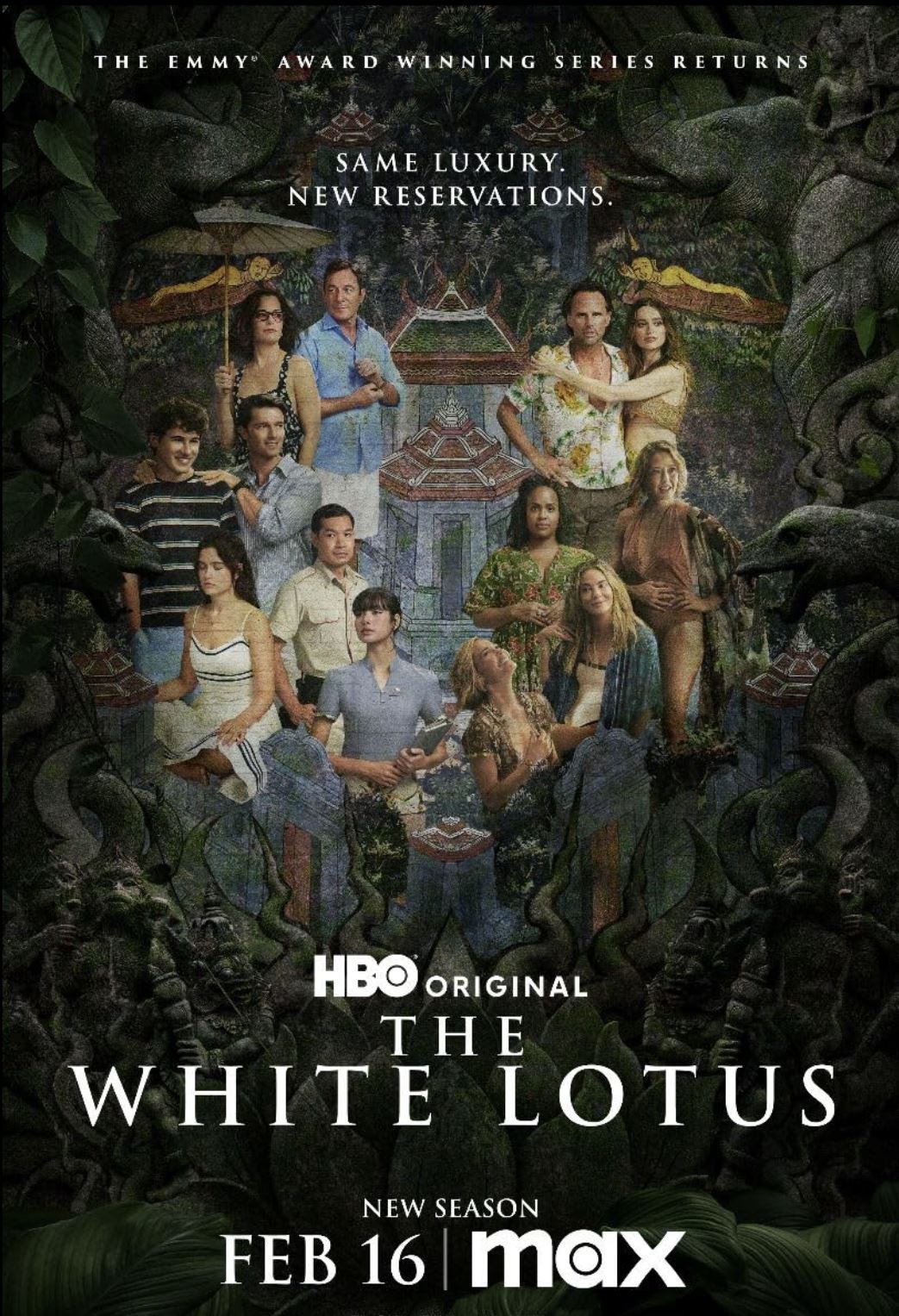
The White Lotus
Advertisement
“I was picking up girls every night … I was out of control, I became insatiable, and, you know, after about a thousand nights like that, you start to lose it,” recounts Frank, explaining why he decided to become Buddhist and celibate. “I started to wonder: Where am I going with this? Why do I feel this need to fuck all these women? What is desire? The form of this cute Asian girl, why does it have such a grip on me? Because she’s the opposite of me? Is she gonna complete me in some way? I realized I could fuck a million women; I’d still never be satisfied—maybe, maybe what I really want is to be one of these Asian girls.”
Satire has a race problem. Consider this controversial scene in the third season of The White Lotus, where two old friends meet for drinks in Bangkok. Both men are white and in their 50s. Seeking revenge on the man who allegedly killed his father, Rick sips on Dewar’s neat. Frank, an expat who gives Rick the gun to carry out his plan, orders a chamomile tea. Rick is surprised by Frank’s ordering of tea: “I don’t think we’ve ever hung out sober.”
This is what spurs Frank’s rant above, as he explains his abrupt lifestyle changes. Yet these changes only occurred after Frank moved to Thailand, because of his sexual preference for Asian women. Frank goes on to tell a perplexed Rick about the first time a ladyboy fucked him. “It was kind of magical.” For Frank, bottoming became a gateway to experiment with race and gender, testing the limits of his white masculinity. Soon enough he started putting out ads in search of white men his age to fuck him while he’d wear lingerie and perfume, impersonating an Asian woman. All the while, he’d hire an Asian woman to watch. “I’d look in her eyes while some guy was fucking me, and I’d think: ‘I am her and I’m fucking me.’”
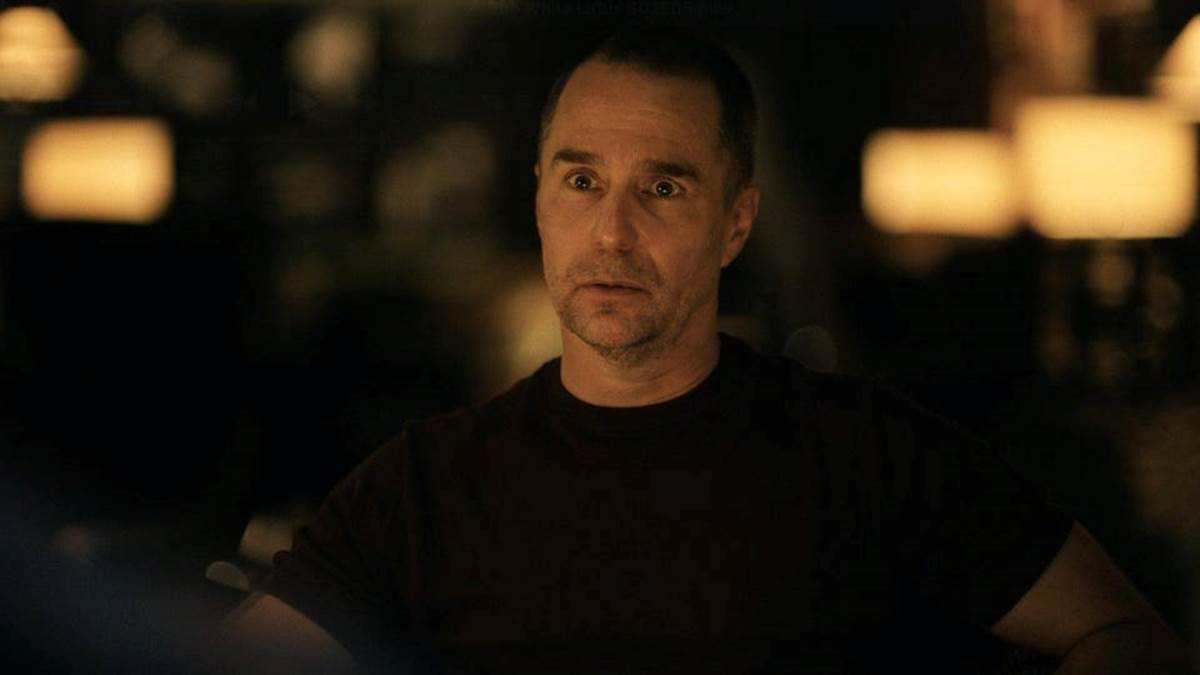
In shock but without judgment, Rick listens as his friend’s reflections morph into a series of questions. “Sex is a poetic act, it’s a metaphor; a metaphor for what? Are we our forms? Am I a middle-aged white guy on the inside too? Or inside, could I be an Asian girl?” Left without answers, Frank turned to Buddhism to quell his addictions to drugs and women, vices that say less about the man than they do about the American culture that formed him.
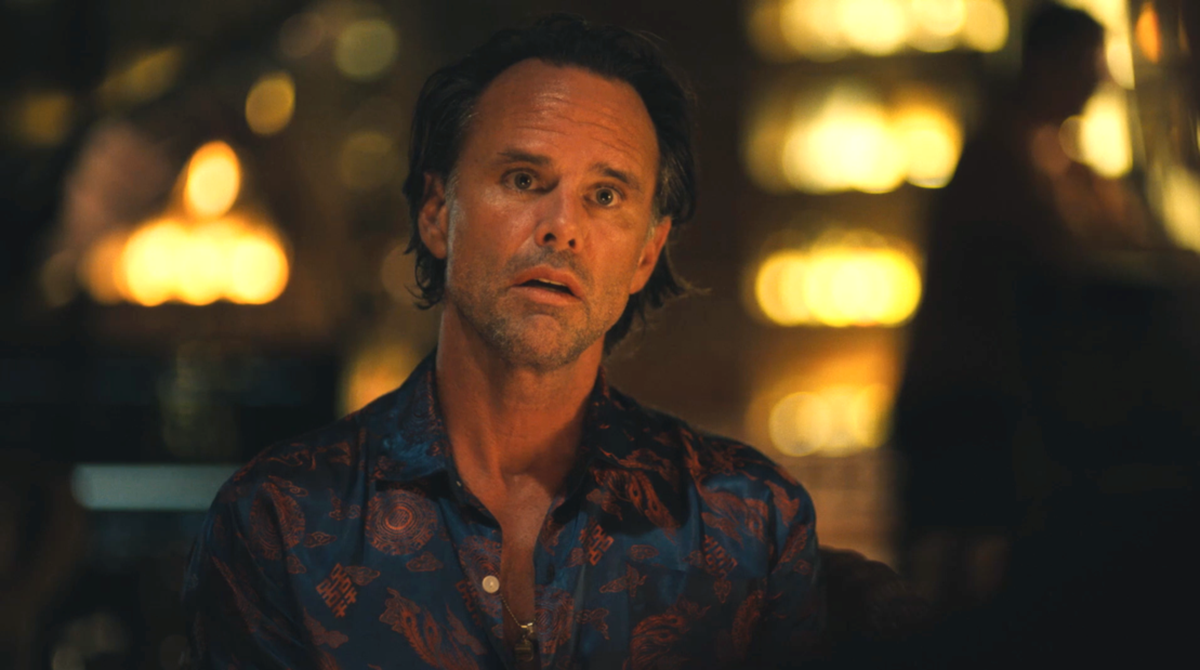
As I watched the scene, I could not help but smile and laugh at Frank, cheering him on in a quasi-sadistic manner, eager and excited to see the lengths this white man will go to distance himself from destiny. Reeling, I savored each word. His failure to rid himself of desire felt personal. His humiliation was my vindication.
My reaction may seem somewhat surprising for a feminist and queer scholar of Asian America. The expectation is that I ought to be disturbed, upset at the scene’s unabashed deviance. You should know that racial fetishization is something I’ve been sitting with for some time. I just published a book exploring whiteness in the Asian diaspora, so watching a white man admit to his Asian fetish felt like a reveling in affirmation. After years of studying guys like Frank, I saw the scene as further confirming my research: that Asian/white sexuality is a residue of US empire, and that Frank is less an outlier and more akin to The Average American Male.
For these reasons, I may be desensitized to this stuff, too familiar with the affliction that is racist desire, too primed to regard Frank as a wannabe Asian/white lotus. But, in feeling a kind of validation, I laughed. I ate it up.
I understand why some found Frank’s laid-back disclosure off-putting or abhorrent.1 These are valid reactions, ones worth holding space for, especially when considering the fact (you may call it coincidence, I’d call it fate) that the episode aired exactly four years after the 2021 Atlanta spa shootings, when Robert Aaron Long, a white evangelical Christian, murdered eight people, including six Asian women, in an attempt to cure his own sex addiction to Asian women. Like Frank, Robert sought a life unburdened by temptation. On March 16, 2021, I did not laugh when I read the dehumanizing jokes circulating online about the victims, about how their lives had “no happy ending.” I certainly don’t laugh when I or other Asians are targets of racist, sexist hailing.
But watching The White Lotus, I find Frank’s character to be an accurate if not exaggerated portrayal. I see how others are repulsed, and I observe my own need to justify my reaction. I say to myself: the show is satire, a representation of the real via ridicule. It’s poking fun at the worst of us.
One of the more popular social satires of the 2020s, The White Lotus has captivated audiences since its first season aired in 2021. Offering commentary on wealth, sex, and spirituality, each season follows a week in the life of the most privileged, unfolding the dramas that ensue when the worlds of hotel guests and staff collide in the idyllic settings of a Hawaiian, Sicilian, and Thai luxury resort. The series, its ensemble cast, and its creator, Mike White, have won the hearts of many, boasting numerous accolades and acclaim, not to mention an archive of meme-able moments by Jennifer Coolidge and Parker Posey, among others.
Despite all the love, critics like Inkoo Kang have drawn attention to the show’s mishandling of race, noting, for instance, the “depthless portrayal of the Native Hawaiian hospitality workforce” in season one. It’s one thing for a show to mock the follies and dysfunctions of the wealthy and white. The people can get behind that. Portraying the fall of the mighty is easy money, low-hanging fruit. Eat the rich! What’s riskier and harder to swallow are the moments when the viewer comes into contact with the white elite’s racist fantasies, which include the tendencies of prestige TV and its insufficient depictions of people of color.
Racism can be as obvious as a project’s choice to prioritize the inner lives of wealthy guests over staff of color or as jaw-dropping as Frank’s desire to follow in the footsteps of Rachel Dolezal or Gwen Stefani, dabbling in women of color femininity as though it were a mask. But racism is also much more ordinary, so mundane that we don’t often flinch when it surfaces. Think no further than the titular object. The racial symbolism inherent to the lotus flower contains the stereotype of the submissive Asian woman—the lotus blossom—as well as a broad representation of the sacred, where the white lotus in particular stands in for purity and spiritual enlightenment.
Satire, as a mode of constructive social criticism, should provoke reflection, and, perhaps, change.
And, indeed, watching Frank narrate his pursuit of enlightenment following a hedonistic immersion (a double penetration?) into Asian womanhood, I immediately thought of Leslie Bow’s concept of racist love, in which she observes how Asian people become objects not only of racialized desire, but of racialized anxiety.2 Fetishized, Asian femininity in particular functions as a vehicle of pleasure; but it is a pleasure, a racist love, that elicits feelings of resentment, envy, and even anti-Asian violence. Sam Rockwell, the actor who played Frank, is credited for reviving the season’s “slow start,” a season many deem boring and the worst yet. Do these views amount to Asian hate?
Sarcasm aside, I thought also of the conflation between the oriental and the ornamental, and thus, I recall Anne Anlin Cheng’s theory of ornamentalism. Less about interracial sex, gay sex, or trans identity, Frank’s longing to fuck Asian women and then to be fucked as an Asian woman animates a kind of racial masquerade, bringing into focus Cheng’s argument on Asian femininity: an “entanglement of living and living-as-thing.”3
Without question, then, season three’s handling of spirituality and wellness normalize the Western perception of the East as a distant land of leisure and remedy, “a playground for white desire,” as Poulomi Saha puts it. Some see this as a fault, noting the show’s failure to “fully escape the grip of the exoticising stereotype,” asking “how successful can a piece of satire be if it replicates the very power structures it purports to satirize?”4
But isn’t that the point of the show? No season has sought to conceal the fact of colonialism, capitalism, white supremacy, or heteropatriarchy. If anything, the violence inherent to structures of domination are watered down by compelling imagery and cinematography. Why burden satire with a vision beyond its scope?
Using otherness and carnal impulses as a crutch, a satire on moral bankruptcy is likely to showcase the white imagination. Sometimes that imagination triggers relatively harmless stereotypes. When Greg tells Tanya he works with the BLM (Bureau of Land Management), she assumes he means Black Lives Matter. Angry at a booking mistake, Shane Patton enlists the help of his travel agent Lorenzo, “a gay Filipino beast.” Victoria Ratcliff suspects a Thai woman needs rescue from her “middle-aged weirdo” white boyfriend.
Other times, the racist imagination is more insidious. In season one, guests eat dinner as indigenous members of the staff perform “traditional Hawaiian entertainment.” In season two, though set in Italy, race emerges by means of allusion, a passing reference. Not only are its guests of color, Ethan and Harper, viewed as white passing, but the pivotal incorporation of the opera Madame Butterfly serves as precursor both to Tanya’s fate and Frank’s bifurcated experimentation with Asian/white desire, a curious invocation of David Henry Hwang’s M. Butterfly. In season three, Buddhism is depicted as it routinely is under Western eyes, as the proverbial, vaguely Asian religion able to soothe and cleanse, transporting one to enlightenment.
Privilege shields us, it dirties us. And that’s why The White Lotus is really about what whiteness and money do to a person.
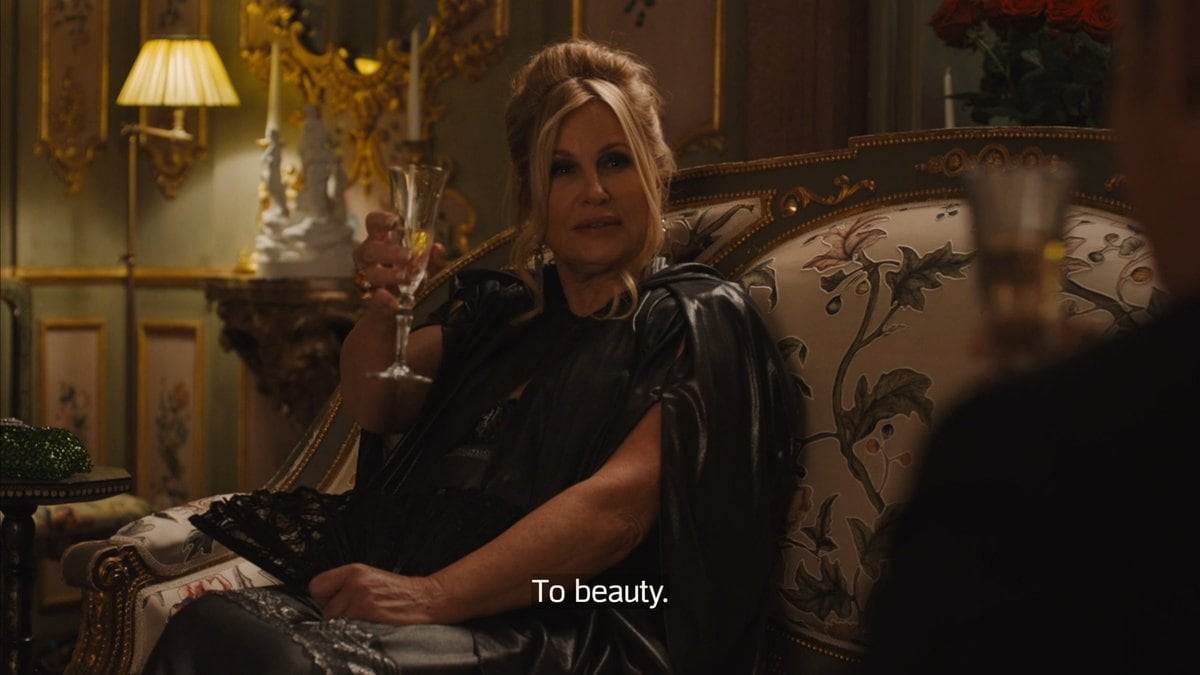
Satire presents us with a looking glass. It works best when one is in on the joke, or, at the very least, willing and open to laugh. But sometimes the joke doesn’t land. (I can’t get into it here, but even my institution felt stung by The White Lotus, filing a complaint after a character contemplated suicide while wearing university apparel.) It’s not easy to be the target of mockery.
More than humor and retaliation, however, satire, as a mode of constructive social criticism, should provoke reflection, and, perhaps, change. What does it say about our culture’s moral compass when any one viewer is disturbed by Frank? Put another way, what does it mean to be disturbed by Frank, but differently than the way one is disturbed by a suicidal father evading financial fraud, a woman sleeping with her friend’s love interest, an age-gap relationship, or an incestual act among brothers?
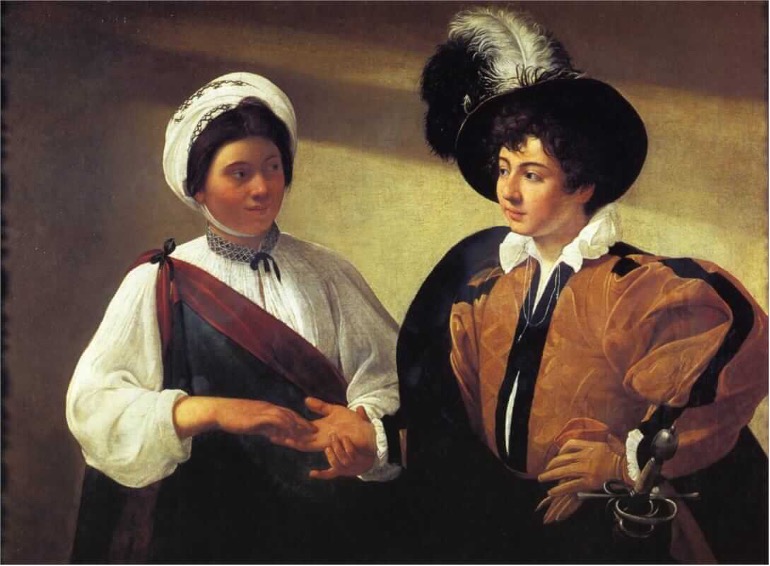

Satire can fan the flames of deep-seated desire. It seems to me that when the subject of social commentary is racist fantasy, the viewer is prone to succumbing to their own cravings. In the case of Frank, I delighted in witnessing a white guy fumble his way through racial fetish; yet others yearned for ethical, textured representations of the underrepresented. Whether indifferent or idealistic, the reactions that racial satire elicit say as much about the moment, about power—the unfinished project of anti-racism—as they do about the fiction that is a life unburdened by race.
Do we thrust critique back at satire because we expect more from it, or because it is easier to condemn art than the world it reflects? Perhaps that is the lesson. Satire reveals a world in need of change. The genre is doing its job—but are we as viewers doing ours? 
This article was commissioned by Sarah Kessler.
- The five-minute-long monologue has triggered a minor uproar. If you spent any time online when the episode first aired, you likely caught wind of the scene’s varied reception. Some viewers found Frank’s calm confession disturbing and problematic, a cheap shot reinforcing the stereotype that Asian women are submissive and objectified, no more than a punchline. Others praised Oscar-winner Sam Rockwell’s masterful performance as the recently sober and self-aware Frank. For all its buzz, however, many still felt confused, unsure of what to feel or how to react. In the days following the episode’s airing, breakdowns attempted to explain the underlying meaning of Frank’s “strange,” “wild,” and “weird“ revelations. Approaching the monologue as a site of symbolism (what did it really mean?), these summaries dance around another question: If satire mobilizes critique through emotion, to what extent does the genre fail when the subject is racist fantasy? ↩
- Leslie Bow, Racist Love: Asian Abstraction and the Pleasures of Fantasy (Duke University Press, 2022). ↩
- Anne Anlin Cheng, Ornamentalism (Oxford University Press, 2019), 23. ↩
- See Rachel Harrison, “The Creators of The White Lotus Tried to Avoid Stereotypes of Thailand. They Didn’t Succeed,” The Guardian, April 8, 2025; and Mitchell Kuga, “The White Lotus Is as Clueless About Native Hawaiians as Its Characters,” Vox, August 15, 2021. ↩