
Being reviewed:
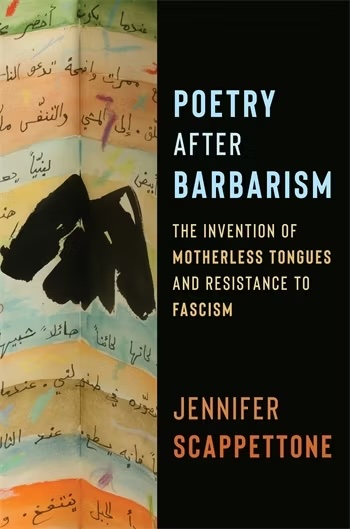
Poetry After Barbarism: The Invention of Motherless Tongues and Resistance to Fascism
Advertisement
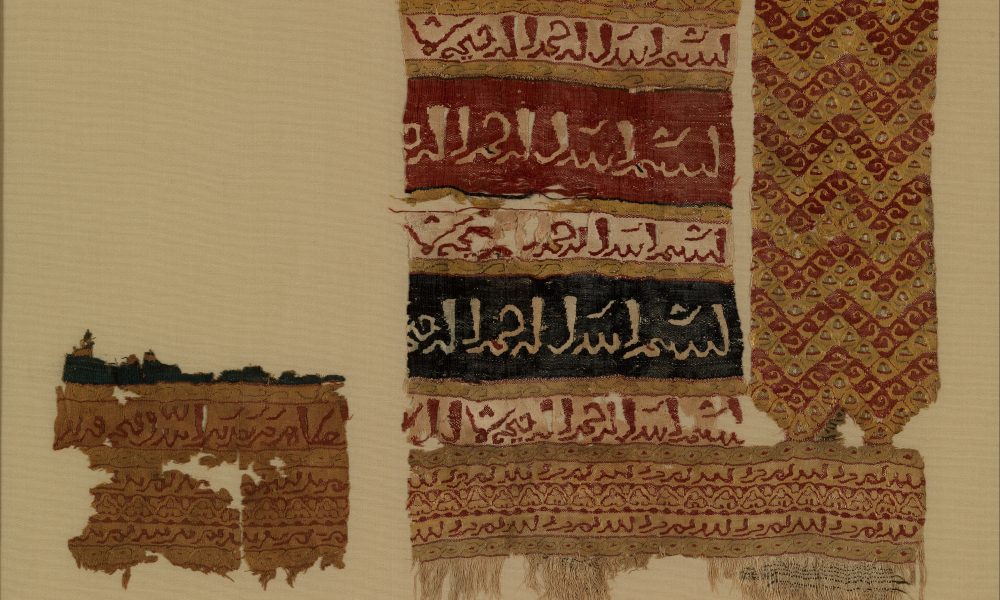
There’s a story most classicists know, told in the appendices of textbooks or on the first day of Latin 101: once upon a time, let’s say 12th-ish century BCE, there was a people who lived somewhere around the Black Sea who had a language, a religion, and a distinctive aesthetic, all of which we’ll call “proto-Indo-European.” One day, something happened—a flood, a drought, an earthquake, a dust storm—that forced their migration, splitting these once-unified people into different continental forms. Some of them landed in India, where they blended their own linguistic and cultural tics with those of an indigenous population, thereby producing Sanskrit. Others landed in Greece and Rome, where they developed Greek and Latin. In the eras that followed, these divided proto-Indo-Europeans bore more nations, more children, more tongues, including Lithuanian, Old English, Russian, and Hindi. Sometimes these forebearers of about 40 percent of our modern languages are just called “the Indo-Europeans,” other times, “the Yamnaya,” and still other times, “the Aryans.” “Look,” an eager instructor will tell you, “mḗtēr/mātā́/mater, that’s ‘mother’ in Greek/Sanskrit/Latin; pater/pita/pater, that’s ‘father’; tú/tuvám/tū, that’s ‘you’; emé/mām/mē, that’s ‘me.’”
This pedagogical performance reminds us that we were once one; and you, by the end of the class, will be part of each other’s oneness too. For most students, it won’t be their first “episode of the scattered tongues” but an empirically authorized version of Babel, the tower this time brought down to the dimensions of verifiable life. But this story of proto-Indo-European, unlike Babel, is a happy tale, one that restores agency and civic duty to today’s new humanists. As the story directs, philology and comparative linguistics have offered lenses through which we can see, at last, the perforated and torn seams of our ancient selves, which we might then stitch back together. Under the shade of the language tree, for a moment, nations dissipate, borders are undrawn, Babel’s spire still scrapes the underbelly of Heaven.
The question raised by the possibility of these common descents has been issued generation and generation anew: What exactly are we to do with the spoils of our shared past? What do we make of the people and languages that have always lived outside these forms? How do we speak together, live together, write together, in Babel’s wake?
But the political stakes of such questions have become increasingly urgent. Indo-European Studies was built upon colonial foundations, unearths Siraj Ahmed in a recent, masterful monograph, The Archaeology of Babel. And that, in turn, reveals that philology and comparative literature writ large were built upon colonialism too. Ahmed shows how philology emerged as an authority during the British Raj, as a tool for recovering lost histories.
This Raj philology, epitomized in the figure of Sir William Jones, laundered, legitimized, and thus fabulated a certain myth of ancient India that bought into partitioned ideologies and ultimately delivered Hindutva hegemony. As Jones reconstructed it, India had always been inhabited by nature-worshipping polytheists who were wedded to a singular religion, Hinduism; the intrusion of the Mughals and their Islamic practice was an unwarranted interruption to the subcontinent’s naturalized literary identity. Ahmed declares, “A dialectical response to colonial history must seek, therefore, neither for a return to philology nor for a future philology but rather for a way out. It would need to search, in other words, between the lines of the received tradition for what philology has effaced.”1 This demand—to refuse methodological futurity and embrace disciplinary abolition—has, unsurprisingly, been met with defensiveness, if not biliousness, by many of the humanities’ leading voices.
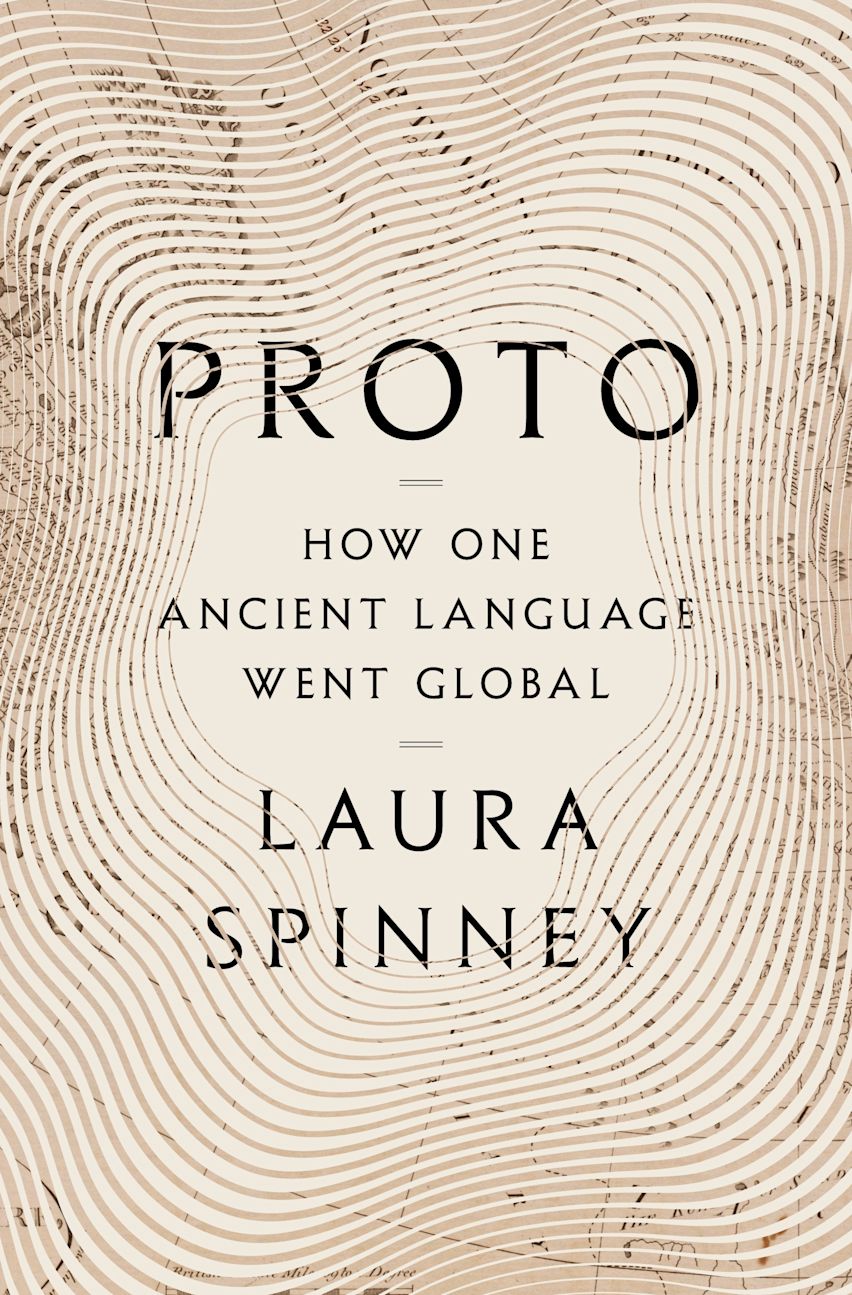
But Ahmed’s warning that philology, under the cover of democratic thought, is actually entrenched with race science and imperialism has been eerily validated and generatively responded to in two monographs: Laura Spinney’s Proto: How One Ancient Language Went Global and Jennifer Scappettone’s Poetry After Barbarism: The Invention of Motherless Tongues and Resistance to Fascism. Both books mobilize language, and the prospect of translingual communication, as their objects of study, with markedly different political ambitions and veneers.
Against the background of philology’s constitution, collocation, and shared parentage with the liberal humanities in the aftermath of the 20th century’s genocides and displacements, Spinney’s contribution to the field is less poetry, more science. Proto’s scientizing of the core tenets of humanism and universalism, though nobly tuned toward a call for Ukrainian liberation, ultimately, and dangerously, begets a project mired in racial logics.
These trappings, I suggest, are land mines laid down by the machinery of philology and require sincere intellectual effort to avoid. Such an effort, or spirit of effort, is made manifest in Scappettone’s Poetry After Barbarism. By escaping Babel through the configuration of the Pentecost, the history of language can refuse genealogy in favor of solidarity and set aside what we have shared in favor of what we might someday share—if only we let ourselves feel the light of another myth.
“Our shared humanity” is an idea to which liberalism‚ and the liberal academy, often retreats. Liberals employ it as a salve whenever our multiracial, multiethnic civil union is injured: all people, after all, have art, music, and poetry. “All people,” that is, share the common ancestry of a once united, now accidentally divided people of Babel.
This liberal tradition understands philology—the study of languages—as principally a historicist study of humanism. And it is best voiced in the theory of Weltliteratur, world literature, composed by the magnanimous Erich Auerbach in the aftermath of the Shoah and its epistemicide. Exiled in Istanbul, the German Jewish comparativist renegotiated world literature in his declarative disciplinary study, Mimesis, which drew his field’s attention back to its universal dimensions. In his foundational 1952 essay, “Philology and Weltliteratur,” brought into English in 1969 by Maire and Edward Said, Auerbach concludes with a daring mission:
In any event, our philological home is the earth: it can no longer be the nation. The most priceless and indispensable part of a philologist’s heritage is still his own nation’s culture and language. Only when he is first separated from this heritage, however, and then transcends it does it become truly effective. We must return, in admittedly altered circumstances, to the knowledge that prenational medieval culture already possessed: the knowledge that the spirit [Geist] is not national.2
Auerbach’s antinationalist configuration of philology affixed humanism at the center of the field. This sensibility was redoubled in the 1980s with a decidedly postwar generation that had settled on the academic humanities’, and particularly literary criticism’s, foundational seat in democratic structures. Elegizing his colleague Lionel Trilling and Trilling’s teaching of the Columbia Core Curriculum, Said in the opening essay to Humanism and Democratic Criticism reflected, “What concerns me is humanism as a useable praxis for intellectuals and academics who want to know what they are doing, what they are committed to as scholars, and who want also to connect these principles to the world in which they live as citizens.”3 Into this milieu, George Steiner, another fugitive of Europe’s antisemitism, thrust his masterpiece, After Babel, and his anti-Zionist critique, “Our Homeland, the Text.” Reflecting on the prelapsarian “Adamic circumstance,” when “world and word were one,” Steiner traces the relationship among the Jewish diaspora, their “apocalyptic writ,” and the false prophet nation-state, Israel.4 Refusing the ancient mandates issued by modern political actors, he resolves:
Locked materially in a material homeland, the text may, in fact, lose its life-force, and its truth values may be betrayed. But when the text is the homeland, even when it is rooted only in the exact remembrance and seeking of a handful of wanderers, nomads of the word, it cannot be extinguished.
Over the decades since World War II, literary criticism warmly embraced methods, texts, and scholarship that careened toward the universal, toward “the world,” toward rebuilding Babel. And these, in turn, helped the discipline eschew clickbait nationalism in favor of democratic society’s melted pot. The chairs of this field in recent decades—Sheldon Pollock, David Damrosch, Benjamin Elman—pooled their projects from global (or more accurately non-Western) evidentiary wells, with Romance philology serving as comparanda and not primary study, thereby substantiating the worldliness of a world philology.
And yet, as postcolonial and Black studies critiques demonstrated, they also eschewed the necessary textures of subjectivity, especially the subjectivities of raced, colonized, and classed persons and literatures. “World” philology’s normative, standardizing force of comparison itself collapsed and reduced non-Western traditions, rendering recognizably Western forms of literature. Such critiques reject theories of “our languages are one” as a naive and frumpy outfit for the humanist to wear. As Said himself later noted, although Auerbach said that “our philological home is the earth,” “his earthly home is European culture.”5
The term “global” is often a tool to smuggle in its own projects of Eurocentric hegemony.
Laura Spinney’s much-buzzed-about Proto: How One Ancient Language Went Global steps into an established tradition: employing an originary language (a defined homeland or urheimat) in mapping a migration that is “easily the most important event of the last five millennia, in the Old World.” This proto-language is important to Spinney because of the modern preponderance of its descendant tongues, with Indo-European thus becoming the scaffolding for our globalized world.
But the term global is often a tool to smuggle in its own projects of Eurocentric hegemony. The Global South in Proto is but a castaway of a once unified Global North and has lost its own texture, history, autonomy, and genealogy for a data-driven, race-science-gullible audience glad to eat up the sparse, phantasmic records of “microscopic traces of food trapped in dental plaque” and “the remains of dozens of dogs and at least one wolf.”
Spinney’s predecessors in this universalizing philological project fortified their science of linguistics with abstract models and reconstructions, like “laryngeal theory.” Taking a different tack, Spinney, who cut her teeth in science journalism with a book on the Spanish flu, spins a tale of Babel without poetry and instead with DNA testing, archaeobotany, and computational biology. Her reliance on these evidentiary sites is notable from the book’s introduction:
How do you study a language that has been dead for thousands of years and was never written down? The short answer is with humility. A longer answer is with linguistics, archaeology and genetics. Historical linguistics probes the history that languages carry within themselves; archaeology tracks ideas and knowledge, the ingredients of culture; genetics tracks people. Though there is no one-to-one mapping of language, culture and genes, relationships do exist between these three, meaning that each one can be informative about the other two.
Without irony, Spinney titled this introduction “Ariomania,” hinting that she might know what’s so wrong with the idea of the “Aryan”—Indo-European Studies’ proof of concept—even while pouring the plaster of evidence into its figural mold. But as Spinney repeats these three terms—linguistics, archaeology, genetics, linguistics, archaeology, genetics—they harmonize into a recognizable tune: race science.
Spinney’s proto-people, conquering and colonizing on horseback, leave data-laden breadcrumbs for us to find, and memorialize. She flags their virtues, these people we do not call Aryans (because that would sound bad!) but instead “the Yamnaya,” a term given by archaeology, in Russian and Ukrainian, referring to the buried mounds these people left behind: “The bearers of that culture varied their style of pottery and metalwork, and their diet, but to start with, at least, their treatment of the dead never wavered … They were extremely homogeneous genetically too, in the beginning.”
What unifies the Yamnaya is how they treated their dead—oh, and also the traces of their Y-chromosomal evidence scraped off piles of millennia-old bones in the steppe. But Yamnaya is no less a politically sharpened term than Aryan; it just points to a different cause célèbre. Documenting her fieldwork, Spinney introduces the terminology of the Yamnaya: “That summer of 2023, while war raged across the Don and a mercenary named Yevgeny Prigozhin led a rebellion out of Rostov, a few hundred kilometres to the west, I watched Shishlina’s team excavate their umpteenth kurgan.” In such moments Spinney’s work most closely positions itself in the long arc of Indo-European’s entanglement in the liberal democratic project. As the pages go on, the reader, statistically likely to be a grandchild of her Yamnaya, feels their debt to the Ukrainian landscape accumulating, and its descendants take on place as genetic begetters, the chromosomal bearers of our own selves: “It would be an understatement to say that Russia’s war on Ukraine has had a detrimental effect on research into the Indo-European languages, whose cradle many scholars believe lies between the two countries.”
What I chafe against here isn’t the humane call to protect and liberate a besieged people. It’s that to generate such sympathy, Spinney constructs an ancient race, linguistically and racially substantiated. The rallying call of our political oneness need not be bound to our literal, genetic oneness, but a practice of solidarity that transcends those very constructs.

What would such an antigenealogical, transcendent philology that I’ve called for here look like? One example might be found in Jennifer Scappettone’s Poetry After Barbarism: The Invention of Motherless Tongues and Resistance to Fascism. Explicitly and abundantly antistatist, Scappettone’s work engages with national language traditions without reinscribing dominant geopolitics. Instead, the book offers a course toward “alternative republics … in which poetry (and its undervalued kith, translation) might assume a central agency,” noting:
Needless to say, the language of a People conceived as monolith needs to disavow the ineluctably shared histories and futures of speech and writing, which deposit themselves in linguistic resources representing a treasury of exchange impossible to shut down: a perpetual transmutation taking place in the ungovernable work of ears, mouths, and hands absorbing and passing on difference.
Difference, not an anachronistic Eden of similarity, is the indubitable protagonist of Scappettone’s story. Approaching the poetic traditions and artistic practices of fugitives, waywards, and exiles, from Etel Adnan to LaTasha N. Nevada Diggs, Scappettone retells not the story of Babel but the story of the Pentecost: wherein Christ’s followers, inspired by the divine spirit—“inspired” in the literal sense of “breathed into”—are suddenly able to speak languages foreign to them.
The Pentecost does not repair Babel but redrafts it, placing an antidote for our separation and noncommunication back in the hands of those who believe and care enough to speak beyond sameness: poets. Guided by the potential of xenoglossy—the spontaneous knowledge of an unlearned language—Scappettone’s book gathers near-magical moments of people producing works intelligible to those othered to them. These achievements, Scappettone notes, are not because of a myth of shared descent, but because of the possibility of their shared occupation of a homeland, enacted not through the state but through experience, performance, and poetics.
Thus, Poetry After Barbarism might be an inaugural bid at a philology without Babel. Scappettone’s book embraces Ahmed’s impossible invitation for language study to not repair through shared heritage or reform through shared futurity, but instead to regenerate legibility, refuse the pure, reembrace the gift of the unknown. Our new guiding myth, I take it, must be the Pentecost. We must live not at the moment of our scattering but at the moment of our spontaneous, and earned, remembrance. Importantly, though, Scappettone makes clear her work is not originary but collectivizing: it brings under a shared light generations of language workers before her, including an impressive chapter on the Italian philologist that undrapes a disciplinary tradition of antifascist praxis.
In this, Scappettone offers the ultimate rejoinder to both Auerbach and Said. To her, it is not enough that our philological home is the earth. In fact, our language—our home—must also be planetary and cosmic, escaping the entrapments that make an internationalized earth just another vestige of the state.
We need not see ourselves as scattered halves looking to be made whole by a return to a unified state. Escaping Babel’s haunt, it’s possible to see—xenoglossically—our bodies, our histories, our languages as complete in themselves. The task remains, then, to extend care, humanity, solidarity, and life, to tongues—and people—outside of the trajectories inscribed by our protos; to raze the language tree that dictates our cultural debt and our naturalized nations; and to reinvest in living with, and living for, difference. 
- Siraj Ahmed, Archaeology of Babel: The Colonial Foundations of the Humanities (Stanford University Press, 2017), p. 20. ↩
- Erich Auerbach, “Philology and ‘Weltliteratur,’” translated by Edward and Maire Said, The Centennial Review, vol. 13, no. 1 (1969). ↩
- Edward Said, Humanism and Democratic Criticism (Columbia University Press, 2004), p. 6. ↩
- George Steiner, “Our Homeland, Our Text,” Salmagundi, no. 66 (1985), 8. ↩
- Edward Said, The World, the Text, and the Critic (Harvard University Press, 1983), p. 7. ↩