Nicholas Dames is co-editor in chief of Public Books. The Theodore Kahan Professor of Humanities in the department of English and comparative literature at Columbia University, his most recent book is The Chapter: A Segmented History from Antiquity to the Twenty-First Century (Princeton University Press, 2023). He has written on contemporary fiction, novel reading, and the humanities for the Atlantic, Harper’s, n+1, the Nation, New Left Review, the New Yorker, and the New York Times Book Review.
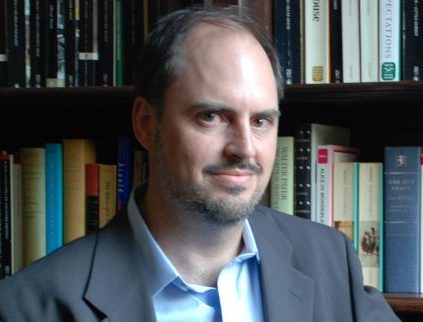
Nicholas Dames
Advertisement
Writing on Public Books
“Disaster Has Happened and Is Happening”: Tara Menon on What the Novel Reveals
“I wanted to propose grief as perhaps the most appropriate response we can have to what is happening to the natural world—the disappearance of coral reefs in the Andaman Sea and bird habitats in New York.”

“Parallel Tracks”: Sophie Ratcliffe on Academia, Memoirs, and Motherhood
“I used to want to experience everything. I don’t anymore.”

Interpret or Judge?: John Guillory on the Future of Literary Criticism
“‘Professing criticism’ is a contradiction and maybe even an impossibility. I’d like to hope that it’s not, that it’s just an innovation, historically.”

Reading Resources: The Novel
A resource for reading about, teaching, and discussing the novel as an artistic and cultural form.

Millennials in Beattieland
No word haunts discussions of Ann Beattie like the word generation. Once upon a time, back when novelists still had the luxury of holding their publicity at a …
We All Must Play “The Westing Game”
In the beginning was Sunset Towers. By which I mean, at the beginning of what I quickly came to think of as my reading life: whatever came before, whether read …
The Email Master
By all accounts, Nell Zink writes fantastic emails. The story of how she brazenly initiated a correspondence with Jonathan Franzen, convincing him over time to act as her agent and promoter, is now a kind of fable. Journalists have described the deluge of digital provocations, corrections, and ludic embellishments that accompany her formal interviews. Her […]
“The People v. O. J. Simpson” as Historical Fiction
The location is wrong. The white Bronco is clearly weaving through traffic on the 710 South as it approaches its intersection with the 10, on the eastern border of El Sereno, just by the Cal State LA campus. In June 1994, O. J. Simpson and Al Cowlings would have had no reason to venture that […]
Franzen Makes Nice
Reading Jonathan Franzen’s fifth novel, Purity, in a state at once sympathetic and skeptical, I kept thinking of George Kaplan. In Alfred Hitchcock’s 1959 film North by Northwest, a ring of foreign spies mistakes the protagonist, Cary Grant’s Roger Thornhill, for Kaplan, a fictional decoy created by the CIA. No matter how strenuously Thornhill protests […]
Knausgaard’s Novel Degree Zero
Proustian epiphanies happen all the time, particularly to children, and they don’t necessarily add up to much.
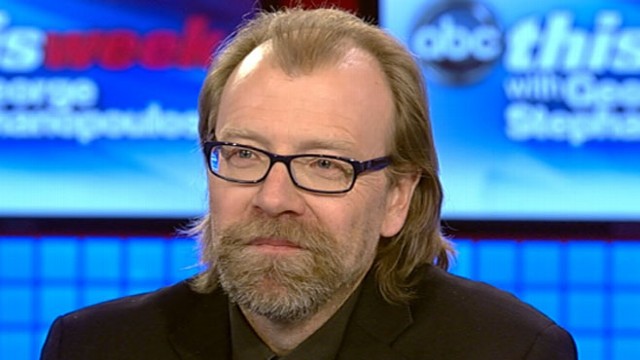
Story Time
For a few weeks at the start of 2013, George Saunders was the gently puzzled face of American letters. You could see him being interviewed by Stephen Colbert, Charlie Rose, or George Stephanopoulos, talking about empathy and capitalism while demonstrating the Northern Cities Vowel Shift. You could read the New York Times Magazine calling him, […]
Edward St. Aubyn and the Depressive Third Person
Few recent novelists offer as many misguided reasons for being liked or disliked than Edward St. Aubyn, whose five Patrick Melrose novels—Never Mind (1992), Bad News (1992), Some Hope (1994), Mother’s Milk (2006), and At Last (2011, published in the United States in early 2012)—have been the occasion of some glowing press. Sensationalism is the […]