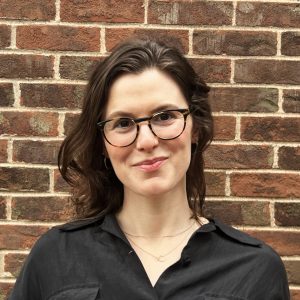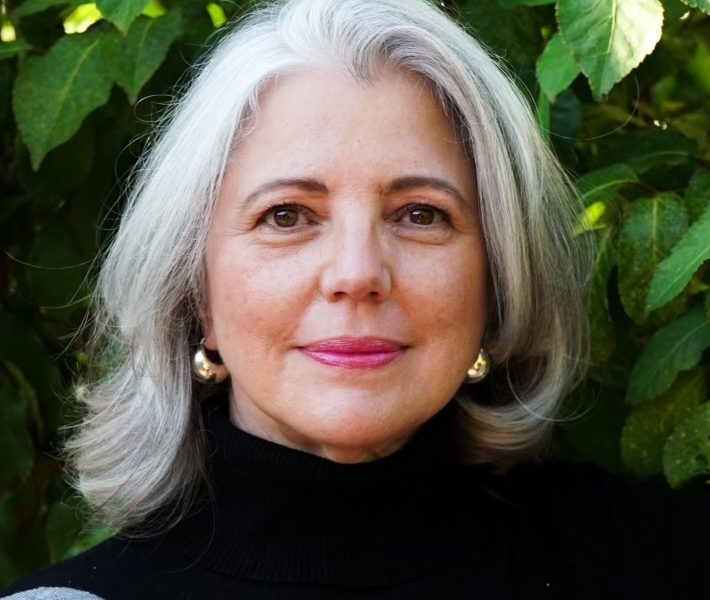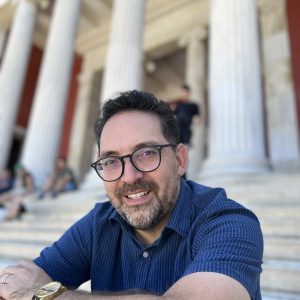


Being reviewed:
Advertisement
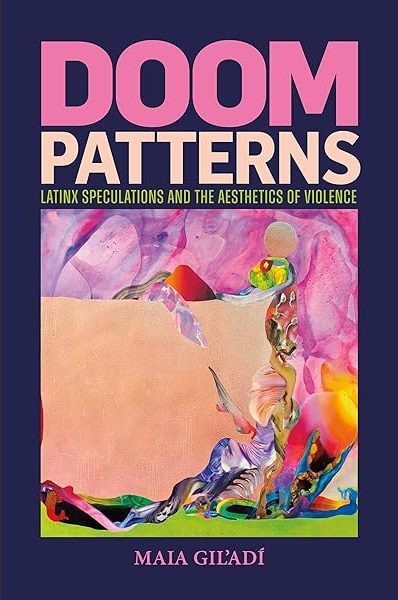
Before his untimely passing on August 18, 2025—six months ago today—Ricardo Ortiz sent me a set of questions about my book Doom Patterns: Latinx Speculations and the Aesthetics of Violence (2025). Our plan was to meet in person over dirty vodka martinis (his drink of choice) and record an “interview.” I put interview in scare quotes, because—although this conversation would be recorded, transcribed, and hopefully published on this site—we both saw it as much more than just an interview. We would talk about my book, but also about the state of our field, Latinx literary studies: its limitations, shifting contours, and future possibilities. It was a field that I had been involved in for a while, but that he had helped nurture from its infancy.
We never had that interview that was more than just an interview. We never had the chance to talk about me, or him, or our relationship to this thing we call Latinx literary studies. When he passed, I was left with the many memories we shared over the decade or so that we knew each other. But I was also left with his set of questions, like the ones below, that I would never now get to “answer”:
“Doom Patterns has been percolating for some years; can you reflect on its (changing? stable?) historical salience over the period of its development, from its initial conceptualization, to the day of its completion for publication, to today, with regard to US Latinidad as an identity category, and/or the status and work of the speculative as a literary and cultural genre, and/or the quality and impact of structural violence on the populations you study most closely? That’s a big question, so feel free to focus wherever you’d like?”
Ricardo was instrumental to the writing of Doom Patterns. When I was in graduate school at George Washington University, my mentor, Antonio López, was the only Latinx literature scholar (Hache Carrillo and Jessica Krug included). As my dissertation advisor, Tony recommended that I meet with Ricardo, talk about my project, and ask for him to be on my committee. “You have to meet Ricardo. He’s the OG,” Tony would have said, probably with a “bro” in there somewhere.
So, I trekked to Georgetown and met Ricardo in his office. I was in the process of writing my prospectus and was brimming with ideas. My dissertation, I thought, would challenge the boundaries of how we define ethnic identity and its depictions in fiction. Have you read Marlon James’s A Brief History of Seven Killings? he asked. I had not. Have you considered how such texts might not only be incorporated into the body of work we now call Latino/a literature (“Latinx” was still a few years away from becoming part of our lexicon) but might also help us expand its boundaries? I had not considered this either. I had a set of books I knew I wanted to discuss in my project, but the conversation with Ricardo made it clear I had to go back to the drawing board, to the reading chair.
That meeting was the beginning of Ricardo helping me understand that academic fields are never static, but always in conversation with others and dealing with shifting historical conditions. This is a point Ricardo makes in his essay on Edwidge Danticat’s Latinidad, which invites scholars to consider how preexisting identitarian hermeneutics “already show the impress of a field that too often mistakes the content of the narrative of historical cause, event, and consequence to the detriment of its deeper relational, even grammatological structures—that is, of its form.”1 At the heart of his writing, teaching, and speaking was Ricardo’s deep commitment to exactly this: the significance of close reading and the doing of literature.

“Considering that Doom Patterns opens in Chapter 1 with Junot Díaz and closes in its Coda with Hernan Diaz, two such dissimilar writers writing in such dissimilar modes of speculative fiction, what would you like your readers to know about your process of selecting the writers/artists and texts/objects that make up the literary and cultural archive of Doom Patterns?
Related question: What would you like your readers to know about your approach to literary interpretation and cultural analysis, from close reading to all the other ‘reading protocols’ that you deploy across your study?”
One of the tasks of Doom Patterns is to chart how US latinidad evolved as an identity category. I approached history in the spirit of Ricardo’s first book, Cultural Erotics in Cuban America (2007), where he shows us how literary texts register the affective and political conditions of diasporic life. For Ricardo, Cuban American literature was never just art or just archive; it was a form of knowledge that revealed how identity shifts across time and circumstance. Working with an archive that moves from Junot Díaz to Hernan Diaz—with Cristina García, Colson Whitehead, Roberto Bolaño , and Sesshu Foster in between—I bring together texts (that look formally disparate) to illuminate the breadth of the speculative in Latinx cultural production. Such interpretive pluralism was something Ricardo taught me: to move among close reading, cultural analysis, and transnational critique, so as to grasp the different scales at which speculative texts operate.
My use of “speculative” includes not only science fiction, fantasy, dystopia, apocalypse, and horror (and their tropes of monsters, time travel, or alternate histories), but also realist works whose depictions of excessive violence push them toward the otherworldly. Following Ricardo’s example, I look for the dialectic between the historical and the imaginative: how literary forms register structures of domination while also opening horizons of possibility. This approach responds to the formal complexity of speculative writing and to the uneven terrains of history and power through which these texts circulate. Interpretation, in this sense, is always both aesthetic and political, inseparable from the struggles the texts themselves attempt to name and navigate.
“Doom Patterns is appearing in what can only be described as a banner year for Latinx literary and cultural studies, with a bumper crop of important new scholarly monographs enlivening the field. How would you describe your sense of the state (or progress?) of the field, especially as a collaborative project, including of course your own distinctive contributions to it?”
Sitting with the struggle was a method Ricardo seemed to enjoy. Yet friction or discomfort was also always equally regarded with its seeming opposite, which he invokes in this question above: collaboration and progress. In this way, Ricardo was putting his finger on one of his hobby horses, that writing was not conducted in isolation but located within broader hemispheric and transnational frameworks, as well as intellectual communities and collective friendships. The proliferation of Latinx studies monographs in the past couple years confirms that the field is flourishing as a collaborative intellectual project. My contribution seeks to extend this collective endeavor by foregrounding the speculative as a key site of Latinx cultural expression, one that reveals the field’s vitality precisely in its ability to generate alternative imaginaries.
Ricardo was, as Tony said, an OG of the field and influenced so many of us. Recent works by folks like Renee Hudson, Christina León, and Joshua Guzmán illustrate the field’s ongoing investment in the interplay between aesthetic form, historical consciousness, and the political stakes of Latinx identity.2 Taking a cue from Ricardo’s belief that Latinx studies works best as a shared, collaborative project, Renee, Christina, and Joshua’s books (in addition to the many others that have appeared in the past couple years) can be seen as part of a larger conversation about how Latinx stories imagine, question, and reshape the world. Renee shows how looking back—through archives, forgotten texts, and revolutionary writing—helps us see Latinx literary history in new ways and opens futures that are still being shaped and imagined. Christina adds to this by illustrating how ideas of latinidad take shape on the page, especially through the ways writers portray race, gender, and the everyday feelings that give those identities texture. Joshua’s work complements theirs by treating style and mood as explicitly political, showing how queer Latinx writers use discontent, refusal, and even ambivalence as powerful critical tools.
This shared project is joined by Doom Patterns, which follows Ricardo’s call for collective thinking. It explores how speculative writing can refuse easy answers, unsettle familiar ideas about latinidad, and create emotional and imaginative space for new possibilities. Like Renee, I treat speculative forms not just as exercises in imagination, but as ways to confront real structures of violence and to sketch out different social worlds that might one day be possible. Most importantly, I as much as Renee, Christina, and Joshua (and the many other Latinx literary studies folks in our circle: Antonio López, Thomas Conners, Israel Reyes, William Orchard, Marion Rohrleitner, Cristina Rodríguez, John Ribó, Joe Miranda, and Marcela DiBlasi) hold the text and the work of close reading as principal and essential; it was the core of Ricardo’s critical practice, the “event.”
Close reading was the method through which Ricardo—as a queer, Latinx, immigrant scholar—carved out intellectual space for voices, texts, and experiences that too often fall outside the dominant frame. By paying close attention to language and form, he brought those perspectives into sharper focus, illuminating their complexities and, in the process, reframing how we understand Latinx literary and cultural production.
Ricardo was less a “giant” than a force of gravity: the kind of scholar, mentor, teacher, and friend who pulled people into fuller versions of themselves
“Now that Doom Patterns is in the world, and considering the state of the world in this summer of 2025, is there a reading/analysis/intervention in the book that you would particularly want readers to pause on today? And can your answer to that question open a larger reflection on what you [see as] for the book’s relationship to futurity, both its own as a scholarly project, but also any larger futurity that it might help us see, and perhaps make?”
Structural diagnosis and speculative projection needn’t be at odds with one another. That’s another thing Ricardo taught me. In his last book, Latinx Literature Now: Between Evanescence and Event (2019), Ricardo saw literature not only as a record of diasporic survival but also a speculative act, one that pointed toward what was not yet realized. I tried to do something similar in Doom Patterns, thinking as much about how literature diagnoses structural violence as about how it invests in the imaginative labor of world-making. In this way, the book presents itself not just as a product of 2025, but as an intervention aimed at the futures Latinx cultural production continues to imagine—and perhaps even to make possible.
Ricardo was always thinking about the future. In 2019, he helped put together a Latinx literary studies cooperative. It seemed random, born of happenstance. But I now realize that it was his way of embodying the future, one that he wished were a bit more open, curious, and dedicated to building community. His own aesthetic earnestness, in fact, always carried a sense of futurity. I often referred to him as a babe past and present—a true movie star—ageless good looks paired with a timeless California cool. Yet this sense of futurity extended beyond appearance. It lived in his sentences, in the way he spoke in public and in conversation, with a cadence that felt both thoroughly considered and generously open. Ricardo embodied a deep love for literature and for the act of thinking alongside others. His long, winding sentences unfolded with intention, pairing intellectual rigor with a heartfelt tone that never rang sentimental or forced. To hear him speak was to feel how literature can still shape a life; how beauty, thought, and feeling can move us forward together.
When our collective was started, Ricardo was an established, notable figure in Cuban American and Latinx literary studies with two brilliant books to his name. He could have faded into the background, making way for a younger generation (something no one wanted), or loudly proclaimed his importance in a kind of grandstanding typical of some middle-aged academics (something no one asked for). He, of course, did neither. A true mensch, Ricardo dexterously moved between curiosity and generosity. He wanted to learn from new generations of scholars— early-career faculty and graduate students—and wanted to also share with them what he did know. The cooperative he set up organized panels and roundtables multiple times a year, nationally and internationally. I cannot imagine anyone else being able to summarize a roundtable proceeding as skillfully as he did. The thrill of seeing how discussions carried over from one to the next was unparalleled.
In one of the group’s last emails, Ricardo had been playing around with the idea of writing an essay about the ways that both Madonna and Lana Del Rey “mined non-white cultures and in particular their representations, stylizations, and sexualizations of a particular kind of young, female-identified political and cultural rebellion, to burnish their own claims to resistance and critique.”3 Central to this aesthetic representation, Ricardo would argue, were Latinx cultural features particular to Los Angeles, his hometown. It would be his first foray into “Lana Del Rey Studies,” as he called it. We will never get to read Ricardo’s essay on Lana Del Rey (or his work on Carmen Maria Machado or Justin Torres). It would have been equal parts fun and daring, brilliant and bitchy, just like him.4 And he signed this email as he always did: xoxo, Ricardo.
It’s hard to imagine the field, or any classroom I walk into, without Ricardo’s presence humming beneath it. The graduate seminar I taught in Fall 2025 was based on one of his syllabi, and I hate that I never had the chance to discuss it with him. His influence has washed over my thinking, my writing, and my teaching, the way an undercurrent shapes the shoreline without announcing itself. His absence isn’t abstract; it settles into the body, a weight carried both alone and with others, felt in the quiet moments when we reach for the guidance he once gave so freely.
Ricardo was less a “giant” than a force of gravity: the kind of scholar, mentor, teacher, and friend who pulled people into fuller versions of themselves. As Walt Whitman once wrote, “Passing stranger! … I am to see to it that I do not lose you.” The exhilaration of encountering Ricardo is encapsulated in this line. You want to hold to every inspiring thought he uttered in your mind. And he returned the feeling, exuding the thrill of meeting and talking and drinking and eating and discussing again and again and again. You left every conversation with Ricardo feeling like you had been deeply loved, had been deeply in love with each other.
Gracias por todo, te extrañamos siempre, Ricardo.
xoxo,
Maia
The Ricardo Ortiz Humanities Endowed Fund
Every year, for generations to come, a faculty member will receive an award in Ricardo’s name to advance research that deepens our shared understanding of what it means to be human. Ricardo deeply believed in the power of the humanities to shape students, serve the common good, and bring people together. Through this Fund, that work—and his spirit—will live on in perpetuity at Georgetown.
Ricardo “embodied all that a university can be at its very best”—a passionate mentor, a gifted teacher, and a relentless builder of community. The fund will honor that legacy by supporting the engaged, creative, and inclusive scholarship that defined Ricardo’s life and work.
Gifts may be made online at give.georgetown.edu/RicardoOrtiz 
This article was commissioned by Bécquer Seguín.
- Ricardo Ortiz, “Edwidge Danticat’s Latinidad: The Farming of Bones and the Cultivation (of Fields) of Knowledge,” in Aftermaths: Exile, Migration, and Diaspora Reconsidered, edited by Marcus Bullock and Peter Paik (Rutgers University Press, 2008), pp. 167–68. ↩
- Renee Hudson Latinx Revolutionary Horizons: Form and Futurity in the Americas (Fordham University Press, 2024), Chrstina León’s Matters of Inscription: Reading Figures of Latinidad (New York University Press, 2024), and Josh Guzmán’s Dissatisfactions: Queer Latinidad and the Politics of Style (New York University Press, 2024) illustrate the field’s ongoing investment in the interplay between aesthetic form, historical consciousness, and the political stakes of Latinx identity. ↩
- From correspondence with Ricardo, November 12, 2024. ↩
- He was not wrong about Lana Del Rey. She has tapped into chola aesthetics: thin arched eyebrows, heavy eyeliner, hoop earrings, plaid shirts buttoned only at the top. Her music, too, has mined chola-inspired themes of nostalgia, fatalism, and desire, staging a melancholic Americana where glamour and decay intertwine. Del Rey’s visual vocabulary borrows that of working-class Latinx Los Angeles. But it has not been without controversy, as Ricardo knew all too well. Del Rey put on the glasses of retro romanticization. Her songs reference a bygone Hollywood, doomed love, and the mythology of the American dream. “It’s complicated,” as the erstwhile Facebook status reminds us. On the one hand, Del Rey’s aesthetic choices underscore her obsession with subcultures, with the gritty glamour of communities on the margins of mainstream American culture. On the other, they raise questions about appropriation and authenticity, since her use of Latinx style can appear detached from the lived experiences and social struggles of their referents. Del Rey’s music and Latinx-inflected style perform as well as myth-make. Her songs inhabit archetypes—the doomed lover, the femme fatale, the girl who wants to escape but can’t. Her stylized lyrical narrative performs a kind of symbolic borrowing. Plus, there’s an asymmetry of power: Del Rey can adopt and discard this aesthetic as she pleases; the communities who developed them cannot. ↩