


Being reviewed:
The Prison before the Panopticon: Incarceration in Ancient and Modern Political Philosophy
Advertisement

Venturing deep into a cavern, a potter discovers six human cadavers, lashed in place so as to face the wall of the cave, and the traces of a fire behind them. “Do you know what that is,” the potter, Cipriano, asks his son-in-law, in the last pages of José Saramago’s novel The Cave. “Yes, I remember reading something about it once, replied Marçal, And do you know that, since that’s what it is, what we saw there has no reality, cannot be real.”
And yet I touched the forehead of one of those women with my own hand, it wasn’t an illusion, it wasn’t a dream, if I went back there now, I would find the same three men and the same three women, the same cords binding them, the same stone bench, the same wall in front of them, If they can’t be those other people, since they never existed, who are they, asked Marçal, I don’t know, but after seeing them, I started thinking that perhaps what really doesn’t exist is what we call nonexistence.
This most celebrated of philosophical fictions is not real, for it describes no place anywhere upon (or beneath) the earth. And yet, it is realer than real: for it describes every place, every time, every thing. It describes our encounter with reality itself.
The existence of the nonexistent is rather important to Jacob Abolafia’s The Prison before the Panopticon. This incisive, unsettling study is a history of nonexistent prisons, the sort of prisons that—like Saramago’s cavern, like Plato’s cave—existed only in the fictions of philosophers. “The idea precedes the institution,” argues Abolafia, meaning that actual prisons did not become a fixture of the political order until the arrival of modernity (to wit, the late 18th century). But the idea of a prison featured in the ruminations of political philosophers long before that, and it is these theoretical prisons with which Abolafia is concerned. “The prison is both thoroughly modern,” he contends, “and deeply rooted in European political thought.”
Before turning to the philosophy, it is worth saying something about the history. Like Saramago’s Cipriano, faced with six corpses and a cave, we must square Abolafia’s claim with all we know of premodern prisons: from the dungeons beneath every self-respecting castle to the writings of a Boethius or a Marco Polo. To address these facts, The Prison before the Panopticon narrows its definition of “the prison.” If “prison” means incarceration of any kind and for any purpose, the prison is as old as cities and laws and walls. If, however, the word means incarceration specifically as a punishment, then Abolafia maintains prisons did not really exist prior to modernity. The distinction may reflect the nuances of theory rather than the untidy violence of practice, but then Abolafia is concerned with “the conceptual construction rather than the material reality of incarceration,” with the prison “as a discursive site rather than an archaeological site.”
As history, I am afraid, Abolafia’s claim is not really tenable. Prisons were ubiquitous and significant presences in ancient, medieval, and early modern history, routinely used for the purpose of punishment. But as political theory, The Prison before the Panopticon has much to say on its own terms. Abolafia has crafted a series of sensitive, original readings of philosophers ancient and modern, together forming a vivid intellectual genealogy of the prison. Even that gap between political theory and history contributes to the book doing the very best thing a book can do, which is to provoke thought—about what the prison is and does, about its place in society, and about the ways we try to make sense of our own violence.
Abolafia breaks down the political theory of the prison into two different lines of argument. The first, which he finds in Demosthenes and Thomas Hobbes, is what he calls the paradox of popular authorization: the prison is the only punishment that affects both rich and poor, high and low, while keeping the offender within the body politic. Accordingly, it is peculiarly suited to maintaining a homeostasis within that body. The “paradox,” according to Abolafia, is that a punishment meant to uphold equality does so by making citizens unequal—perhaps to the point of no longer being citizens. The second tradition, more familiar to our time, is that prison is a tool to reform individuals into better subjects/citizens, an idea The Prison before the Panopticon follows from Plato to Thomas More to Jeremy Bentham.
Abolafia begins in Athens, where two of Demosthenes’s courtroom speeches articulate a “democratic theory of the prison as a form of egalitarian punishment,” to curb elites whose excessive wealth and power might jeopardize the democratic nature of the state. The prison emerges as a crux for Athenian anxieties about their democracy and its limitations (and the uncomfortable reality that its equality depended upon systemic inequalities—most of all the slavery which the prison so resembled). Such a paradox can be found in Hobbes, too, even though he had no truck with democracy. Still, he had to confront analogous tensions in how the prison interacted with the conceptual foundations of his politics. Punishment writ large is a problem for Hobbes, insofar as there are certain rights that not even the Leviathan can take from the subject, including that of self-defense. Whence, then, the authority to punish? In a fascinating, beautifully textured reading, Abolafia follows Hobbes as he grapples with the paradox: in which the prison took on an outsize prominence due to “the central importance of physical restraint in Hobbes’s theory of liberty and, ultimately, to his theory of the social contract.” Hobbes positions incarceration as “a sort of liminal condition between full citizenship and the state of war.” The captive reenacts the primal moment of the social contract and yields their rights to the sovereign anew.
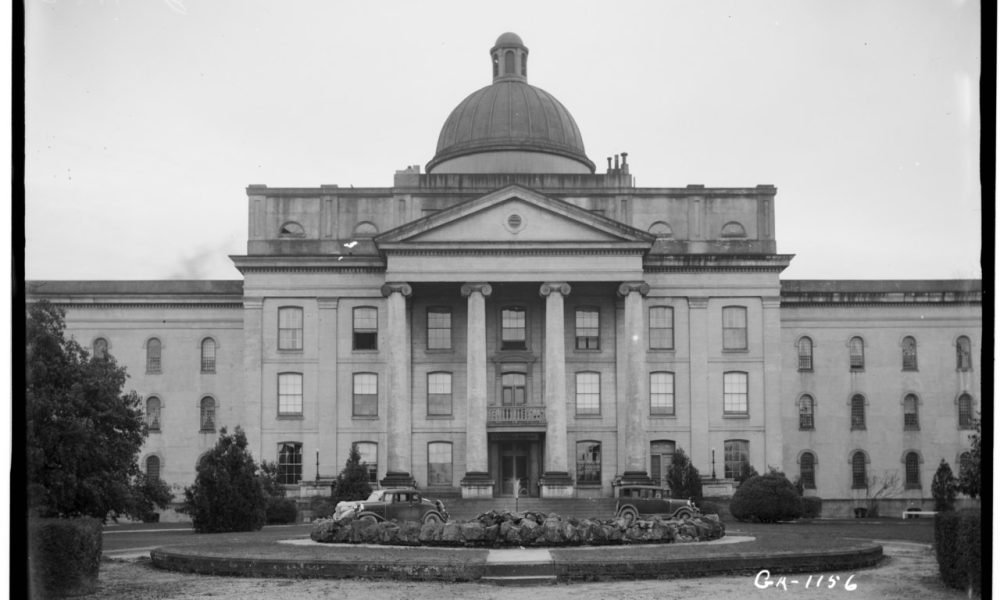

Plato, Demosthenes’s older contemporary, launches Abolafia’s other genealogy, the prison as the means of reform. The argument requires considerable philosophical legwork: accounts of “how the human mind works, how physical confinement affects psychic function, and how confining criminals will make them better citizens,” as well as the proper prison for the job. In broadest strokes, where Demosthenes and Hobbes are interested in who punishes and who is punished, Plato and his heirs are more concerned with the how of incarceration.
With respect to Plato, the key text is the philosopher’s last dialogue, the Laws. In legislating for the ideal state, the characters propose no fewer than three prisons: a jail for the quotidian maintenance of order, a reformatory, and a remote facility to be given “a name suggestive of punishment.” The latter two institutions are reserved for the punishment of “impiety,” with prisoners placed according to redeemability. Abolafia deftly maps Plato’s carceral theories onto his epistemology, showing how the prisons reflect an intricate taxonomy of passion, pleasure, knowledge, and ignorance by which crimes and criminals may be distinguished. No less effective is the demonstration of the political stakes of the prisons—why should a polity exert itself to make people better? The prisons are an education in shame, to further “the emotion’s natural role as a mediator of intersubjective ethical life.”
Plato gives way to Thomas More, whose Utopia shares the ambition to transform through punishment. Yet this work also draws deeply from the Christian monastic tradition, which in the intervening centuries had evolved its own ways of transmuting confinement into reform. For More, what makes imprisonment reforming is labor; because it “does what no other form of punishment can—it corrects behavior both justly and usefully.” Ironically, then, Utopia transposes reform from the moral realm to the practical, not to say the utilitarian.
The prison we know today does not really promise reform (and would not be believed if it did) and works to fragment any sense of political community.
Enter Jeremy Bentham, brandishing the plans of his Panopticon. Bentham owed much more to the Utopian tradition than we imagine, and like Plato he rooted his reforming prison in sweeping accounts of human psychology (all behavior reduces to the seeking of pleasure and the avoiding of pain) and of social order (best secured by labor and property).
The result is a fresh perspective on what is genuinely new in the Panopticon: its atomized individualism. The utilitarian calculus anchored reform entirely in how the subject themselves judged their own interests (as adjusted by the prison). This solitary consumer/producer/prisoner comes into sharper focus against the background of Plato’s and More’s profoundly interpersonal definitions of reform. For Abolafia, then, the Panopticon is best understood as the end-point of a tradition rather than its beginning.
If the modern theory of the prison is the confluence of these two philosophical traditions, the wellsprings appear to have run dry. The prison we know today does not really promise reform (and would not be believed if it did) and works to fragment any sense of political community. Abolafia conjectures that prison abolition has such potency as an idea in the realm of the scholar and the activist precisely because the ideological foundations of the prison have rotted away. “Neither of the intellectual resources on which the modern theory of the prison initially relied—the idea of reform and the value of incarceration for popular self-rule—can be plausibly endorsed in the United States in the age of mass incarceration.” Reform through punishment seems to be well and truly dead. Not only because every technique yet developed to reform prisoners has failed, Abolafia explains, but also because any successful method would prove incompatible with contemporary norms around autonomy, equality, and liberty.
But perhaps there’s life in the popular authorization tradition yet. Abolafia concludes with the possibility of a prison for “the preservation of political principles like equal voice, equal respect, and people power,” through the punishment of the violent and the anti-democratic. A realigning of carceral priorities from drug dealers and petty thieves to insider traders and would-be tyrants. The book’s last line—a provocation both exasperating and stimulating—invites the reader “to imagine a future of thinking about incarceration that rises to the moral challenges set by the past.”
The instinctual reaction of a prison abolitionist such as myself is to recoil. A democracy that relies upon the prison is not the democracy we ought to want. Engaging more seriously, I see a loophole of some breadth: to take a single example, if you asked the late Alexei Navalny’s jailers, they would tell you that he was imprisoned for massive corruption and for anti-democratic political activity. As a matter of history, the road to American mass incarceration was paved with democratic intentions, from the 18th-century penitentiaries that promised a suitably republican form of punishment to the shibboleth of citizenship that justifies the detention of undocumented immigrants.
Even supposing we sought a democratic prison, could we get there from here? Abolafia acknowledges that contemporary mass incarceration is “antithetical” to those democratic values. The implication is that that antithesis is incidental, rather than inherent (or so ingrained as to become inherent). Out of the crooked timber of mass incarceration, how are we to make something straight?
So we return to the relationship of history to political philosophy, the existent to the nonexistent.
The gap between theory and practice structures The Prison before the Panopticon. A refrain of the book is the distance between a given philosopher’s visions and the realities of the prisons of their time. A prisoner in Athens, whatever Demosthenes said, was far more likely to be a pauper than an oligarch. Their prison was not part of a sweeping political vision and it did not try to reform them, whatever Plato dreamed up. Renaissance slavery was not an enlightening experience, whatever tales More told.
Indeed, I find myself asking whether any of these philosophers knew what they were talking about. At a certain point, the distance between the discursive site and the archaeological site strains the limits of analogy. That is not to say that Plato’s hypothetical prisons are unimportant merely because they were hypothetical: as Abolafia shows, the influence of his ideas is still being felt, and nothing comparable can be said for the actual prisons of classical Athens.
But what sort of philosophy of the prison can be made from unreal prisons? Put another way: Must there be some descriptive, as well as normative, element to political philosophy?
Here I think of another insightful reader of More’s Utopia, the German historian Hermann Oncken. Though somewhat beclouded by anachronism and post-Versailles resentments, Oncken’s 1922 lecture, Die Utopia des Thomas Morus und das Machtproblem in der Staatslehre (Thomas More’s Utopia and the problem of power in political theory) shed much light on the violence inherent to Utopia and on the nature of political thought.
He argues that every abstract theory of the state runs aground on power, because the exercise of power is bound up with the specifics of time and place—contingencies that cannot be theorized, but learned empirically or historically. The moment a theoretical state must do something, theory gives way to history: what institutions are in place, who are its neighbors, and so on. Oncken critiques the search for “the state as such” and the analysis thereof “as an isolated phenomenon, roughly in the same way and with the same justifications as science first of all isolates the object of its inquiries, an organ or a plant, in order to subject it to their investigation.” The state that could be thus analyzed never existed and never could.
The same is true, mutatis mutandis, of the prison. Abolafia compellingly demonstrates that a theory of punishment must be rooted in broader philosophical accounts. A Demosthenes or a Hobbes needs a theory of the state—an account of the political homeostasis that the prison helps to maintain. A Plato or a More or a Bentham needs an account of moral psychology such that the prison can make people better. Both are in some measure empirical questions: Is the state really “like that”? Are prisoners’ minds really “like that”?
To answer such questions with the hypothetical prisoner is the philosopher’s version of playing tennis without the net, to borrow a phrase from Robert Frost. It is simply too easy. Imaginary prisoners do not have the real prisoner’s unpleasant habit of surprising. The allegorical inmate only ever rebels in anticipated ways. These nonexistent prisons have the privilege of the unfalsifiable, but also the fragility of the untested.
On one level, I am suggesting that the unreality of these philosophies calls their soundness and validity into question. But on another, I wonder whether the real antithesis is between the prison and philosophy. One 19th-century Irish writer, describing the regime at Armagh Jail, listed the rewards on offer to the prisoner “if he takes to it philosophically.” Submission is all the philosophy the prison expects of its inmates.1 The extreme case might be the words of the Auschwitz guard when Primo Levi asked why he could not slake his thirst from an icicle: Hier ist kein warum. There is no why here.2
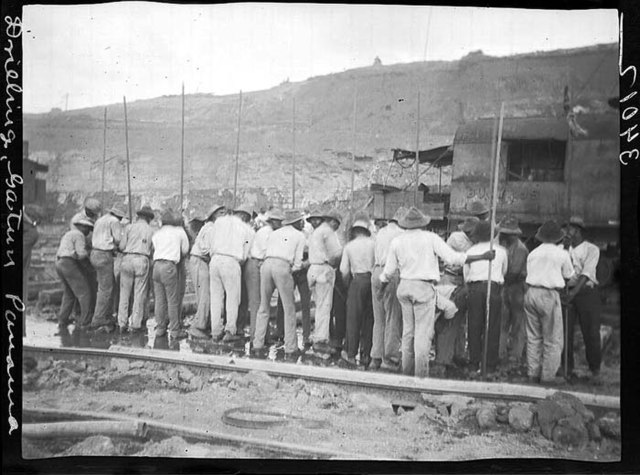

It is the violence of the prison, violence on an unthinkable scale, that makes this book so timely. The prison is, without any question, one of the preeminent problems for political philosophy in the 21st century, as thinkers like Mariame Kaba and Tommie Shelby have already recognized. And as Abolafia shows us, this has long been the case.
But in such a context, a political philosophy of the prison with no necessary relationship to the realities of the prison is a luxury we can ill afford. Because the prisons, the actual prisons, are where contemporary politics happen. The prison and its outriders—policing, probation, parole, bail, surveillance—have become many citizens’ most immediate and most meaningful encounters with the state. Entire realms of the political, such as migration, are framed in carceral terms. The prison poses an anomaly for representative democracy, its inmates usually deprived of the right to vote but counted for purposes of gerrymandering. Contemporary political economy must account for states contracting out the punishment function to private companies and the vast economic ecosystem, of caterers and internet service providers and architects, sustained by the public money poured into prisons. Even the international dimension of political philosophy has its carceral edge, in hostage taking, prisoner swaps, and solemn agreements for one country to lock up another’s inmates. The fact that one in every three American adults has a criminal record demands a whole new account of citizenship and its relationship to punishment.
It also demands recognizing prisons as spaces where political philosophy might happen. The prisoner has no choice but to be a political philosopher: they are daily confronted with the realities and ideologies of the political order, and they have time and every incentive to understand them. We all know a litany of famous political prisoners and dissidents, but I am really talking about the unsung philosophers who populate tiers and yards across the world. Like the incarcerated scholar in Lisa Guenther’s Plato reading group, who drew upon the Phaedo, the dialogue depicting the final hours before Socrates’s execution, to craft a luminous critique of capital punishment: “They’ve stolen death. A perfectly natural thing has been taken and used as a tool … No one has the right to do that, to take death and use it for their own purposes.”
If political philosophy is really to confront the problem of the prison, the symposium should be taking place inside the prison itself.